
Measured and Quoted on Site
Not off a photo. We come out, look at the ground and the access, and price the actual job.
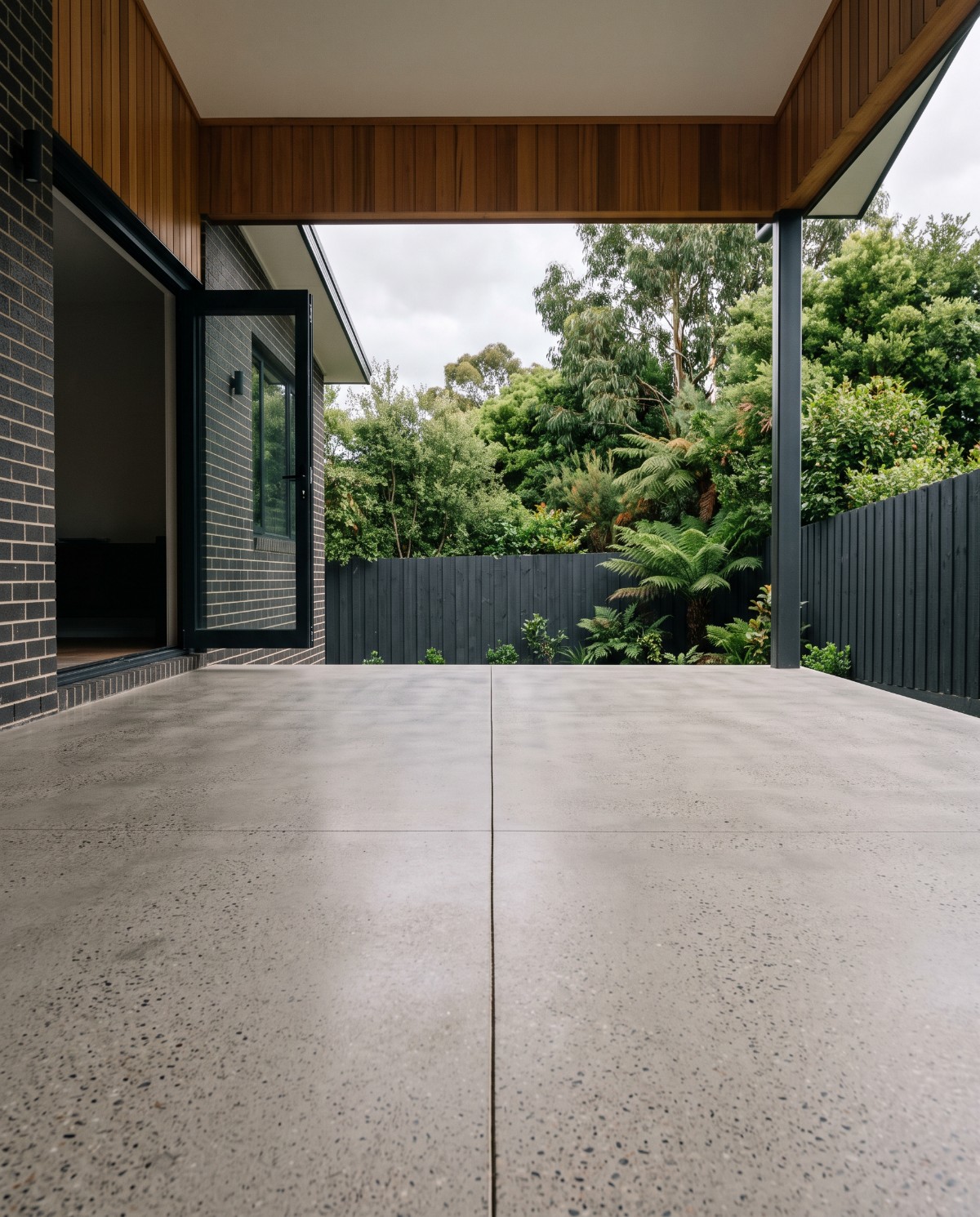
Honed is the calm one, and in Launceston it is the finish people choose for an alfresco they actually sit in. The slab is ground back until the surface is smooth and the stone sits flush rather than proud, which looks superb and behaves very differently in the wet. Where you put it matters more than on any other finish.
Not off a photo. We come out, look at the ground and the access, and price the actual job.
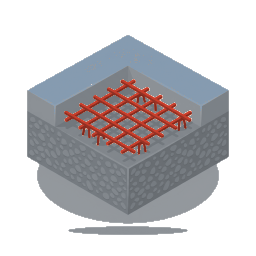
Excavation, a compacted base and reinforcement to spec, the half that decides how long it lasts.

One written price for the whole job, not a rate per square metre, and the site is left clean.
Honed is not a coating and not a polish. The cured slab is ground with progressively finer diamond pads until the surface is smooth and matte, revealing whatever stone the grind reaches.
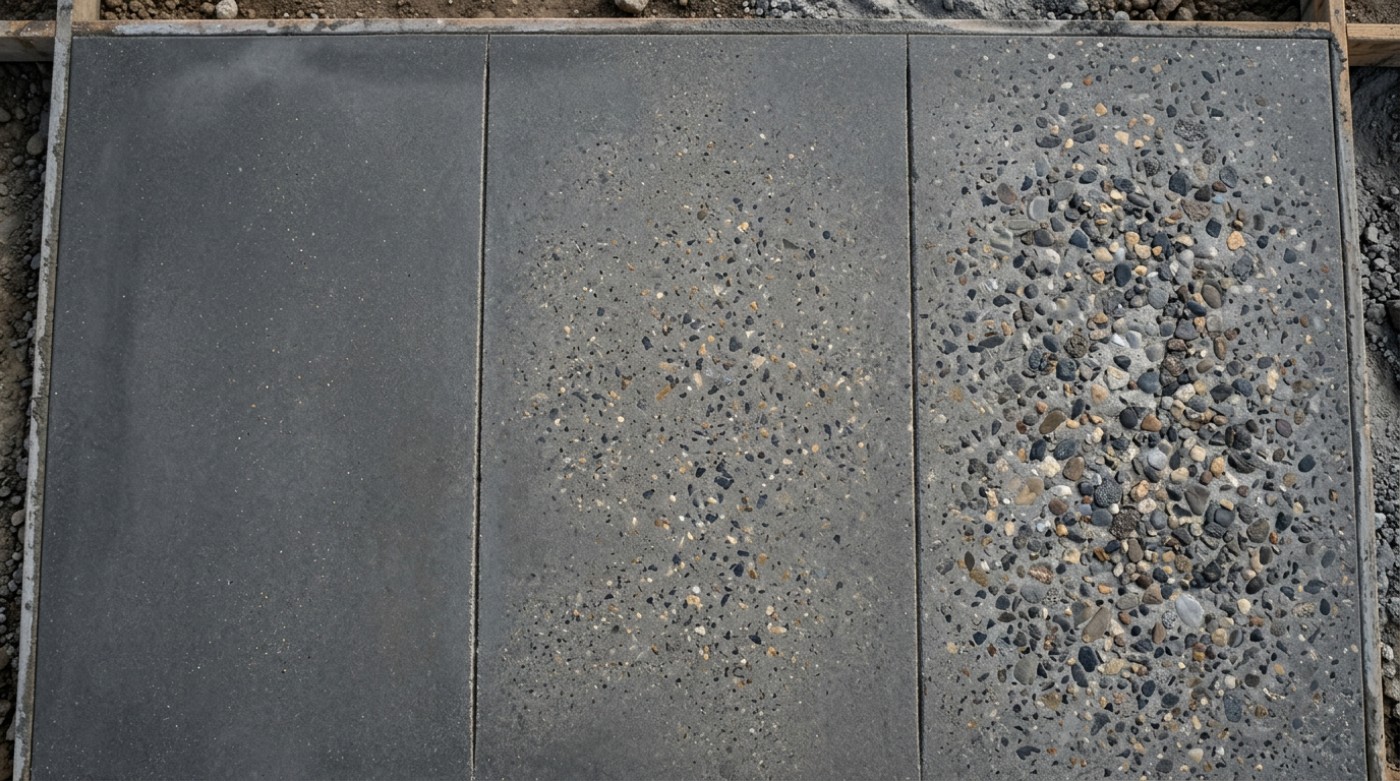
Nothing is applied. The finish is the slab with a few millimetres taken off it, so there is no layer to lift, peel or wear through.
A light grind shows sand and little else. A deeper cut reaches the larger stone. Same concrete, three quite different surfaces.
Honed stops at a soft satin sheen. Taking it further, to a mirror, is polished concrete, and that is an indoor finish for different reasons.
A smooth surface hides nothing. Honed is the finish that rewards a good pour and exposes a rushed one, which is why it is not the cheap option.
This is the single most important thing on this page, and most of the trade will not tell you: honed concrete is slippery when it is wet unless it is finished for grip.
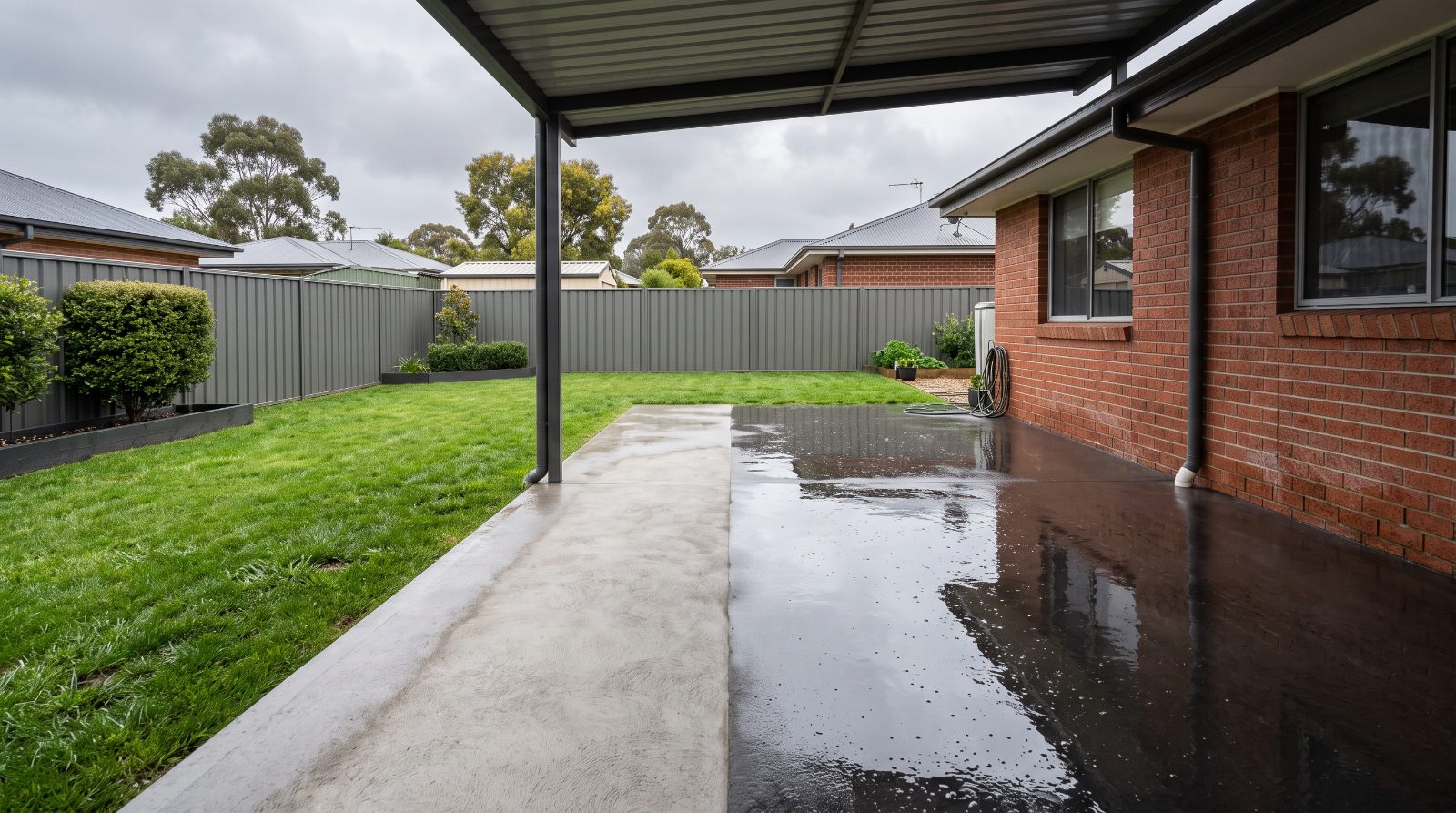
The natural home for it. Sheltered, dry, and seen up close every day, which is exactly what honed is good at.
It works on the lounging side of a pool surround, with exposed aggregate on the wet zone at the water. One pour, two finishes.
It looks superb on a short suburban drive. It also needs a grip additive if it slopes or if it sits in shade where it stays damp.
Grinding a house slab is polished concrete, with different preparation and different sealing. That is its own page.
A wet honed step is where people slip. Grip beats appearance anywhere someone might be barefoot and moving.
Tell us where the floor is and how much weather it sees, and we will say whether honed is the right call.
The three get confused constantly, and they are not interchangeable. Read across.
Honed is a method rather than a colour, so it can be almost anything. These are the combinations people ask for most.
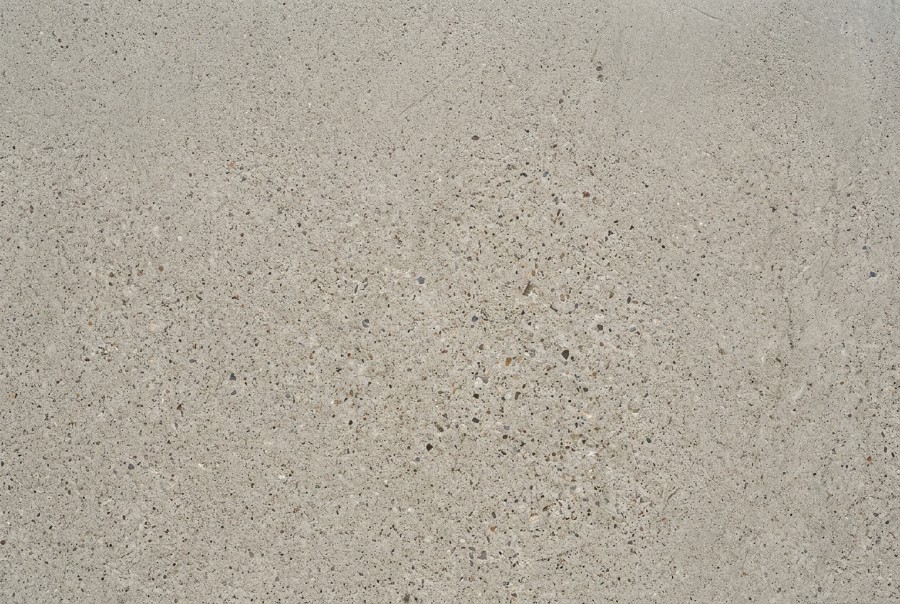
The default. Fine sand revealed, almost no stone, and the least expensive way into the finish.
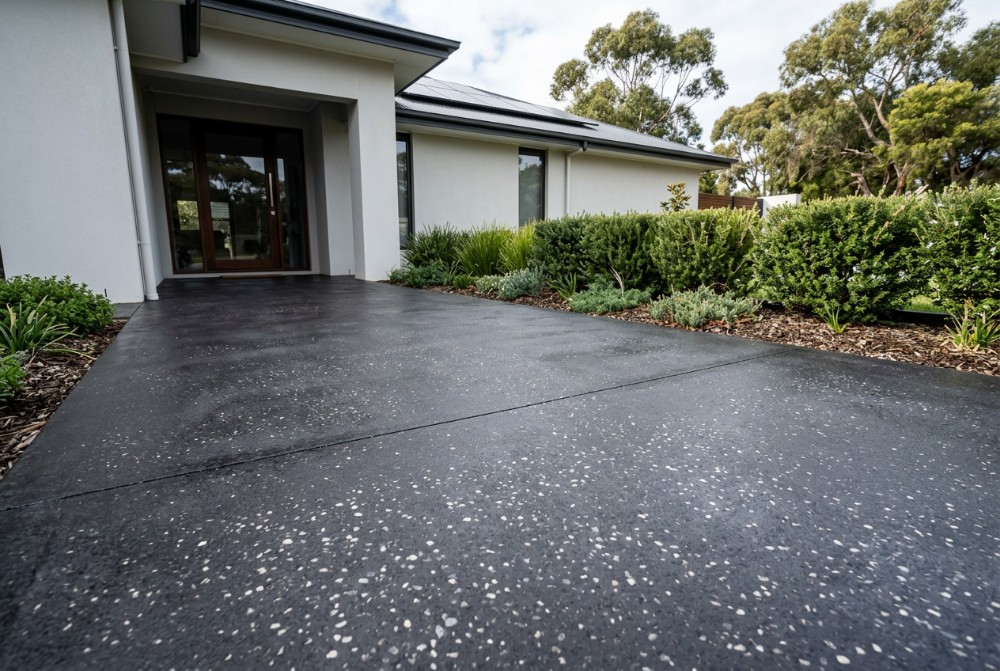
Oxide in the mix and then ground, so pale stone flecks read against a dark ground. It holds heat, so keep it out of bare-foot areas.
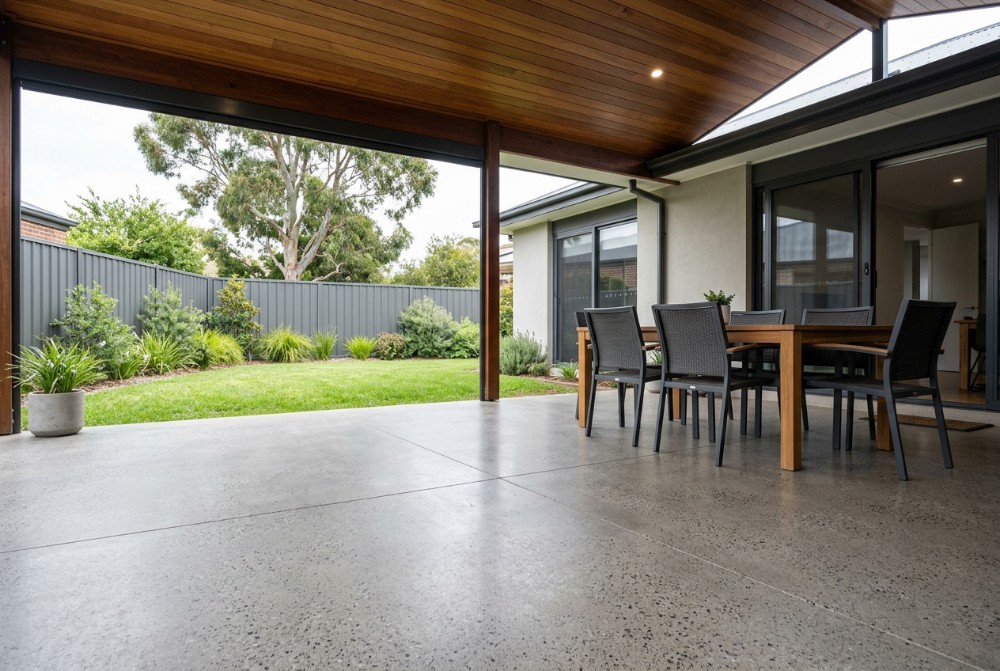
Poured level with the house slab and sheltered by the roofline. The most common place we lay it and the one it suits best.
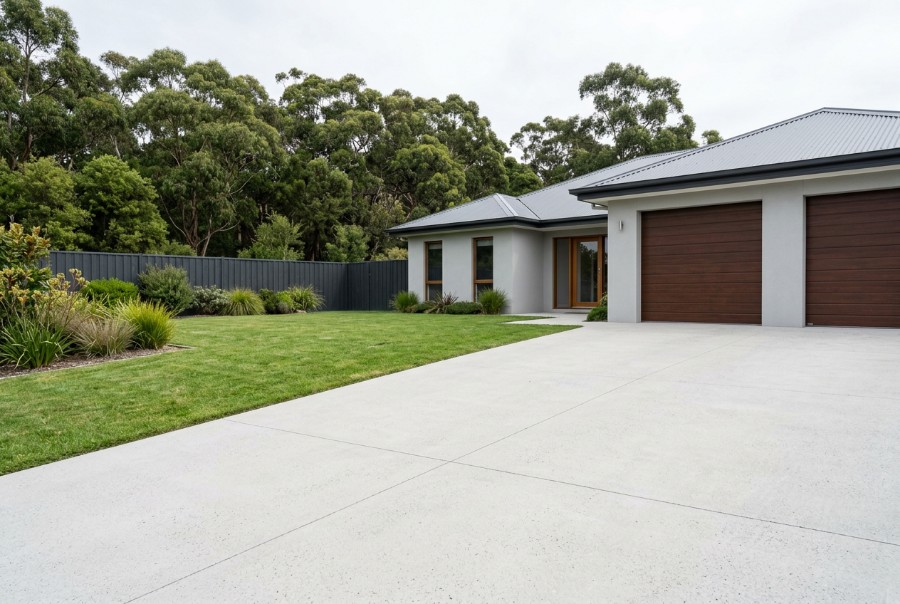
It works, and it looks sharper than anything else on a small frontage. It wants a grip additive if it slopes or sits in shade.
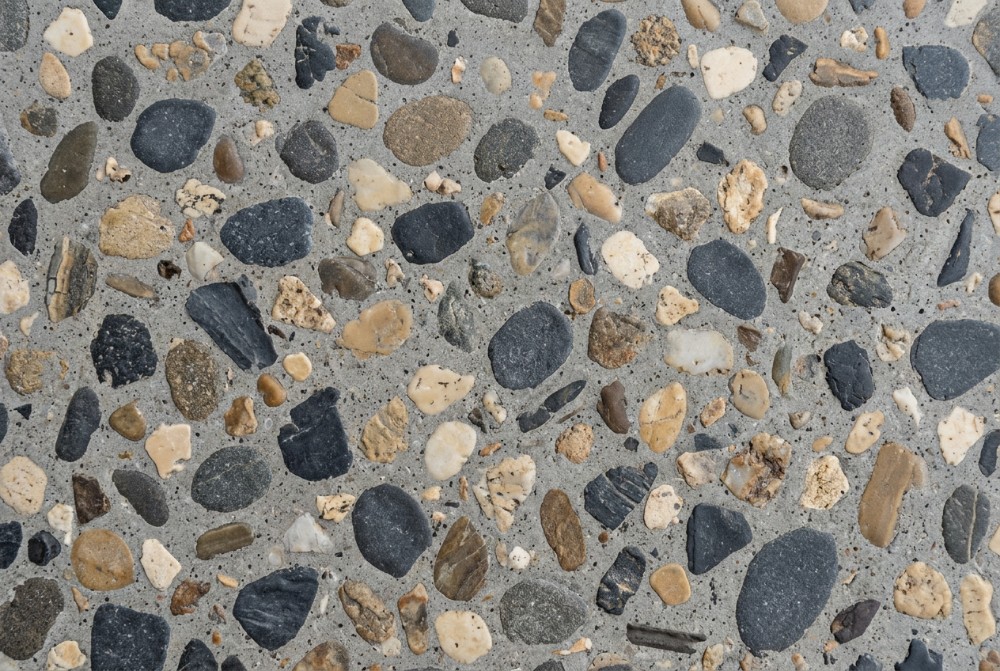
Ground further so the larger aggregate reads clearly, flush rather than proud. Closer to a terrazzo look without leaving the slab.
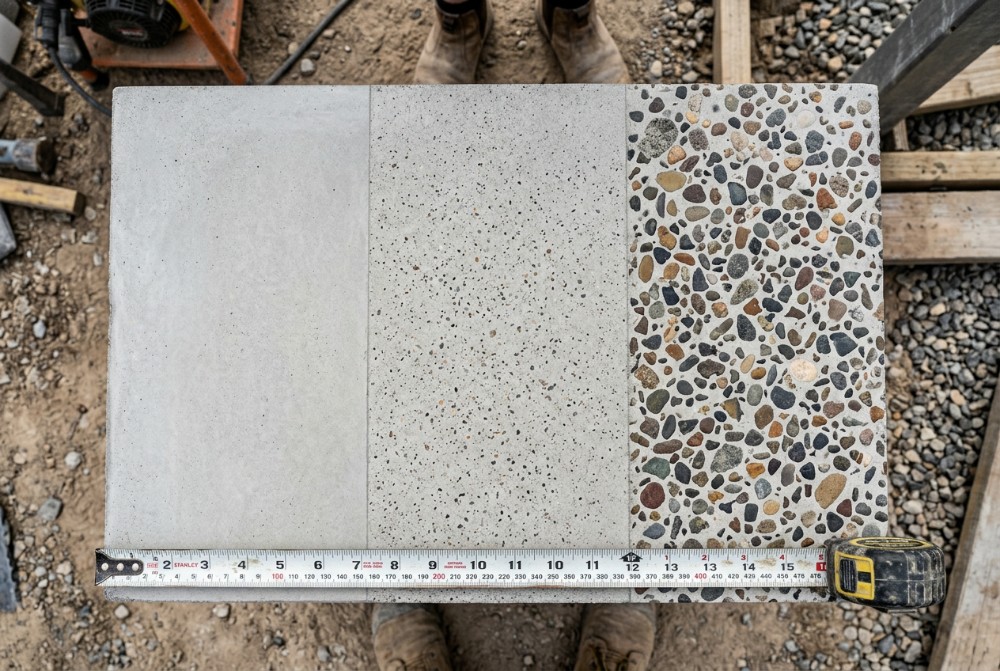
The same concrete taken to three different grinds, which is the clearest way to see what the decision actually changes.
Ask at the measure and we will show you the real thing before you choose, because honed concrete changes with the light on it.
Unlike exposed aggregate, honing does not happen on pour day. The slab goes down, it cures, and then it is ground, which means two visits and a gap between them.
Levels, falls and the shape, plus whether the area is covered, because that decides the grind and whether it needs grip.
Out to depth, crushed rock in and compacted in layers. Honed is structural concrete, so the base does the same work it always does.
Formwork to the line and the fall, mesh on chairs, and expansion joints against anything the slab must not be tied to.
Placed, screeded and power-floated as flat as it will go. Honed shows every imperfection, so this is where the finish is really won.
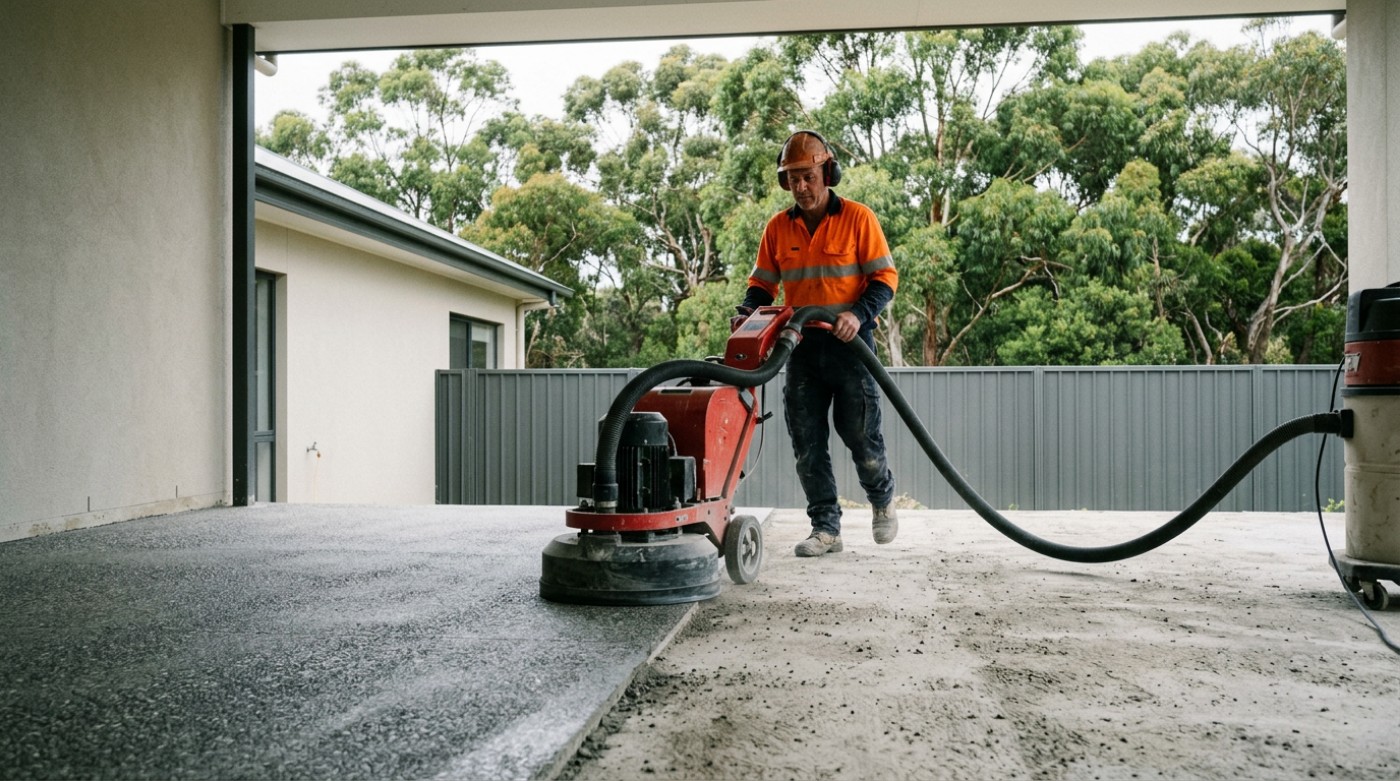
The slab cures for a few weeks, then it is ground with progressively finer diamonds to the depth you chose, and sealed if you want it.
Honed does want a bit more of you than exposed aggregate does. Not much, but it is honest to say so before you choose it.
Ask at the measure and we will show you the real thing underfoot, wet and dry.
Installed, per square metre. Honing a fresh pour and honing a slab you already have are different jobs and different money.
Worked examples at real sizes, so you can see roughly where your job sits before you call. These are indicative ranges only. Final pricing depends on site conditions and finish requirements, which is what the free measure settles.
 Alfresco
40m² at our honed, full pour and hone rate
Top of the Range60m² at our honed, full pour and hone rate
Lowest Cost40m² at our honing a slab you have rate
Honed costs more than plain or exposed aggregate, because it is two operations rather than one and the grinding is slow. These are the things that move it.
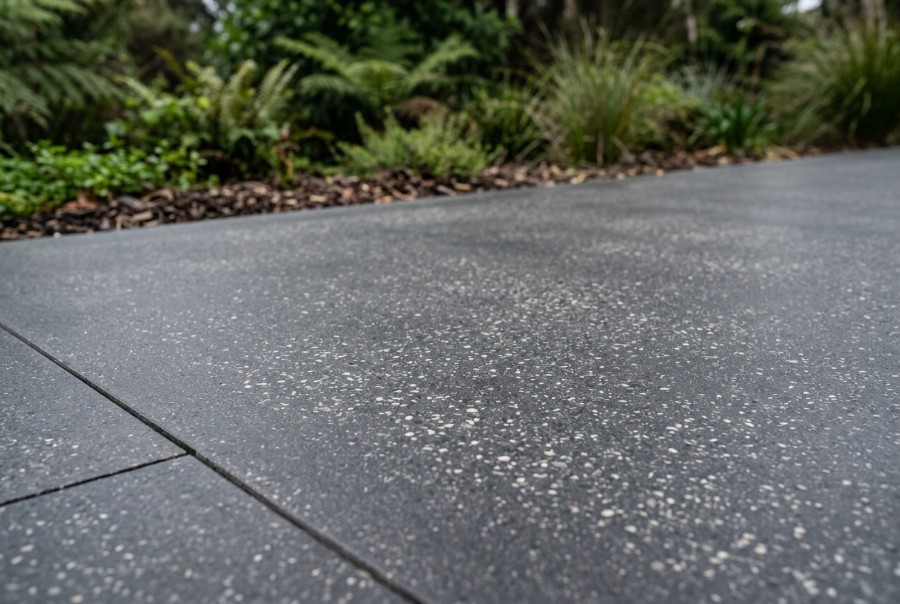
Not a cost line exactly, but the first question, because it decides whether the job needs a grip additive and how deep we grind.
A light grind is one pass. Reaching the larger stone is several, with finer diamonds each time, and the machine time is the cost.
Grinders are efficient in open runs and slow around edges, corners and anything they cannot reach. Hand work at the perimeter is real time.
Oxide in the truck is an extra, and a dark colour with a deep grind is the dearest combination on this page.
Part of the job rather than optional, and the product matters. Ask what is being used and how often it needs redoing.
An old slab out, carted and tipped. On a tight site the removal can cost more than the pour that replaces it.
Send the rough size and tell us whether it is covered or out in the weather, that one detail changes the recommendation. The measure is free either way.
Would rather talk it through? (03) 6724 3698, or send the details through the contact page.
Plus the wider Launceston area. See every suburb we cover.
It is a cured concrete slab ground back with diamond pads until the surface is smooth and matte and the stone sits flush rather than proud. Nothing is applied to it, the finish is the slab with a few millimetres taken off, so there is no coating to peel or wear through.
When it is wet, yes, unless it is finished for grip. That is the single most important thing on this page. A grip additive in the sealer solves it, and we recommend honed under a roofline rather than out in the weather for exactly this reason.
How far the grinding goes. Honed stops at a soft matte sheen; polished continues to a mirror. Polished is an indoor floor finish and is genuinely dangerous outdoors when wet. Honed is the outdoor one, and it still wants grip where it gets rain.
Often yes, and it is one of the good things about the finish. If the slab is sound, flat enough and thick enough to take a few millimetres off, it can be ground rather than replaced. We look at it before we say, a slab with a topping or a bad surface may not have enough to give.
Yes. Unlike exposed aggregate, honed is open and it stains, so sealing is part of the job rather than an upsell. It wears where people walk and wants redoing every few years, and around water it needs a grip additive in it.
It can be, and it looks sharper than anything else on a short suburban frontage. It needs a grip additive if the drive slopes or sits in shade where it stays damp, and it will show tyre marks and oil more than exposed aggregate would. Worth it if the look matters more than the maintenance.
One call and we come out, measure the real thing and put a price in writing. It costs nothing and there is no salesman in it.
One call. We measure it and put a fixed price in writing. Costs nothing.
Would rather type it out? Send the details instead