Measured and Quoted on Site
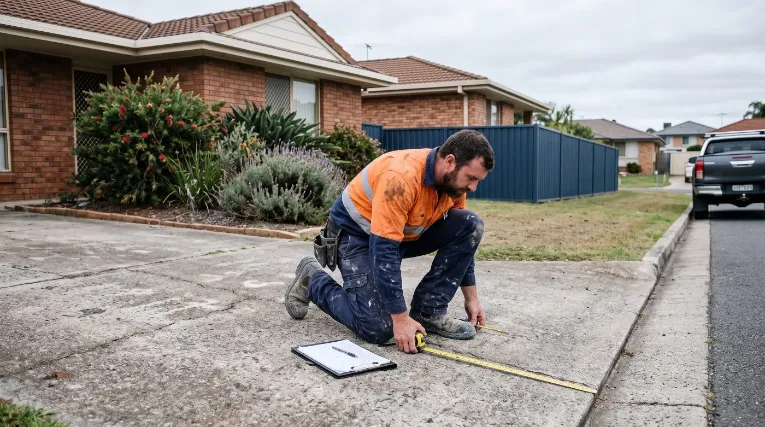
Not off a photo. We come out, look at the ground and the access, and price the actual job.
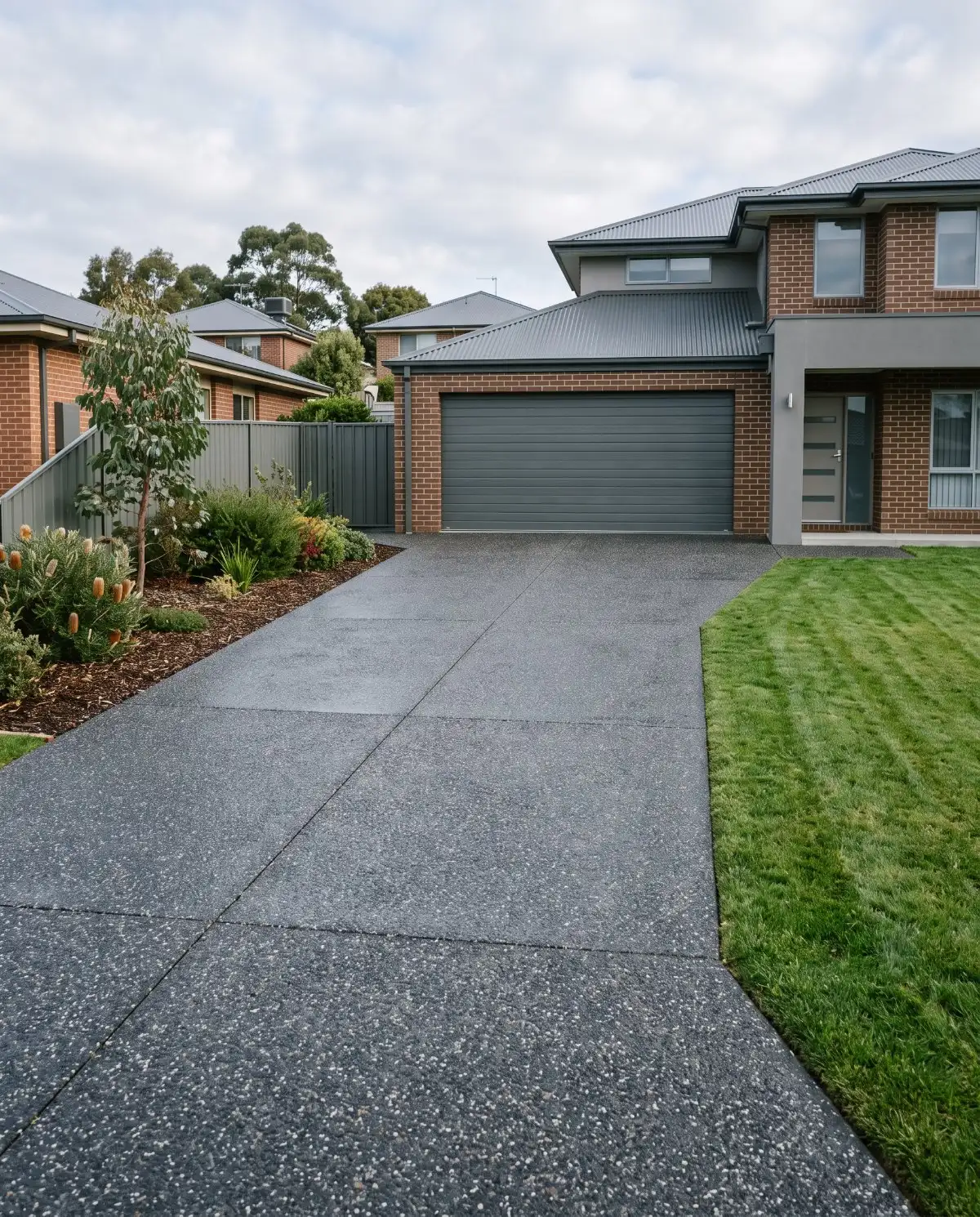
A concrete driveway is the biggest slab most Launceston houses ever get, and it is the one everybody sees. How long it lasts comes down to the excavation, the base, the reinforcement and the drainage under it, the parts nobody sees once it is poured.
Not off a photo. We come out, look at the ground and the access, and price the actual job.
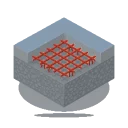
Excavation, a compacted base and reinforcement to spec, the half that decides how long it lasts.
One written price for the whole job, not a rate per square metre, and the site is left clean.
Two real sizes plus the crossover, so you have a figure before you ring rather than after. Most Launceston driveways land between the two.
 Single driveway, about 32m², plain$1,900 – $3,850The common suburban driveway, one car wide, straight run to the street.Double driveway, about 60m², exposed$6,500 – $10,000Two cars wide in exposed aggregate, standard access, no retaining.
 Council crossover, if yours needs one$800 – $2,000A separate job with a permit attached. Not every driveway needs one.
These are indicative ranges only. Final pricing depends on site conditions and finish requirements, which is what the free measure settles.
The crossover is the part of the driveway in front of your boundary, including the kerb and channel. In the City of Launceston, all new, replacement, altered or repaired crossovers need a council permit, and a planning application may also be needed.
Other northern Tasmanian councils set their own rules, and we check yours at the measure. City of Launceston driveway and crossover rules
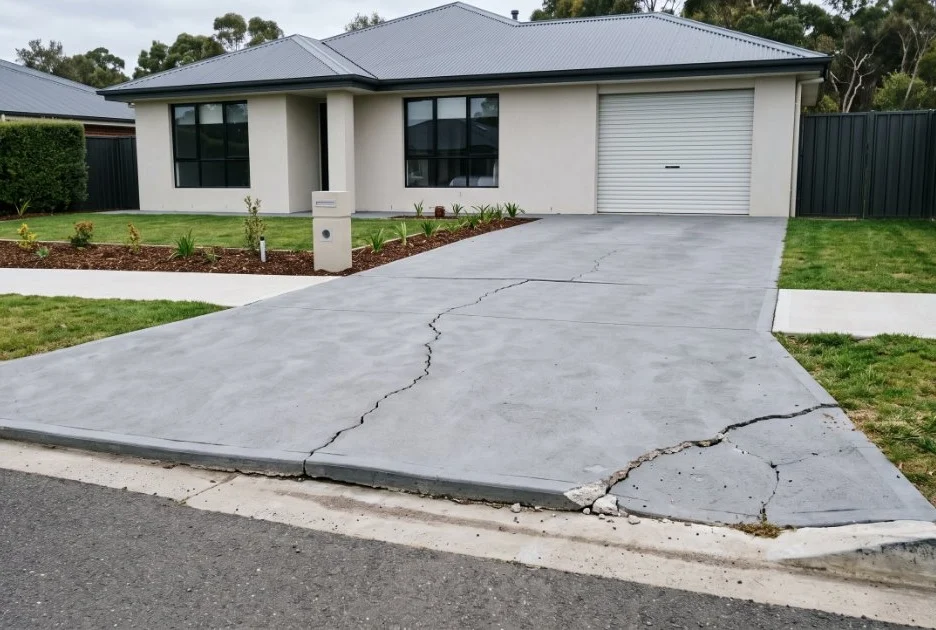
Most driveways we are called to already have one. The question is never really what it costs, it is whether the slab you have can be saved. Three answers, and which one you get is decided on site in about ten minutes.
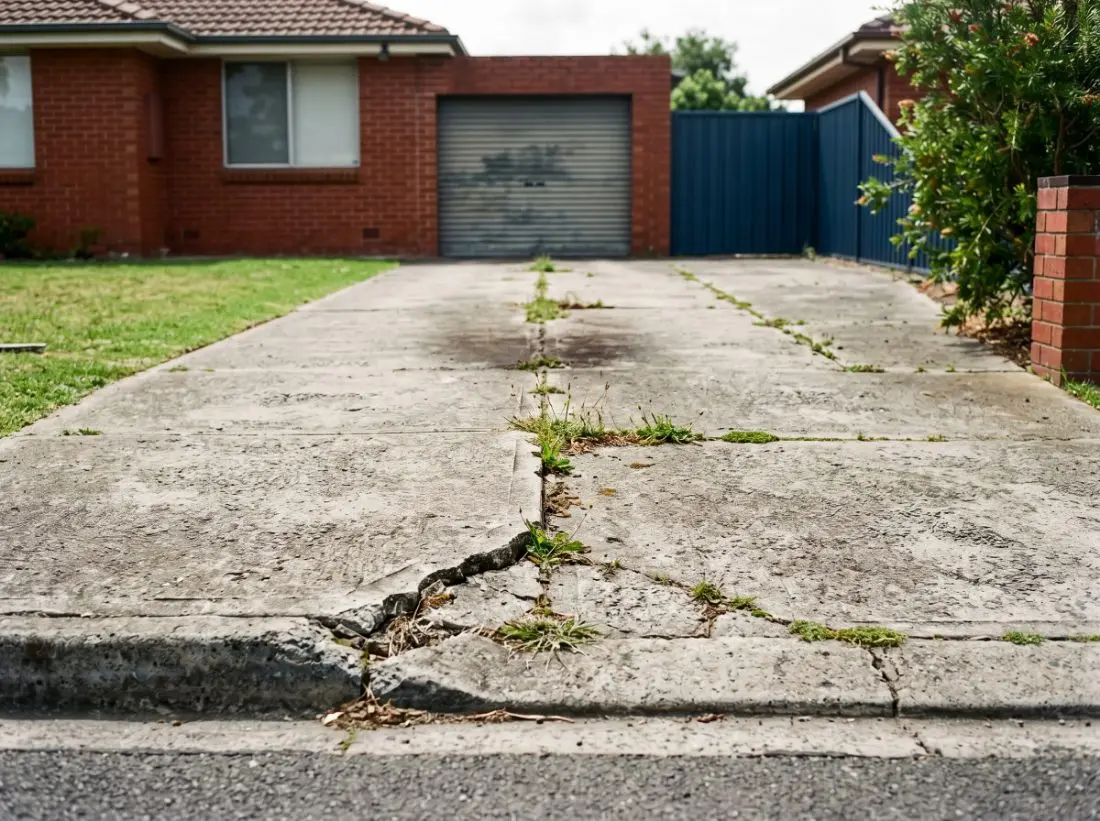
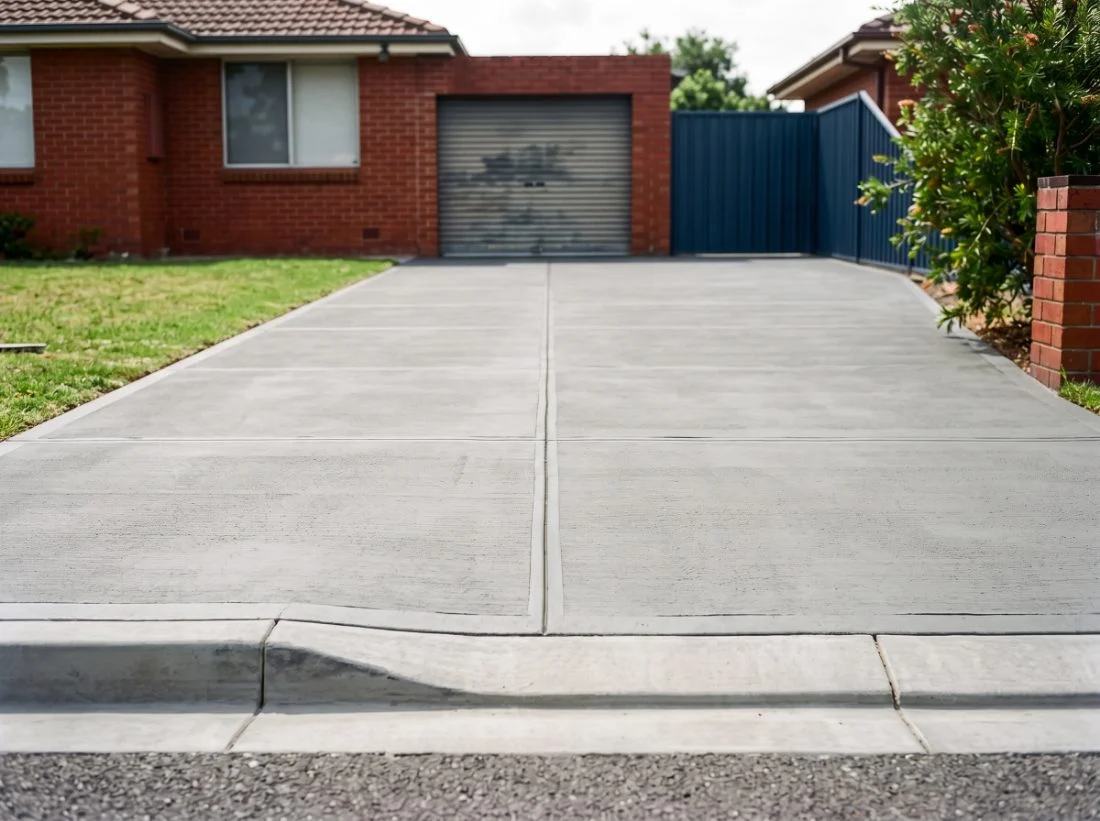
The slab is sound underneath, sitting flat, and the problem is the surface: worn, stained, dated, or a finish you no longer like. An overlay bonds to what is there and you keep the base you already paid for. Cheapest of the three by a distance.
One or two cracks, a broken corner at the kerb, a section that has dropped. If the rest of the slab is holding and the ground under it has stopped moving, cutting out and replacing the bad section costs a fraction of the whole driveway.
The cracking is through the slab rather than in the surface, one side sits proud of the other, or the base under it has washed out and is still moving. Nothing you put on top of that lasts, because the fault is underneath and an overlay inherits it.
The line most quotes leave vague is what happens to the old one. Breaking out a single driveway, carting it away and tipping it is real money and it is charged whether the quote separates it or not. Ours names it, so you can see what you are paying to remove and what you are paying to build.
The ranges above are real figures. What follows is what decides where inside them your driveway lands. These are the things that actually move the number, and we work them out on site before we write anything down.
Square metres set the bulk of it. A long straight run is cheaper per metre than the same area cut into curves and corners, because the boxing takes longer than the pour.
An old slab has to come up and go somewhere. Breaking out, carting away and tipping is real money, and it is the line most quotes leave vague.
Soft or reactive ground needs more base, deeper edges or more steel. This is why we look at the site rather than pricing off a photo.
Where the water has to go decides the levels. A driveway that runs toward the house needs a grate and a drain, and that is a different job.
Plain broom is the base. Exposed aggregate, colour through the mix, honing or sealing each add cost, and each behaves differently underfoot and under tyres.
If the truck cannot get near it, the concrete has to be barrowed or pumped. Pumping is a line on the quote, not a surprise on the invoice.
Measure the length and the width at the widest point. It will not give you a price. Nobody honest can price a driveway off two numbers, but it tells you the area, and it tells us most of what we need before we come out.
Based on a 100mm slab with thickened edges. It is a starting point for the conversation, not a quote.
Have those two numbers when you ring and we can tell you straight away whether it is a half day or a two day job, whether the truck will reach it, and what the finish options do to the number.
Send the size and where it is, or ring us. We come out and measure it properly, free either way.
Would rather talk it through? (03) 6724 3698, or send the details through the contact page.
Plus the wider Launceston area.
Most of a driveway is decided by the site. These five are yours, and they are the ones worth ten minutes of thought before anybody pours anything.
Broom, exposed aggregate, coloured or honed.
A broom finish grips and hides nothing. Exposed aggregate hides tyre marks a broom will show for years and is the most common choice here. Honed is calmer underfoot, and it is the one that shows a bad pour, so it has to be right.
Through the mix, not painted on.
Oxide goes in at the truck and goes all the way through, so a chip shows the same colour rather than grey. Anything painted or stained on afterwards is a maintenance job you have signed up for without being told.
Where you want it to crack.
Concrete cracks. The only question is whether it cracks on a line we cut or across the middle of your driveway. Spacing follows the shape, and the cuts go in early rather than when someone gets around to it.
Thickened where the load is.
The edge is where a driveway fails first, because it is where the wheels are and there is nothing beside it holding it up. Edges get thickened, and so does the strip where cars turn in off the kerb.
Where the water goes on a wet week.
Fall is set at the measure and checked before the pour. Water that ponds is a nuisance; water that runs at the house is a problem you live with for decades.
Everything that decides whether a driveway lasts is buried before the concrete arrives. You cannot see any of it from the kerb, which is exactly why it is the first thing cut when a quote is sharpened.
A quote can come down four ways, and all four are invisible on the day it is finished. This is what to ask about when you are comparing prices.
Got a quote in front of you? Read it against that table, then call us and we will tell you, line by line, what is in ours.
(03) 6724 3698A driveway is not a one day job, and the waiting afterwards matters as much as the pour. These are general rules and the weather moves them, which is why we tell you the actual dates at the quote.
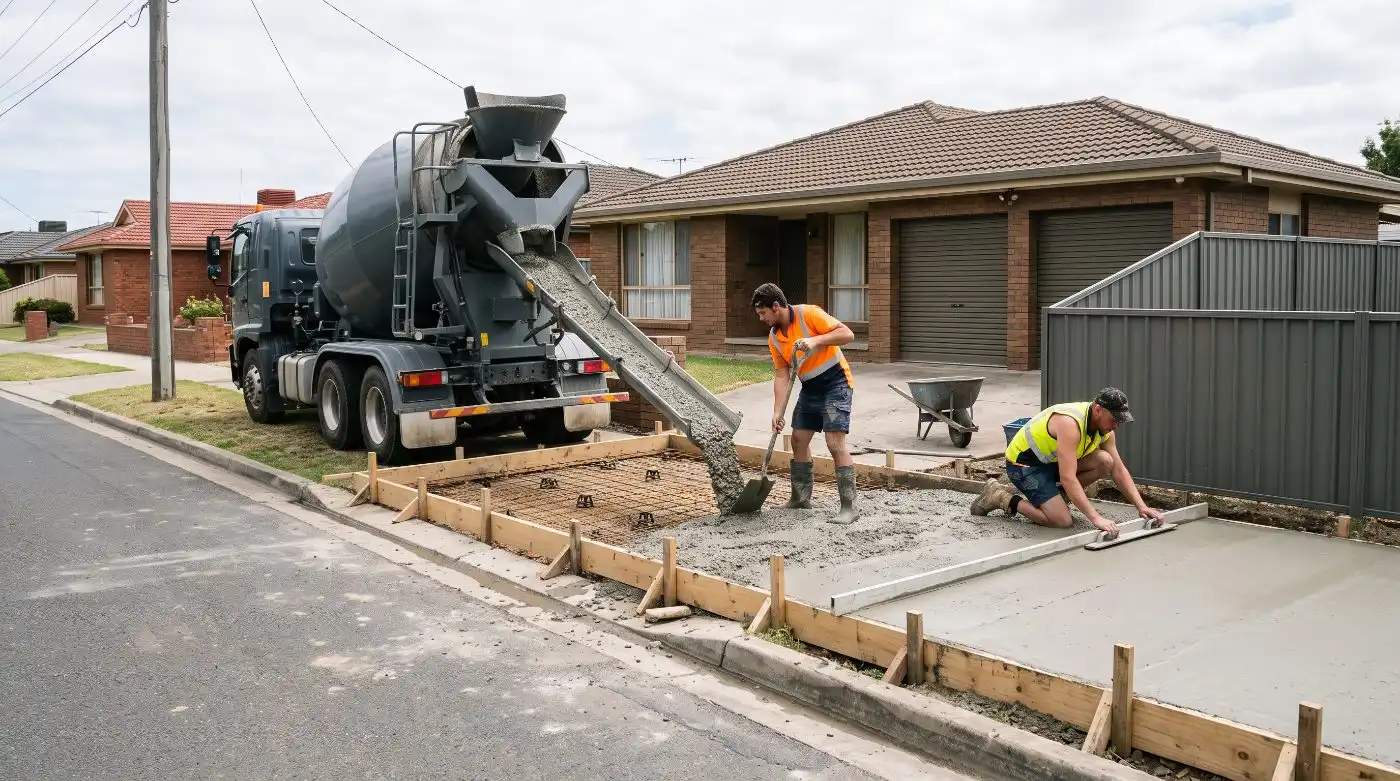
Old slab out, base in and compacted, boxing set.
Poured, screeded, floated and finished the same day.
You can walk on it. Keep everything else off.
Early, while it is still green enough to cut clean.
Longer in a cold week. Twenty-eight days for the full strength.
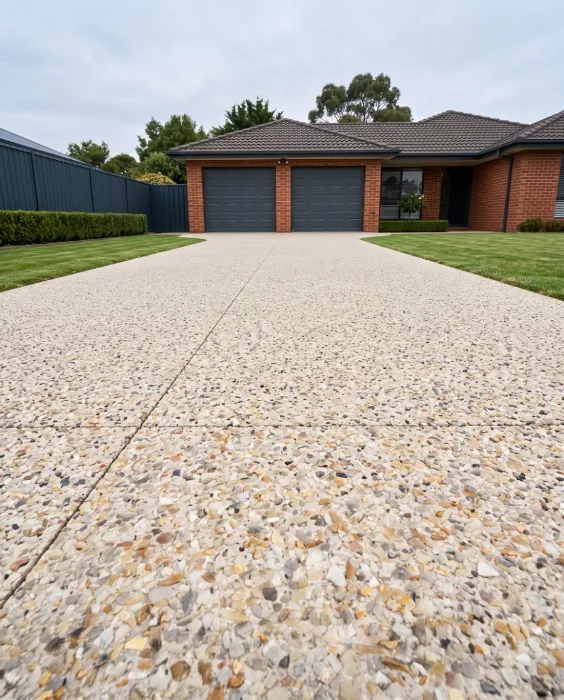
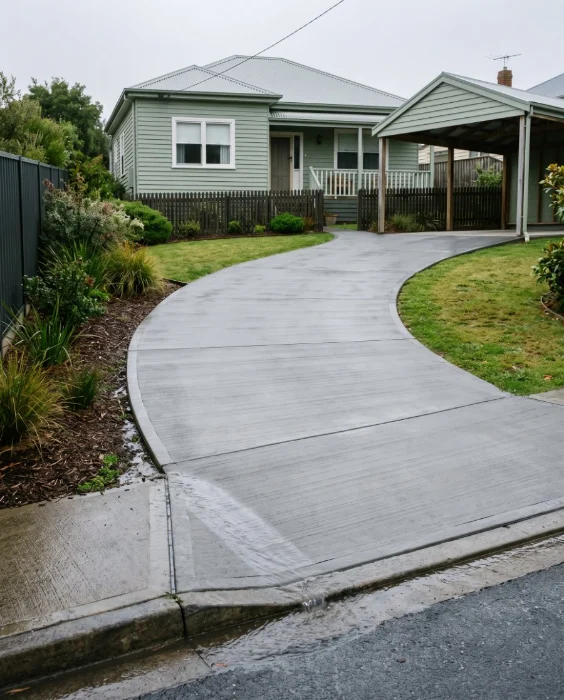
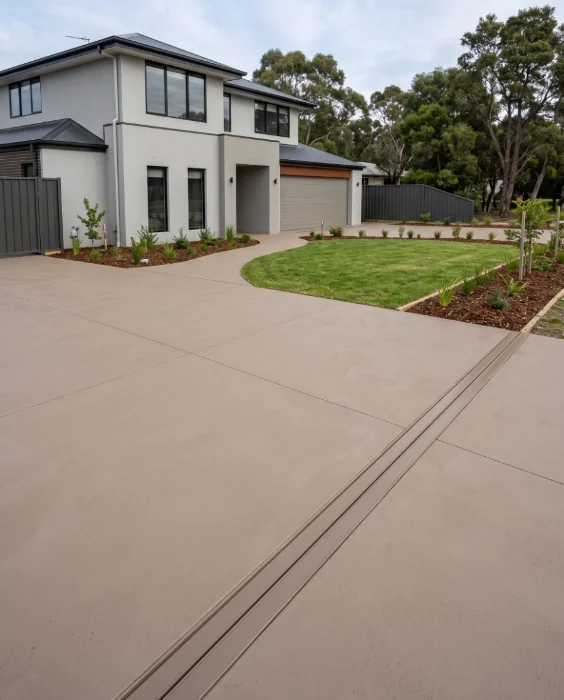
The same slab in four finishes. Every one of them is poured here in Launceston, and we will show you the real thing at the measure before you choose.
Not sure which of these suits your place? Tell us what the house looks like
A residential driveway is 100mm thick through the field, with the edges and the turn-in from the kerb thickened beyond that. Anything thinner is where cracking and edge breakup start. Thickness on its own is not enough. It works with the base under it and the mesh in it.
About seven days for a car, and longer through a cold Launceston week because concrete gains strength slowly below ten degrees. You can walk on it after about a day. Full design strength is twenty-eight days, and heavy vehicles should wait for it.
Concrete moves as it cures, so the honest answer is that it will crack somewhere. The job is deciding where. Control joints are saw cut early at spacings that suit the shape, so the movement goes into a straight line you chose rather than across the middle.
Usually not for the driveway on your own land. The crossover, the part in front of your boundary including the kerb and channel, is different: in the City of Launceston all new, replacement, altered or repaired crossovers need a council permit, and a planning application may also be needed. Other northern Tasmanian councils set their own rules, and we tell you which part of your job needs what before you commit.
It hides tyre marks and surface wear that a plain broom finish shows for years, and it grips well when wet, which matters here. It costs more. Plain broom is not a lesser job. It is the base finish and it is entirely correct for a driveway.
Yes. Where the old driveway has to come out, we break it out, cart it away and tip it, then re-do the base before the new pour. Removal is named on our quote, so you can see what you are paying to remove and what you are paying to build.
Yes. The fall is set at the measure and checked before the pour, so water runs out to the street instead of ponding or running at the house. Where water would sit at the garage door, a strip drain goes in across the threshold.
We generally do not pour a new driveway over an old one. Overlaying an old slab means the new one inherits its cracks and movement, and you lose height at the door and the kerb. If the old slab is sound and sitting flat and only the surface is the problem, resurfacing it is usually the better option. Otherwise it comes out, and the cost of removing it belongs on the quote rather than in a surprise.
One call and we come out, measure the real thing and put a price in writing. It costs nothing and there is no salesman in it.
One call. We measure it and put a fixed price in writing. Costs nothing.
Would rather type it out? Send the details instead