HomeBlogAboutContactGET A QUOTE
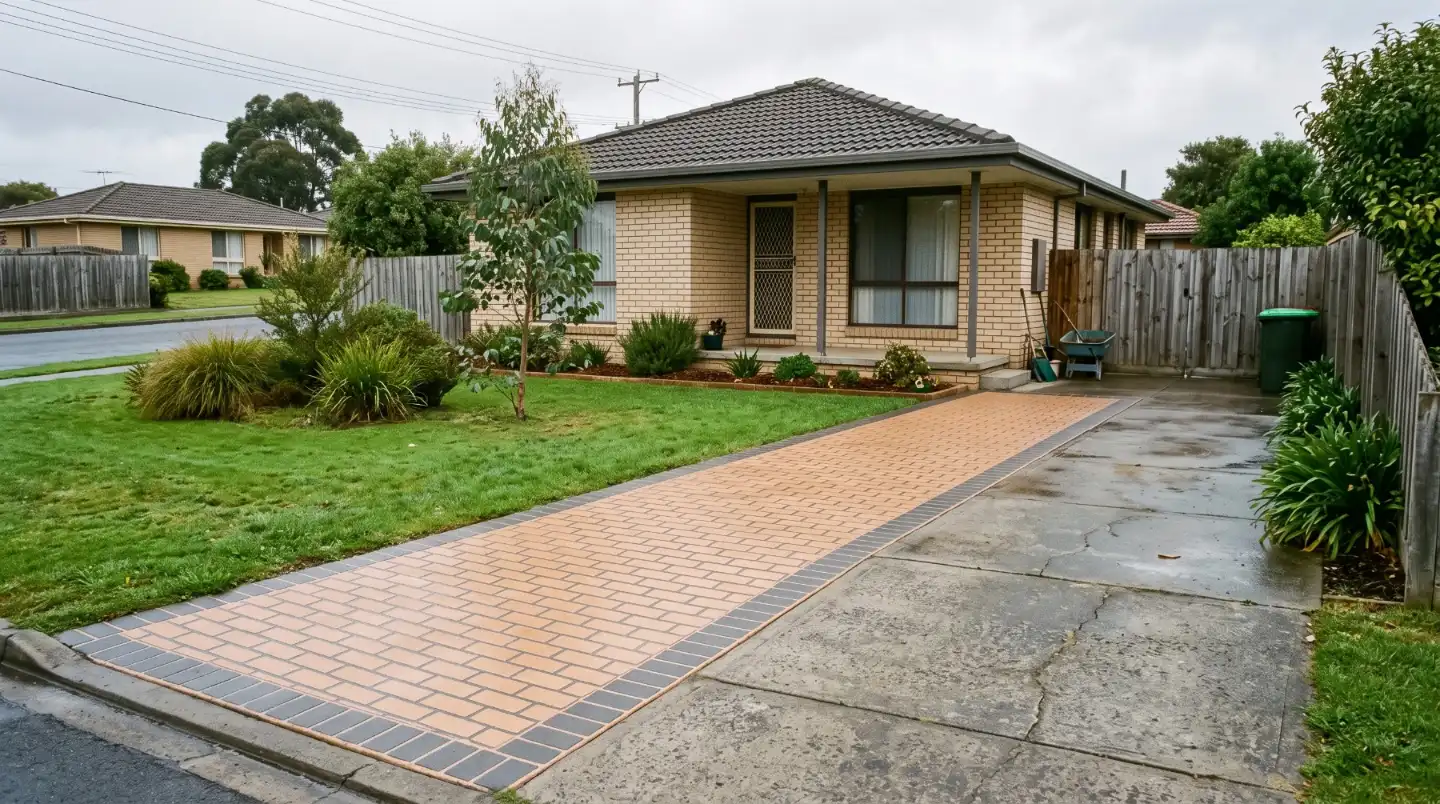
Resurfacing puts a new surface over the Launceston slab you already have. When the concrete underneath is sound it is the best value on this whole site. When it is not, it is money spent on hiding a problem for two years.
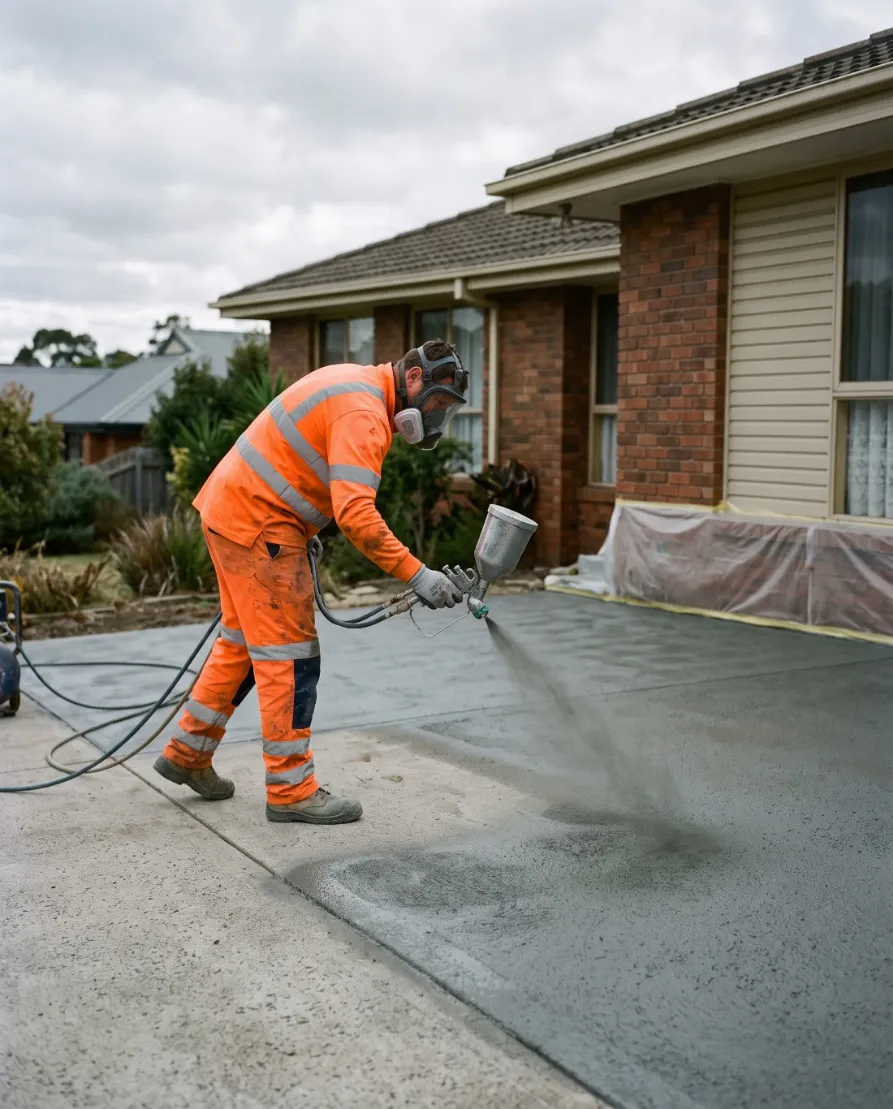
Resurfacing is a thin cementitious layer, a few millimetres, bonded onto existing concrete. It is not paint and it is not a new slab, and knowing which of those it is closer to explains most of what follows.
A polymer-modified cementitious mix. It is far more durable than a paint or a sealer, and it behaves like thin concrete because that is roughly what it is.
Thick enough to give a new colour and texture, nowhere near thick enough to add strength. The slab underneath still does all the structural work.
The old surface is ground or acid-etched and cleaned so the new layer can key into it. Skipping that is why failed resurfacing looks like peeling paint.
Falls, levels and drainage stay exactly as they are. Resurfacing will not fix water running the wrong way, that needs concrete, not a coating.
Which is the whole appeal, and it is real, provided the slab under it has years left in it.
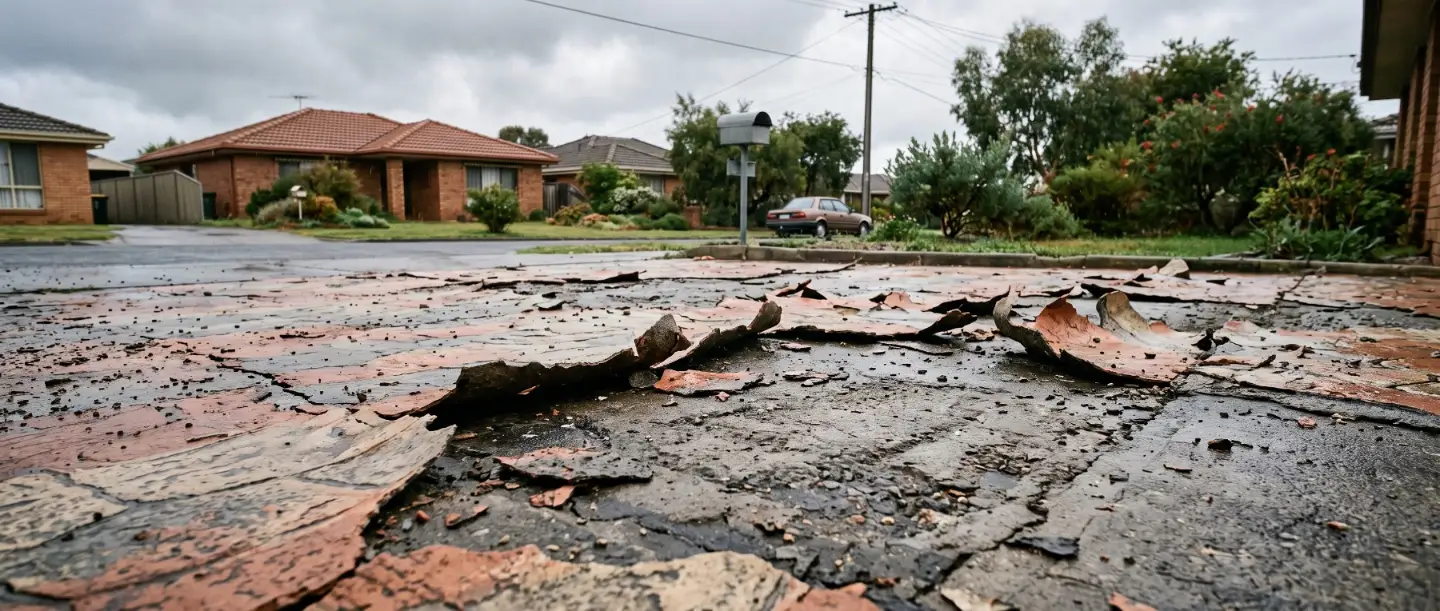
This is the section the resurfacing trade tends not to write. A coating over a failing slab fails with it, usually within two summers.
Same idea underneath, three quite different looks, and the choice is mostly about where the area is and how much texture it needs.
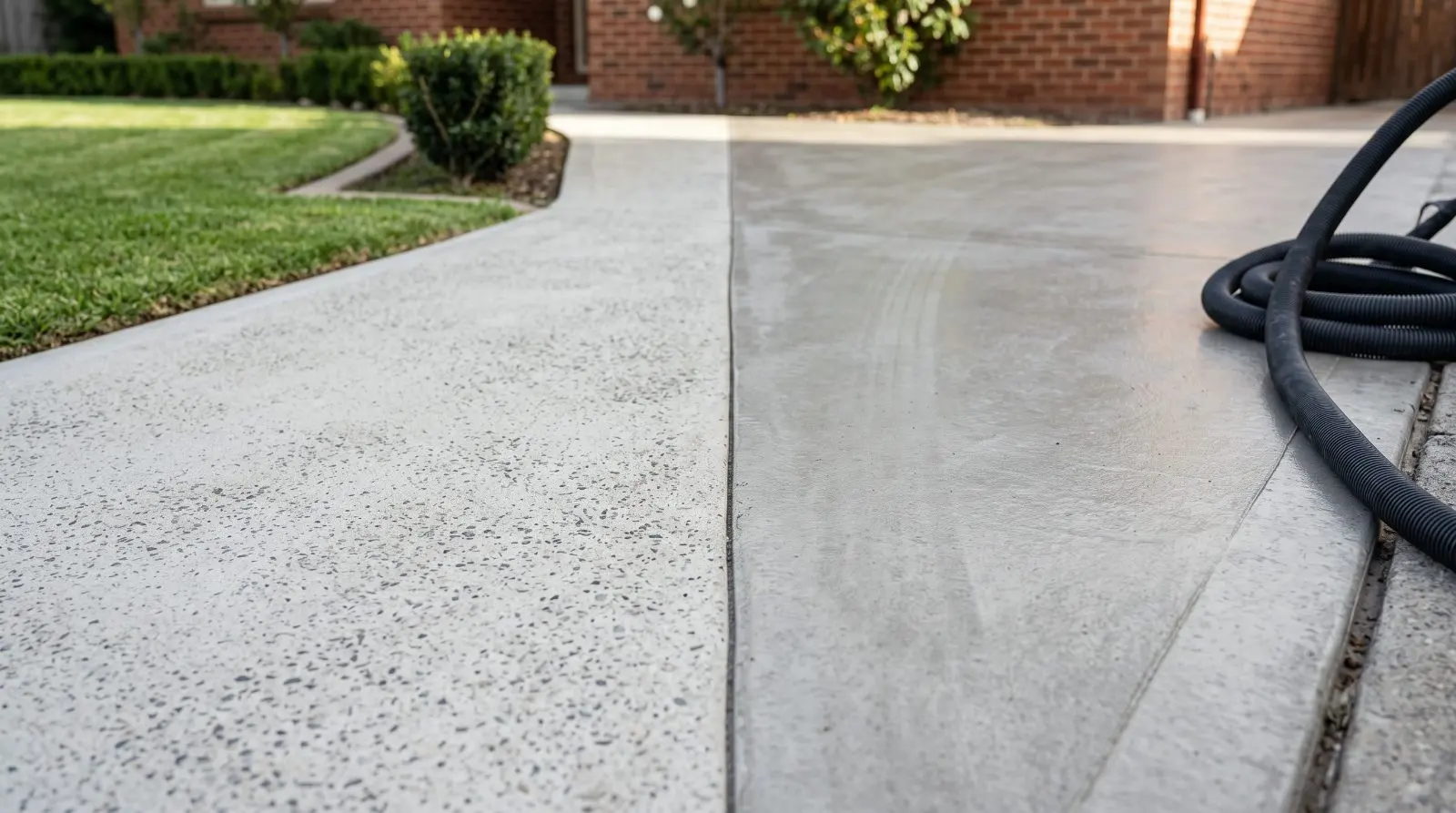
Applied with a hopper gun in a fine spatter, then usually knocked back with a trowel. It gives an even, slightly textured surface with good grip, takes colour well, and it is the most common driveway finish. This is what most people mean when they say spray on concrete.
A paper stencil is laid down before the topping goes on and lifted afterwards, leaving a brick, tile, cobble or slate pattern with contrasting grout lines. It is the classic Australian driveway resurface, it hides marks well, and it dates faster than a plain finish, which is worth knowing before you choose it.
Applied and trowelled flat like a render, for a smooth modern surface. It suits covered alfrescos, patios and indoor floors. Outdoors it wants a grip additive, for the same reason honed concrete does.
All three take colour and all three want sealing. What decides whether they last is the preparation underneath, not which one you picked.
Tell us the area and which finish you like, and we will price it against replacing the slab too.
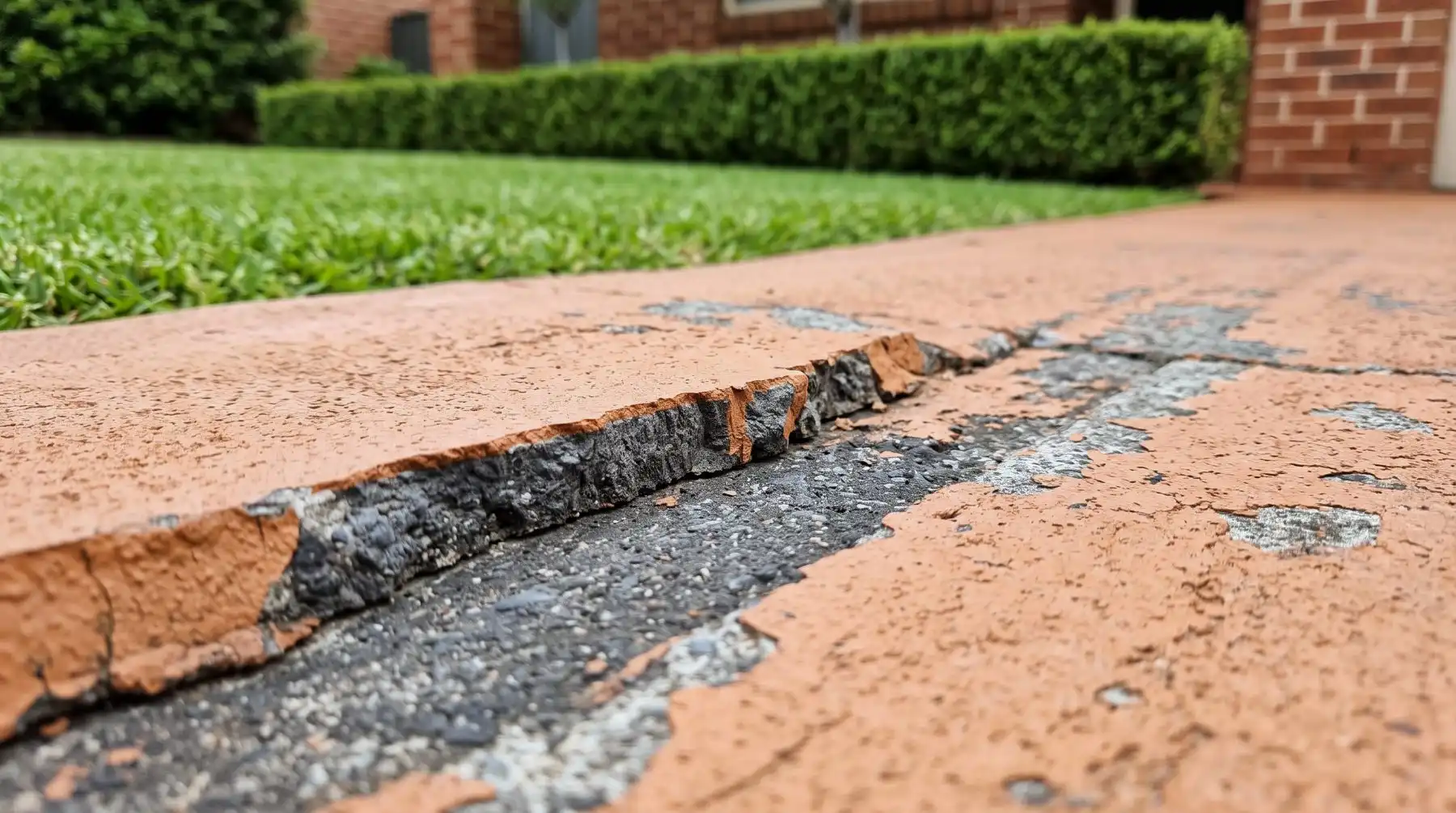
On a new pour we put oxide through the mix so the colour goes all the way through. Resurfacing cannot do that, the colour is in a layer a few millimetres thick, and when it wears at the traffic line you see grey underneath. That is not a reason to avoid it. It is a reason to seal it, to expect to reseal it every few years, and to choose a colour you can live with rather than one that fights the house.
The three get compared badly, usually on price alone. Read across.
We pour concrete too, so we have no reason to sell you a topping when replacing is the better job.
The application is a few hours. What comes before it is the reason a resurface lasts fifteen years or two.
Movement, cracks, moisture and falls. This is where we tell you whether to resurface at all, and it costs you nothing.
Preparation, repairs, topping, colour and sealing in one written price. Beware any quote where the preparation is a separate surprise.
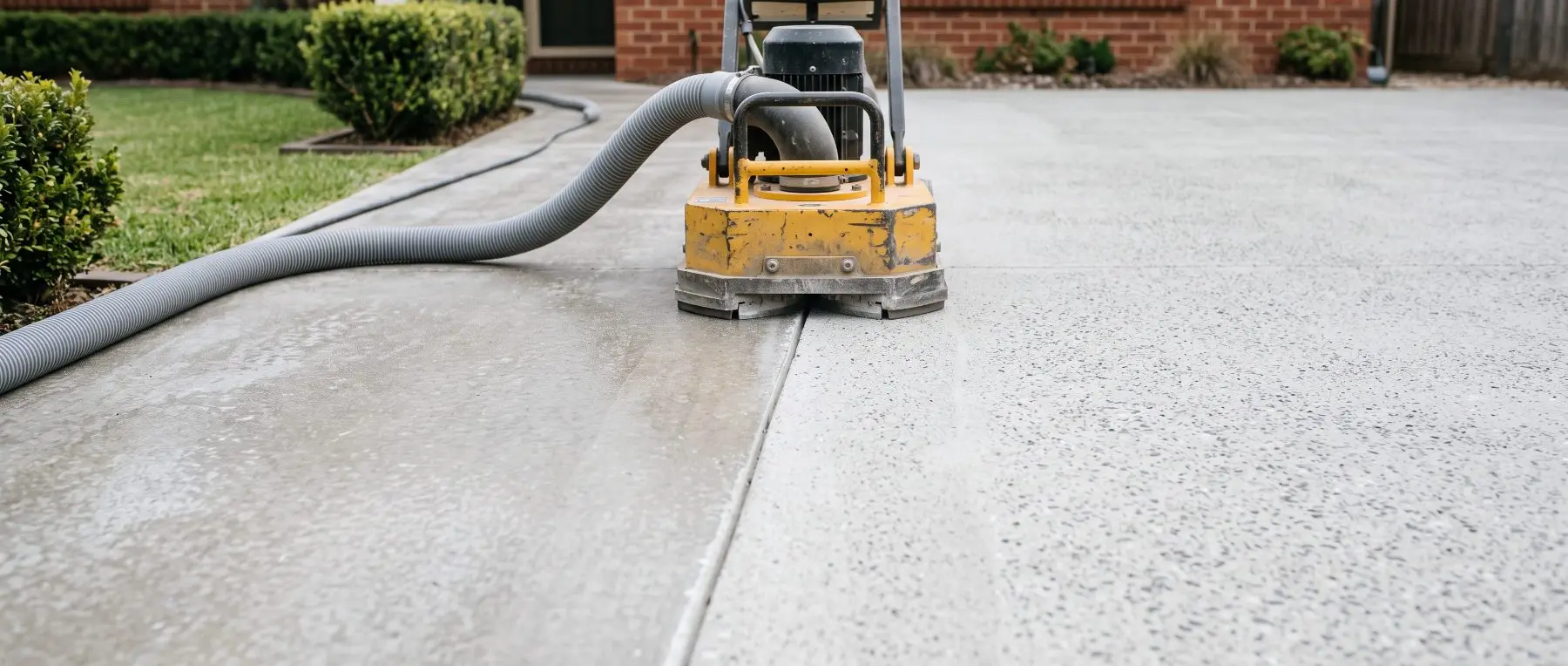
Pressure clean, then grind or acid-etch to open the surface up. Oil, sealer and loose material all have to go or the topping will not bond.
Non-moving cracks routed and filled, edges masked, a bonding primer over the lot so the topping keys in properly.
Topping sprayed, stencilled or trowelled, cut to match the joints below it, then sealed once it has cured. Foot traffic in a day, cars after a few.
A stencil or spray-on topping runs $50 to $120 per square metre, roughly a third of a new slab, and these are the things that move it within that.
The biggest line and the least visible. A clean sound slab needs a grind; an oily, sealed, patched one needs considerably more before anything can go on it.
Spray-on is the most economical. Stencil adds the stencil work and the second colour. A trowelled overlay is the most labour.
Square metres set the bulk. A simple rectangle is efficient; cutting around garden beds, steps and a curved path is slower per metre.
Cracks routed and filled, a dropped edge rebuilt, a bad patch ground out. All cheaper now than as a failure later.
One colour or two, and which sealer. Sealing is not optional on a topping, so treat a quote without it as incomplete.
The cheapest outcome on this page is us telling you the slab will not hold a topping, before you have spent anything on one.
Ask any resurfacing quote one question: what preparation is included. That single answer separates the jobs that last from the ones that peel.
Measure the length and the width of the concrete you already have. Resurfacing is priced on the area you can see, so this is the number that matters most on this page.
Area only. Resurfacing adds a few millimetres rather than a slab, so there is no concrete volume to work out. A starting point, not a quote.
Have that number when you ring, and tell us what the concrete underneath is doing. Sound and level is the good case. Cracked, lifting or moving is a different conversation and we would rather have it before we quote.
On a sound slab, properly prepared and kept sealed, ten to fifteen years is realistic and longer is common. On a slab that moves, or one that was not prepared properly, it can start lifting inside two years. Almost every failed resurface we are called to look at failed because of what was under it, not the product on top.
It is the same thing as resurfacing, a thin polymer-modified cement topping applied with a hopper spray gun, then usually knocked back with a trowel. It gives an even textured finish with good grip and takes colour well, and it is the most common driveway resurfacing finish in Australia.
It depends entirely on the crack. Hairline cracks that are not moving can be routed, filled and bridged as part of the preparation. Cracks with a step across them, or cracks that keep reopening, mean the ground under the slab is moving, a topping over that will crack in the same line within a season.
Yes, roughly a third of the cost, which is the whole appeal. The catch is that it only works on concrete that is structurally sound. Spending a third on a slab with two years left in it is not a saving, and that is the check we do before quoting.
Yes, and it is part of the job rather than an extra. The colour sits in a layer a few millimetres thick, so the sealer is what protects it from wear and staining. Expect to reseal every few years, sooner on a driveway than on a covered patio.
No. A topping follows the falls that are already there, so anywhere water sits today it will sit afterwards. Drainage problems need the concrete changed rather than covered, either a repair to the affected section or a new pour with the fall set correctly.
The whole decision rests on the concrete underneath, and that takes about ten minutes to check properly. Send a photo of the worst part and one of the whole area, or we will come and look.
One call and we come out, measure the real thing and put a price in writing. It costs nothing and there is no salesman in it.
One call. We measure it and put a fixed price in writing. Costs nothing.
Would rather type it out? Send the details instead