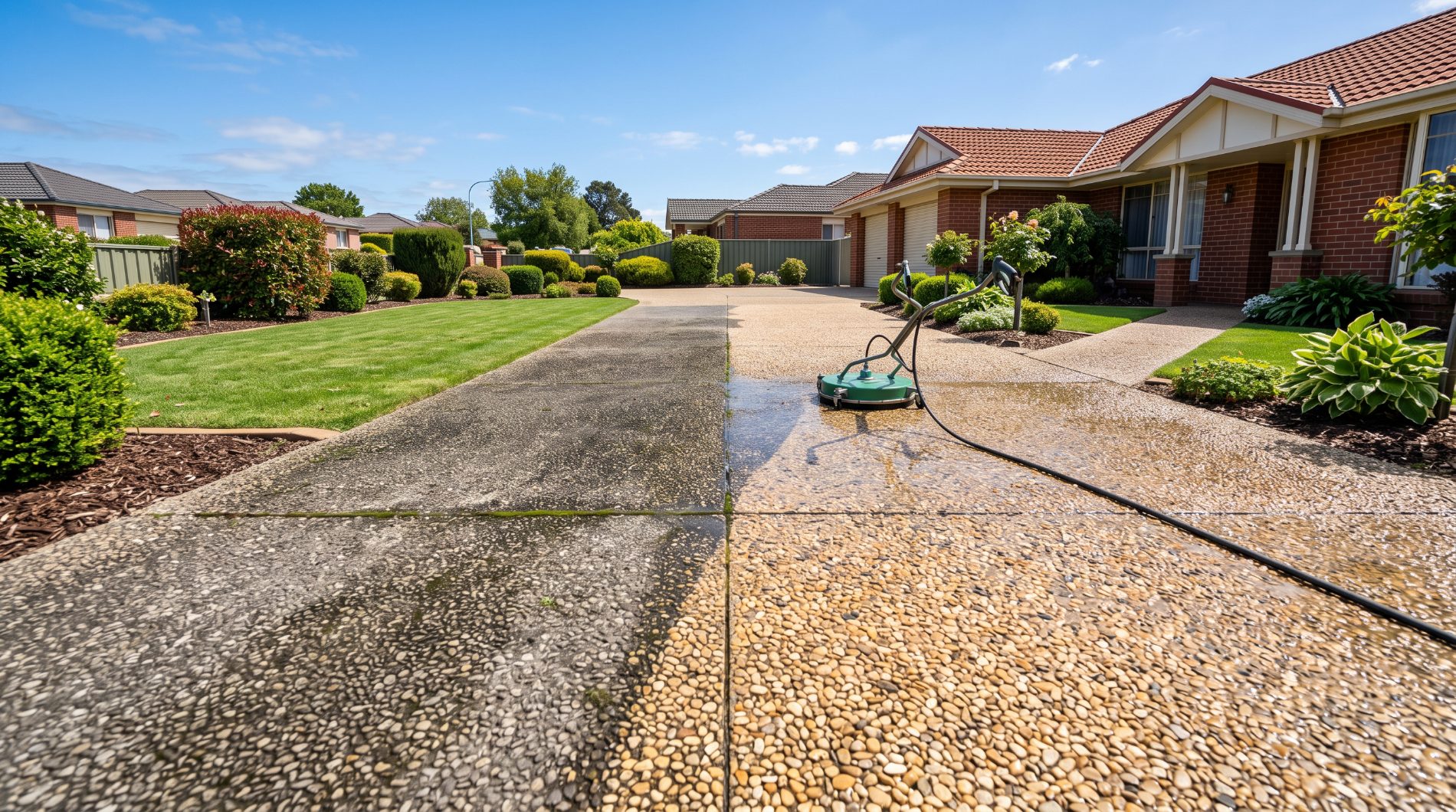
Driveway and Concrete Cleaning in Launceston
Most Launceston concrete that people think needs replacing just needs washing. The part worth knowing before you book anyone is that a pressure washer can also take the surface off, and on the wrong finish that damage does not grow back.
- Pressure and soft washing
- Sealing after
- Straight about what stays
The Pressure Has to Suit the Concrete, Not the Stain
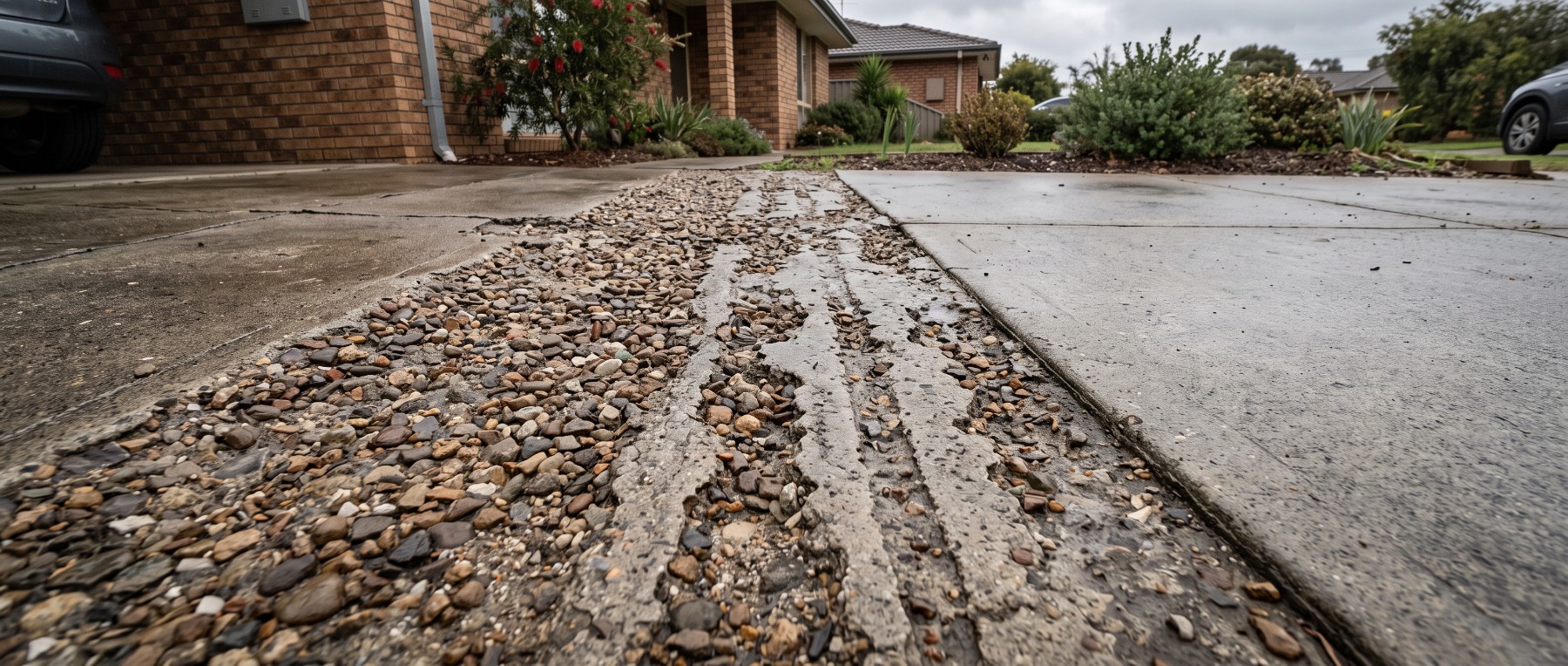
This is the whole difference between a clean driveway and a permanently marked one, and it is decided in the first two minutes of the job.
Plain Broom-finish Concrete Is Tough
A sound broomed slab takes a surface cleaner at working pressure without complaint. This is most driveways and it is the easy case.
Exposed Aggregate Needs Care
Too much pressure blasts the matrix from between the stones and the stone starts to drop out. Once it does, that patch is finished.
Honed and Polished Are the Fragile Ones
A ground surface is a finish, not just concrete, and a pressure washer will dull and score it. These get a soft wash and a chemical clean instead.
Old and Weathered Concrete Is Weaker Than It Looks
Twenty years of frost and traffic softens the surface layer. The same pressure that cleans new concrete erodes old concrete.
Which Is Why We Look Before We Start
Thirty seconds identifying the finish saves an argument that no amount of cleaning afterwards can settle.
What Comes Off, and What You Are Stuck With
Nobody in this trade likes writing the right-hand column. It is the more useful half of the page, because it stops you paying to clean something that will not change.
Comes Off
 Comes Off
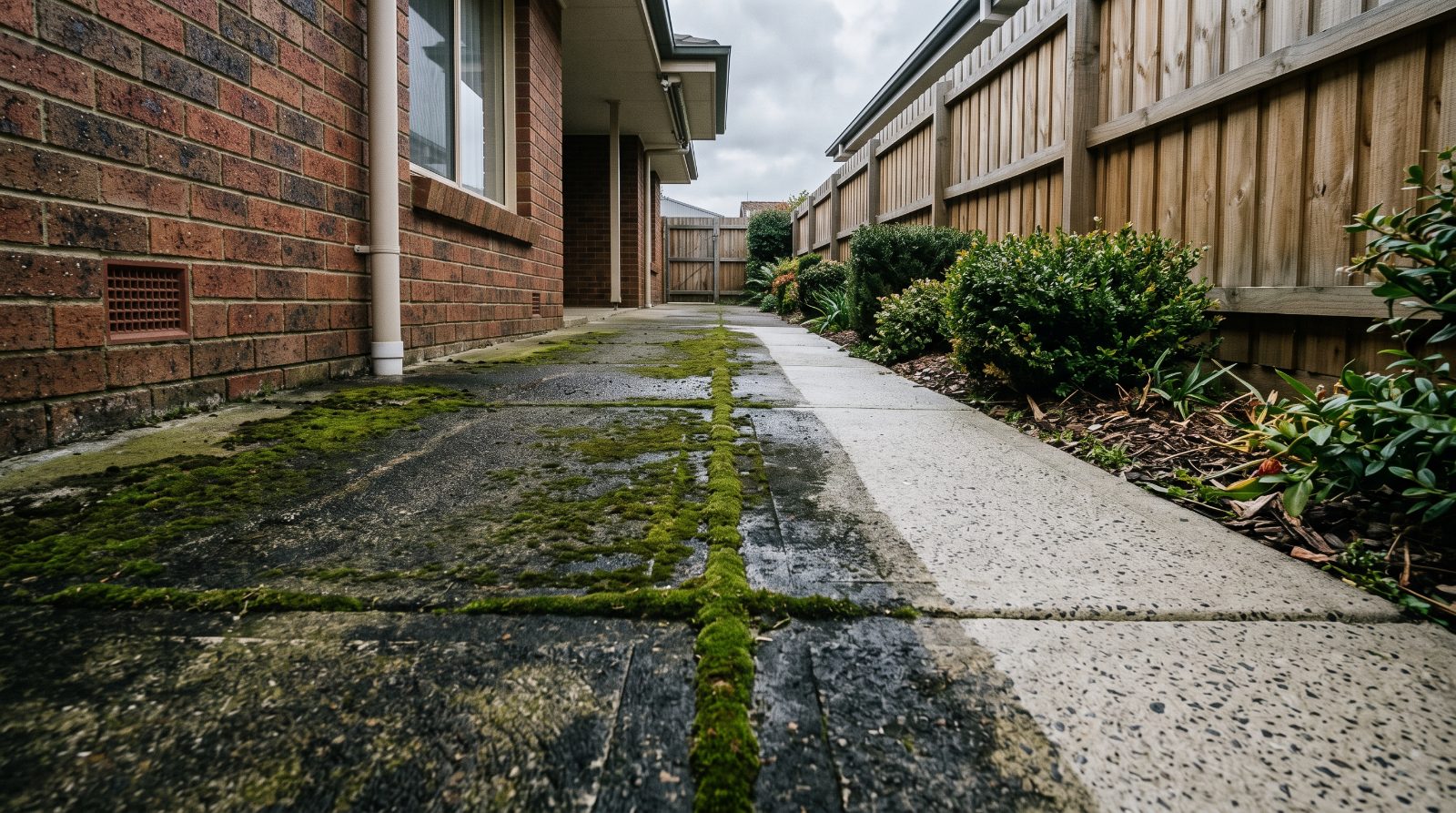
- Moss, algae and lichenThe most common complaint here and the most satisfying to fix. It lifts completely, and a soft wash kills the spores so it stays off longer.
- General grey grime and traffic filmYears of dust, exhaust and rain. It comes off and the difference is usually bigger than people expect.
- Leaf and tannin stainingThe brown marks under a gum or a liquidambar. A specific cleaner shifts most of it, and what is left fades in a season.
- Fresh oil and greaseIf it has not been there long, a degreaser and a hot wash gets most of it. The sooner it is dealt with, the better it goes.
Does Not Come Off
- Old oil that has soaked inConcrete is porous and oil travels down into it. Cleaning the surface lifts the top of the stain and leaves a shadow. Poulticing helps and rarely erases it.
- Rust from steel sitting on itA wheelbarrow, a pot plant, reo left on the slab. The rust is in the concrete, not on it, and a chemical treatment fades rather than removes it.
- Efflorescence, which comes backThe white bloom is salt coming out of the slab itself. It cleans off and returns until the moisture path behind it is dealt with.
- Paint, and anything that has etchedSpilled paint, acid, battery leak. That is grinding territory, which is a repair rather than a clean.
- The colour of the concrete itselfSometimes a driveway is not dirty. It is grey, and it has always been grey. Cleaning will not change that and we will say so rather than take the booking.
Three Ways to Clean Concrete, and When Each One Is Right
The machine is the smallest part of this. What matters is matching the method to the surface and to what is actually on it.
Rotary Surface Cleaner
A shrouded spinning head that keeps the jets at a constant distance from the concrete. It cleans evenly, it does not leave wand stripes, and it is what a driveway should be done with. Anyone cleaning a whole slab with a bare wand is doing it the way that leaves marks.
Soft Washing
Low pressure with a cleaning solution that does the work chemically, left to dwell and then rinsed. This is the right answer on honed, polished, painted and old fragile surfaces, and it kills moss spores rather than just removing the green, so it stays clean noticeably longer.
Targeted Treatment
Degreaser on oil, a specific product on rust or tannin, applied to the spot rather than the whole area. Slower, and the only thing that shifts a stain that has gone into the concrete rather than sitting on it.
Most jobs are a combination, a soft wash to kill what is growing, a surface clean for the general grime, and spot treatment where something specific has landed.
Tell us the surface and what is on it, and we will say which method it needs and what it costs.
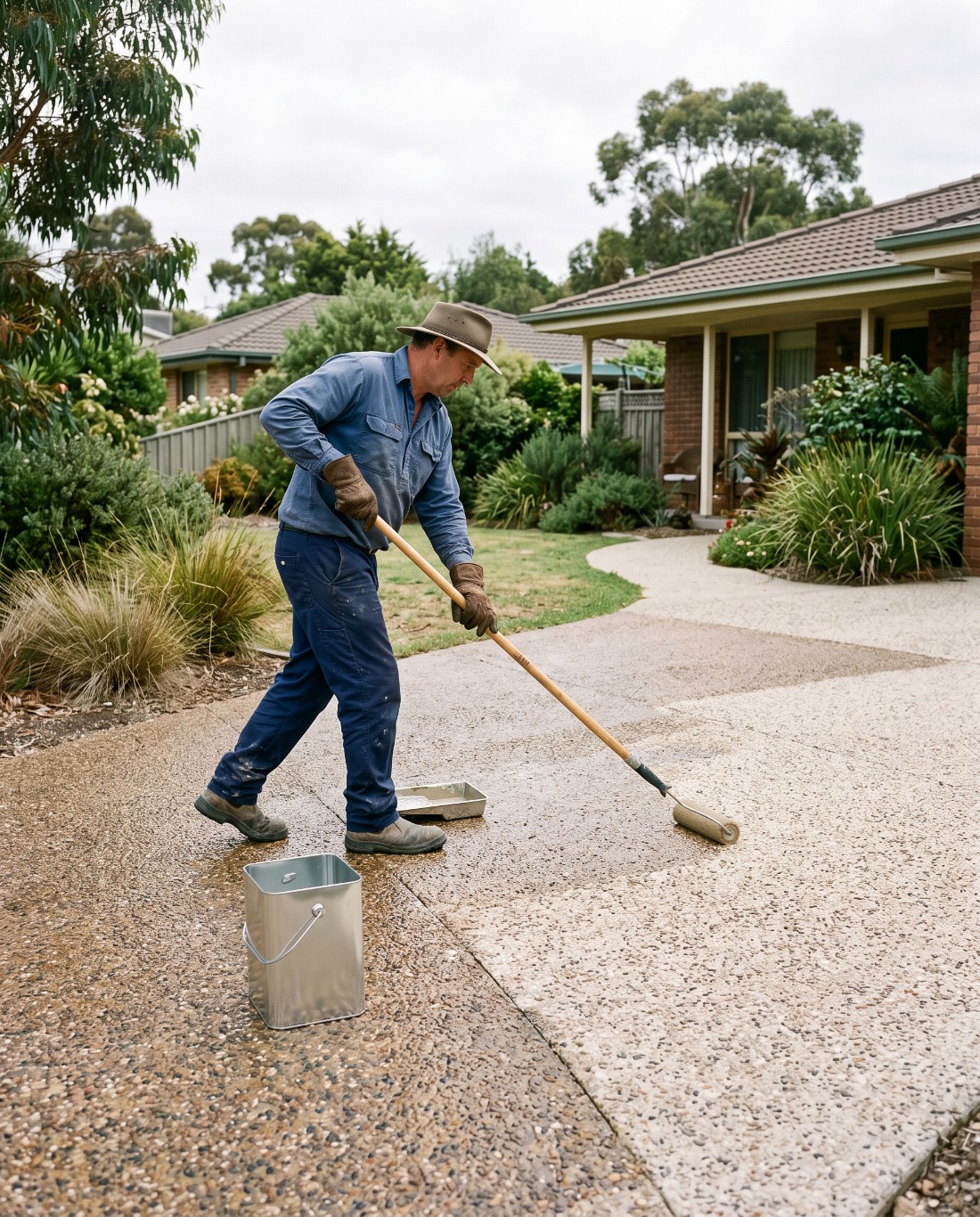
Cleaning Lasts Twice as Long If You Seal It Afterwards
A clean unsealed slab is an open surface waiting to absorb the next thing that lands on it. Sealing it while it is clean and dry closes the pores, so oil sits on top long enough to wipe up, moss has less to grip, and the colour stays richer. It is the single most useful thing you can do on the day, and it is why we quote it with the clean rather than as an upsell afterwards. On exposed aggregate the difference in how it looks is worth it on its own.
What Different Surfaces Actually Need
Rough guidance for Launceston, where the shaded south side of a house grows moss most of the year. Read across.
Send us a photo of the surface and we will tell you what will come off and what will not.
Identify, Treat, Wash, Seal
Half a day for a typical driveway, and a second visit for the sealer once it has properly dried out.
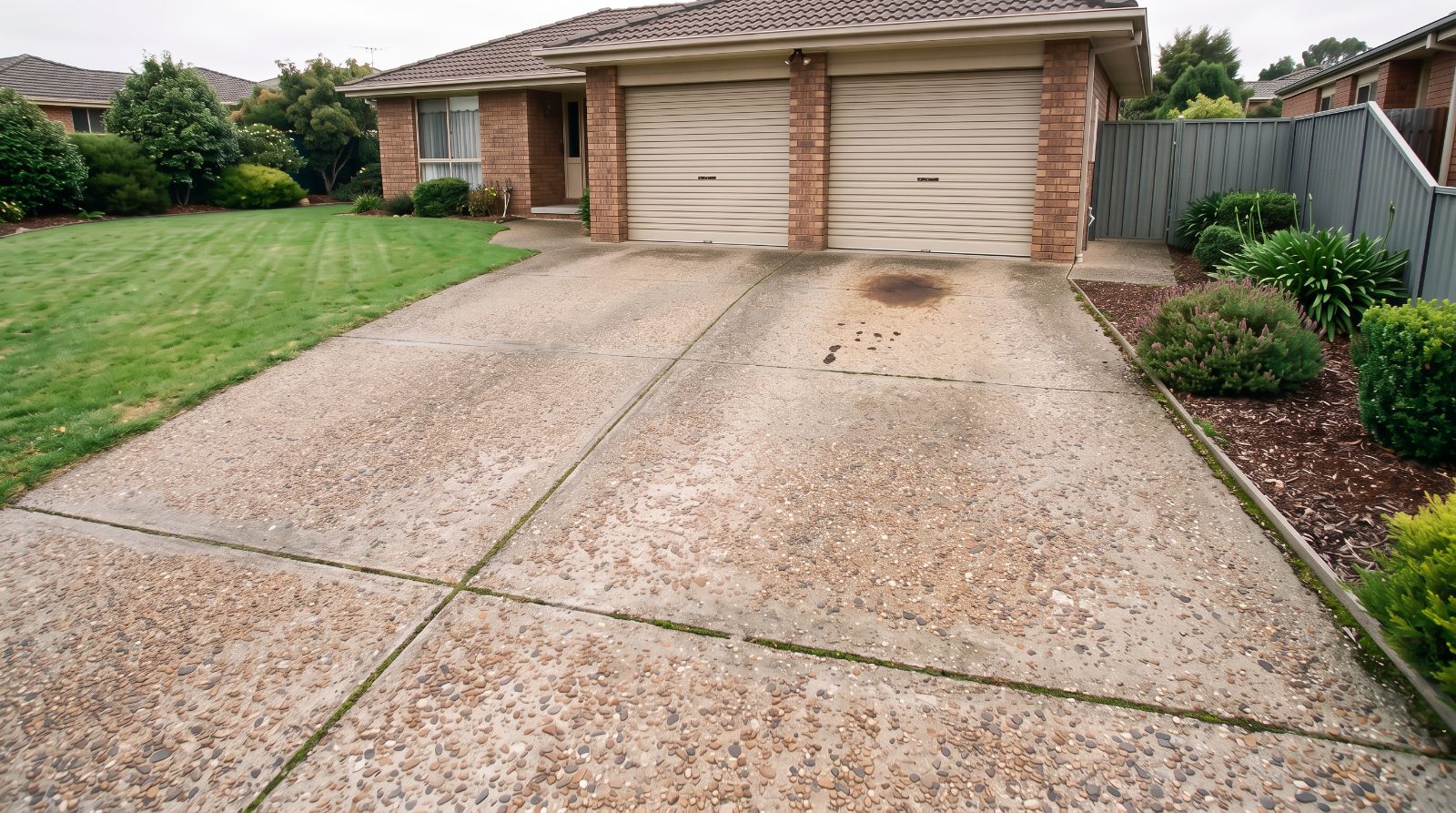
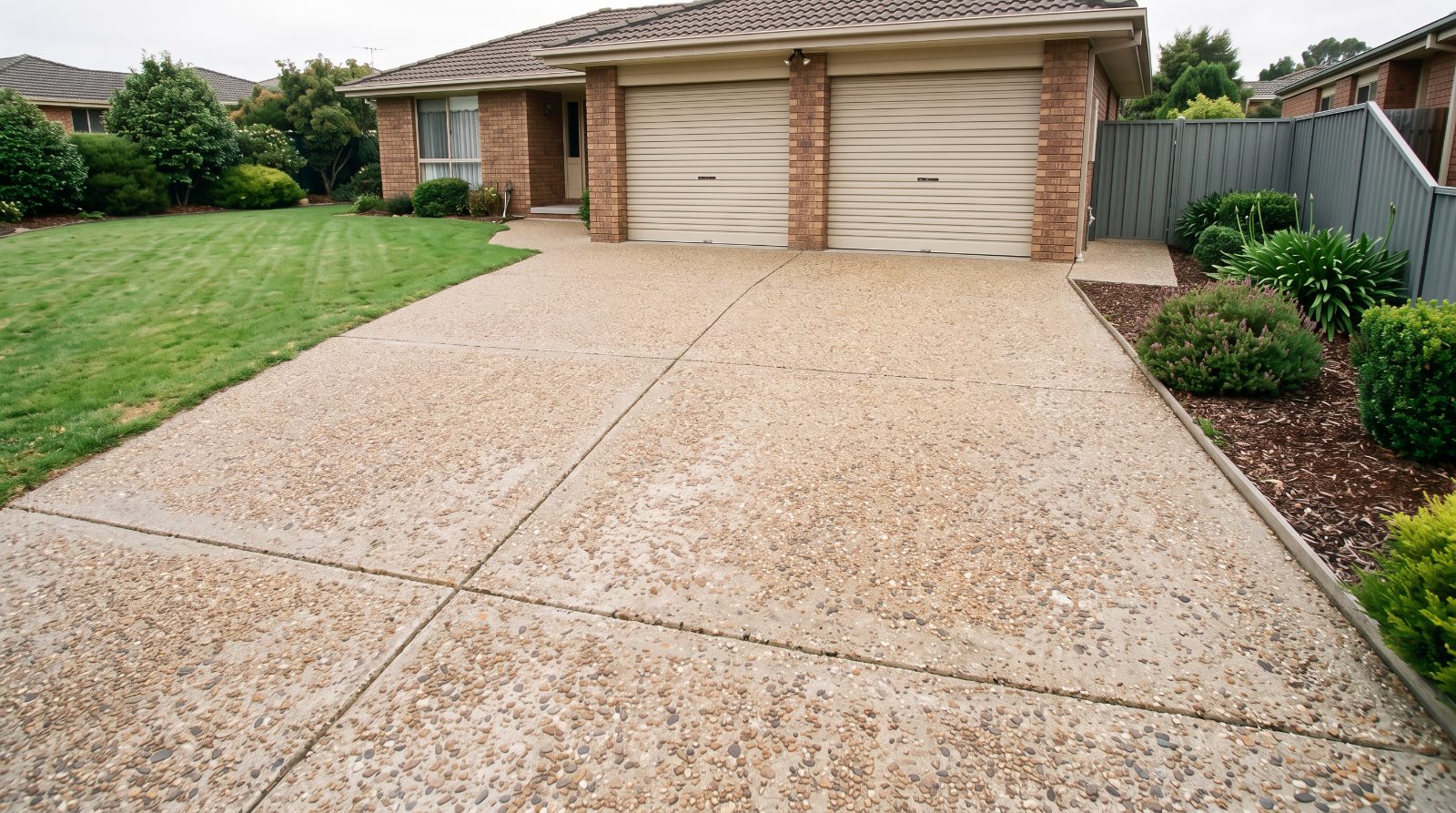

Work Out What the Surface Is
Broom, exposed, honed or coated, and how old and sound it is. That decides the pressure and the method before anything is switched on.

Say What Will Not Come Off
Before we start, not after. You should know which marks are staying so you can decide whether the job is still worth doing.

Pre-treat the Specifics
Degreaser on oil, a moss and algae treatment left to dwell, tannin and rust products where they are needed.

Wash It Properly
Rotary surface cleaner at a pressure the concrete can take, edges cut in by hand, and the runoff directed somewhere sensible rather than into a garden bed.
Let It Dry, Then Seal
Sealer goes on dry concrete or it clouds, so this is usually a separate day. Then it stays cleaner for years rather than months.
What Changes the Price of a Concrete Clean
Cleaning is priced on area and on how much of it is hand work, and the sealing is a separate line because it is a separate visit.
How Much Area There Is
Square metres set the bulk of it. A driveway, a path and a patio done in one visit costs less each than any of them done alone.
What Is on It
A general grime clean is one job. Oil, rust, tannin and paint each need their own product, their own dwell time and their own attempt.
The Surface, and How Careful It Has to Be
A broomed drive is straightforward. Honed concrete, an old coated surface or fragile exposed aggregate all take longer because they take less pressure.
Edges, Steps and Awkward Bits
A surface cleaner covers open area quickly and cannot get near an edge. Steps, borders and around plants are hand work, and that is where the hours go.
Water and Where It Drains
We need a tap and somewhere sensible for the runoff. Occasionally that means containing it, which adds to the day.
And Whether You Seal It
A separate visit once it is dry. It roughly doubles how long the clean lasts, so it is the line on the quote we would keep.
If the honest answer is that cleaning will not achieve much on your slab, we will tell you and point you at resurfacing instead, which is a different page and a different budget.
Work Out How Much There Is to Clean
Measure the length and the width of the area you want done. Cleaning is priced on area and access, so this plus a photo tells us nearly everything.
The area you want done
Area only, since nothing is being poured. A starting point for the conversation, not a quote.
Have that number when you ring, and tell us whether there is a tap and a spot to park within about thirty metres. Both change the job more than the size does.
Concrete Cleaning Questions We Get Asked in Launceston
Will pressure washing damage my concrete?
It can, and it is permanent when it does. Too much pressure strips the surface paste and leaves wand-shaped stripes, and on exposed aggregate it blasts the matrix out from between the stones. Plain broomed concrete in sound condition takes a rotary surface cleaner without trouble. Honed, polished and old weathered surfaces should be soft washed instead.
Will you get the oil stain out of my driveway?
Partly, and we will tell you how much before we start. Fresh oil comes up well with a degreaser and a hot wash. Oil that has been soaking in for years has travelled down into the concrete, so cleaning lifts the top of it and leaves a shadow. A poultice draws more of it out and rarely removes it completely.
How often should a driveway be cleaned in Launceston?
Every two to three years for a plain driveway in open sun, and yearly for anything shaded or on the south side of a house, where moss and algae grow most of the year here. Sealing after a clean roughly doubles how long it stays looking right.
What is the difference between pressure washing and soft washing?
Pressure washing removes dirt mechanically with force. Soft washing uses low pressure and a cleaning solution that does the work chemically, then rinses. Soft washing is the right choice on delicate finishes, and on moss and algae it kills the spores rather than just removing the green, so it stays clean longer.
Should I seal my concrete after cleaning it?
It is the most useful thing you can do on the day. Sealing a clean dry slab closes the pores, so oil sits on top long enough to wipe up, moss has less to grip and the colour stays richer. It has to go on dry concrete, so it is usually a second visit a few days later.
The white marks on my concrete keep coming back. Why?
That is efflorescence, salts inside the concrete being carried to the surface by moisture moving through the slab. It cleans off easily and it returns, because the cause is the moisture path rather than the surface. Dealing with what is keeping the slab wet is the only thing that stops it for good.
Send a Photo and We Will Tell You What Will Come Off
A photo in daylight of the worst part is usually enough. We will tell you what will lift, what will fade, what will not move at all, and whether it is worth doing before winter or after it.
- We say up front what will not come off
- Pressure matched to the finish, not to the stain
- Sealing quoted with it, because that is what keeps it clean
- And we will tell you if resurfacing is the better spend
Find Out What Your Job Costs
One call and we come out, measure the real thing and put a price in writing. It costs nothing and there is no salesman in it.
One call. We measure it and put a fixed price in writing. Costs nothing.
- We come and measure itOn site, tape out, so the price is for your job and not a guess off a photo.
- A fixed written priceOne number you can hold us to. Not a range, not a rate, not an estimate.
- The crew who quotes it pours itThe bloke standing in your driveway is the bloke who does the work. Who you are dealing with.
- Measured on site, not guessed
- Fixed written price, not a range
- The crew who quotes it pours it
Would rather type it out? Send the details instead