
Measured and Quoted on Site
Not off a photo. We come out, look at the ground and the access, and price the actual job.
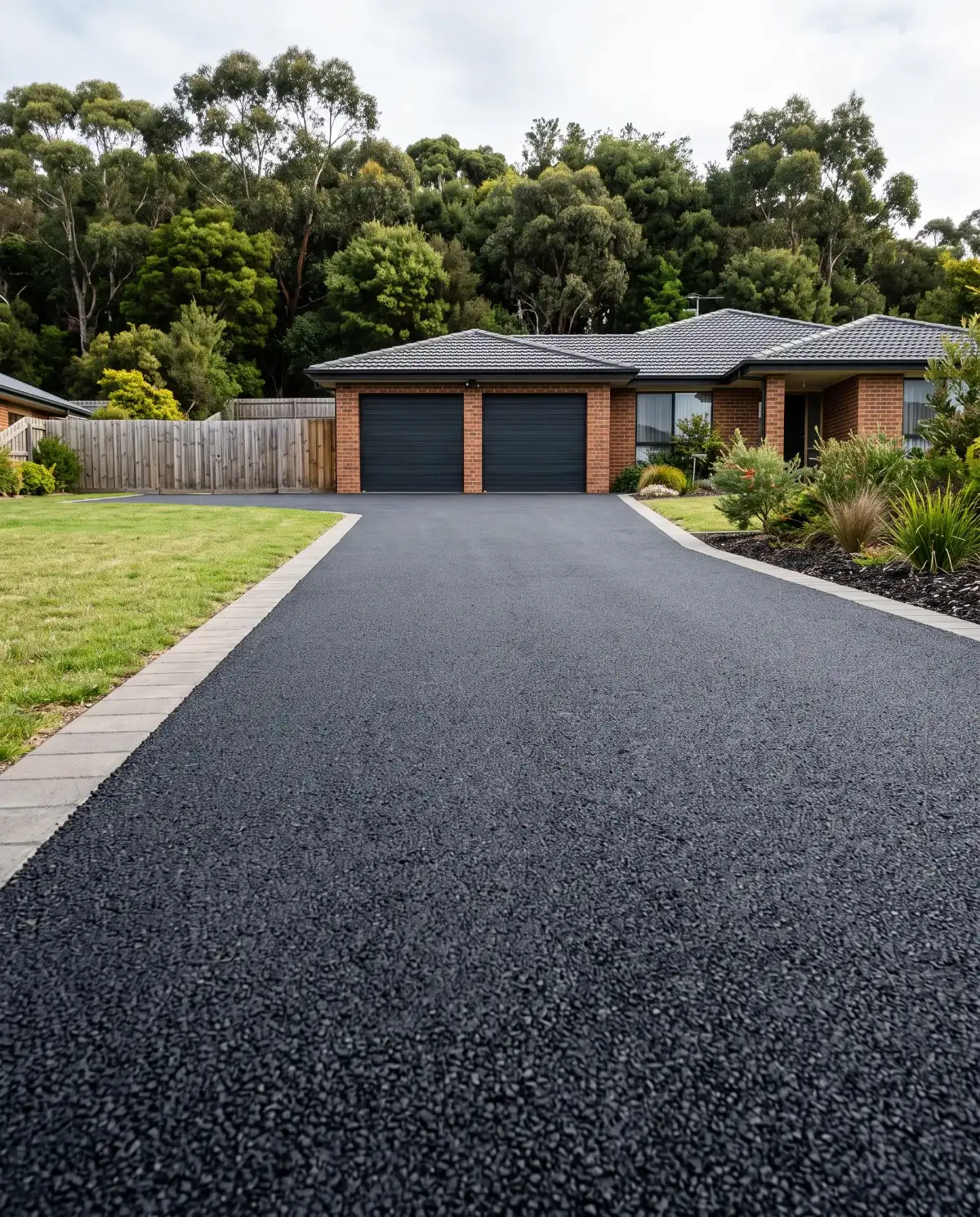
An asphalt driveway is the right answer for some Launceston houses and the wrong one for others, and we pour concrete as well, so we have no reason to sell you the wrong one. Here is how to tell which yours is.
Not off a photo. We come out, look at the ground and the access, and price the actual job.
Excavation, a compacted base and held edges, the half that decides how long it lasts.

One written price for the whole job, not a rate per square metre, and the site is left clean.
Four words get used for roughly the same thing in Australia, and two of them are wrong. It matters, because what you are quoted for is not always what you think you asked for.
The correct name for the finished product: stone aggregate bound with bitumen, mixed hot and rolled while it is still hot. Everything on this page is asphalt.
Strictly the black binder that holds the stone together, not the surface itself. In everyday Australian use “bitumen driveway” and “asphalt driveway” mean the same thing, and we answer to both.
Asphalt delivered and laid hot, which is what a proper driveway gets. It compacts under a roller into a dense sealed surface.
Not the same job. Sprayed bitumen with stone scattered over it and rolled in. Cheaper, rougher, thinner, and it is what people mean when they say a driveway “went to bits after three years”.
If a quote says bitumen and you assumed hotmix, ask which one. That single question explains most of the price difference between two asphalt quotes.
We lay both, so this is as straight as we can make it. Neither one wins everywhere, and the right answer usually comes down to the length of the drive and how long you plan to be there.
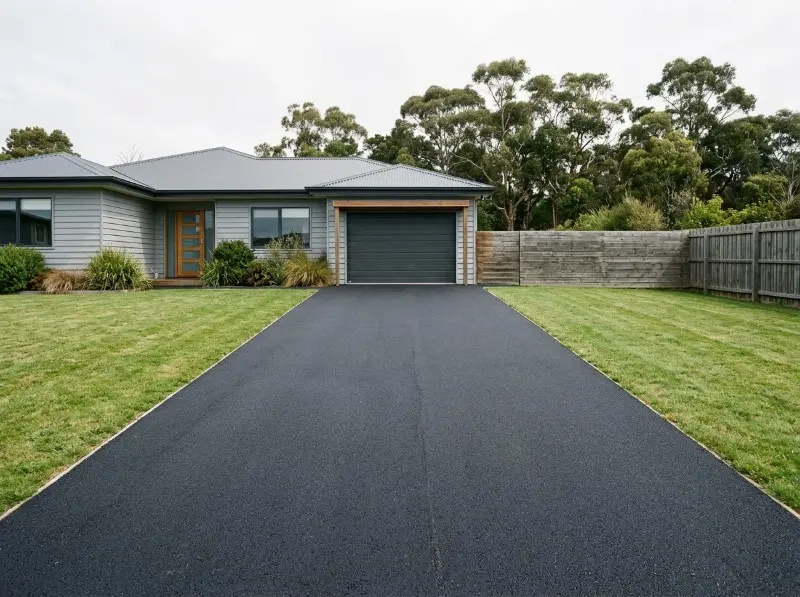
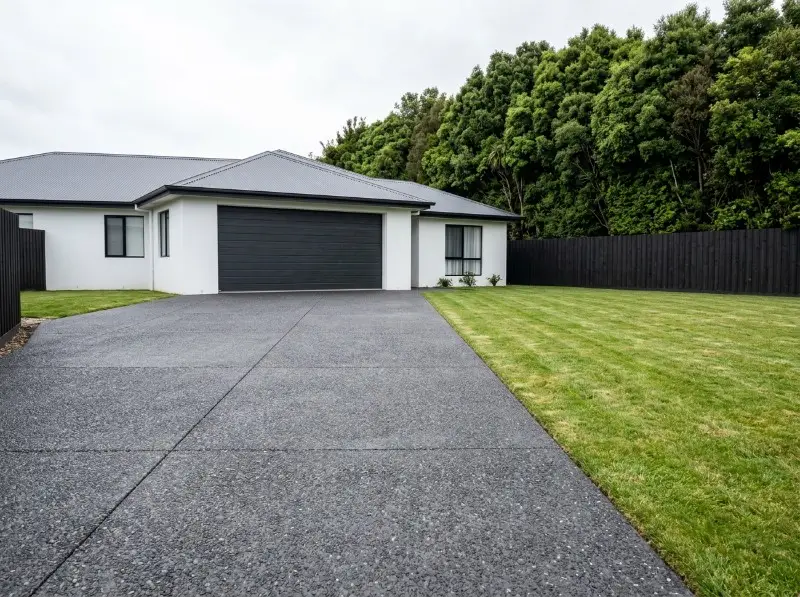
Rule of thumb: a long drive, an acreage approach or a resurface over something existing usually points to asphalt. A short suburban drive that you want to look sharp for thirty years usually points to concrete. We will tell you which one yours is at the measure, and it is free either way.
Not sure which yours is? Tell us the length of the drive and we will say, before anyone comes out.
Asphalt has the widest range of anything we lay, because most of what you are paying for is underneath the surface. A small job on ground that is already sound sits at the bottom of the range; a full dig out, base and drainage sits at the top.
 Our asphalt rate$45 – $100/m²Installed, per square metre. Where you land depends on the base underneath and the size of the job.Single driveway, about 32m²$1,450 – $3,200One car wide, straight run to the street.Double driveway, about 60m²$2,700 – $6,000Two cars wide, standard access.
These are indicative ranges only. Final pricing depends on site conditions and finish requirements, which is what the free measure settles.
Get Your Job MeasuredNearly every search around asphalt is a price search. A rate is only the starting point though, because these are the things that decide where inside it your driveway lands, and we work them out on site before we write a number down.
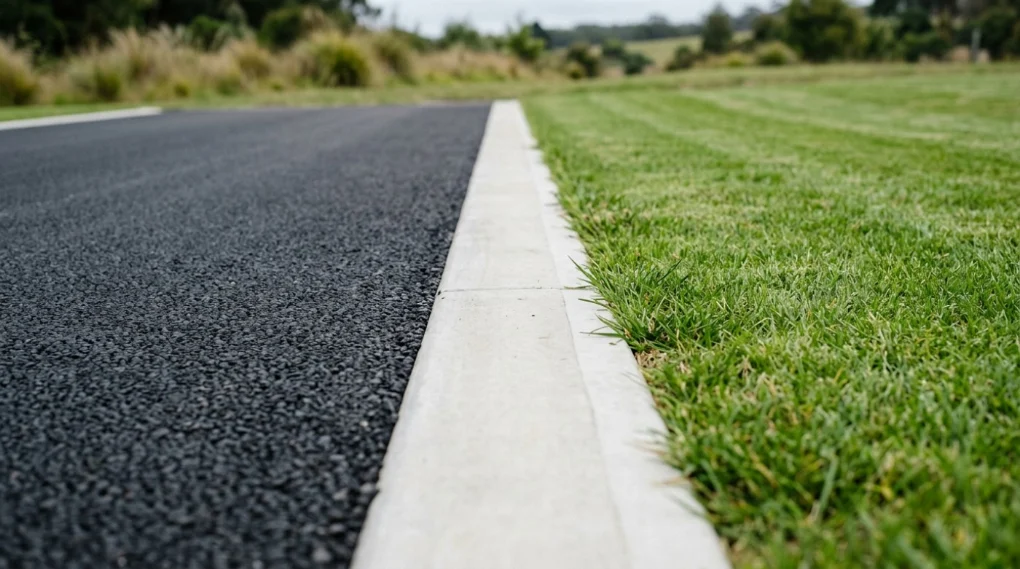
Laying over sound existing asphalt or a stable base is one job. Digging out soft ground, carting it away and bringing in new base is another entirely.
A domestic drive and a drive that takes a truck are different depths of hotmix. Thin is cheap on the day and expensive in five years.
Long straight runs are efficient to lay and roll. Tight corners, narrow paths and edges that have to be hand-worked take the time.
Asphalt has to arrive hot and be rolled before it cools. A site the plant cannot get to is a different job with different equipment.
Asphalt has no edge strength of its own. Concrete edging, a garden bed or a kerb has to hold it, or it crumbles from the sides in.
Where the water goes decides the falls, and a drive that has to shed into a grate is priced differently from one that sheds to a lawn.
There are jobs where asphalt is not the cheap option, it is the correct one. These are the four we recommend it for without hesitating, and behind all of them sit two more reasons: it flexes on ground that moves, and it is driveable within a couple of days rather than seven.
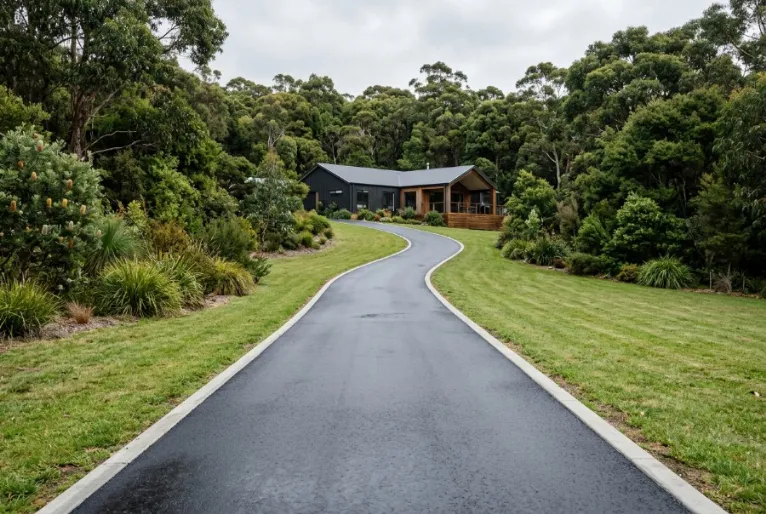
Once a drive runs past thirty or forty metres the cost gap against concrete becomes the whole decision, and asphalt handles the length without a joint every few metres.
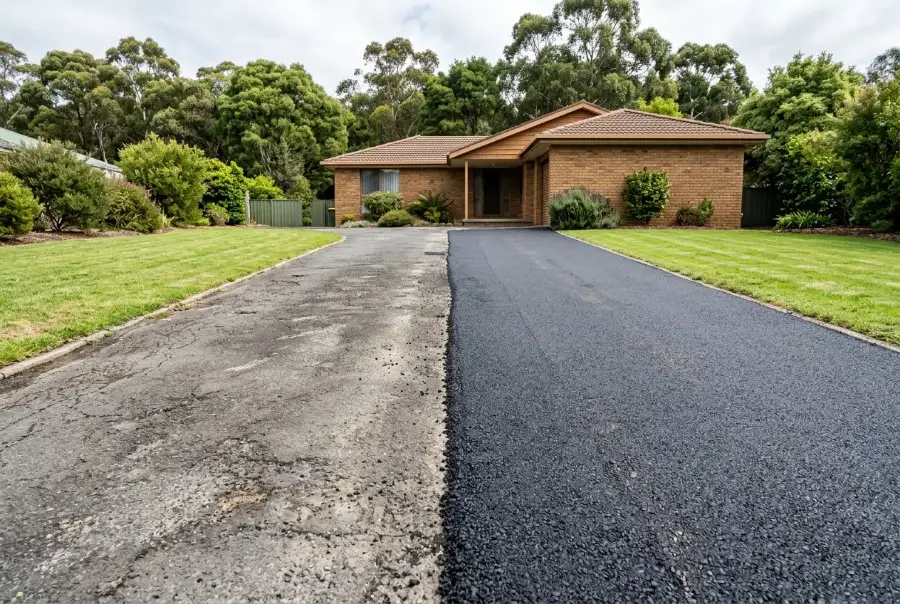
Sound old asphalt can be overlaid rather than dug out. It is fast, it is much cheaper than starting again, and it looks new.
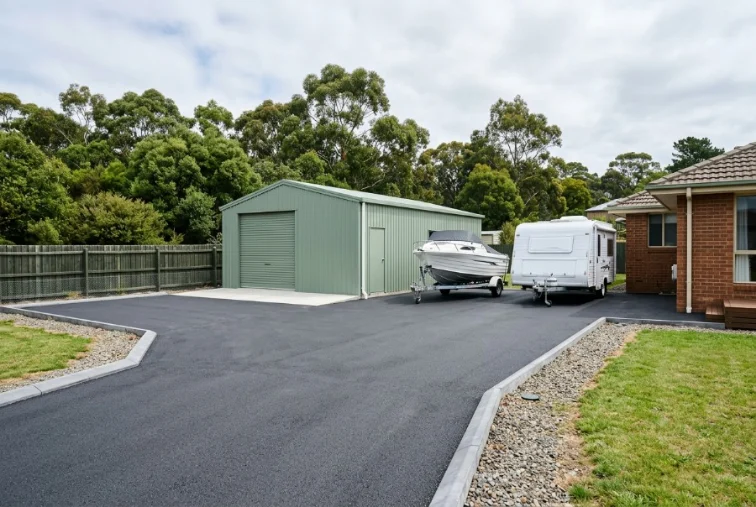
Anywhere the surface is about function rather than looks: a turning area, a shed apron, a bay for a caravan or a boat.
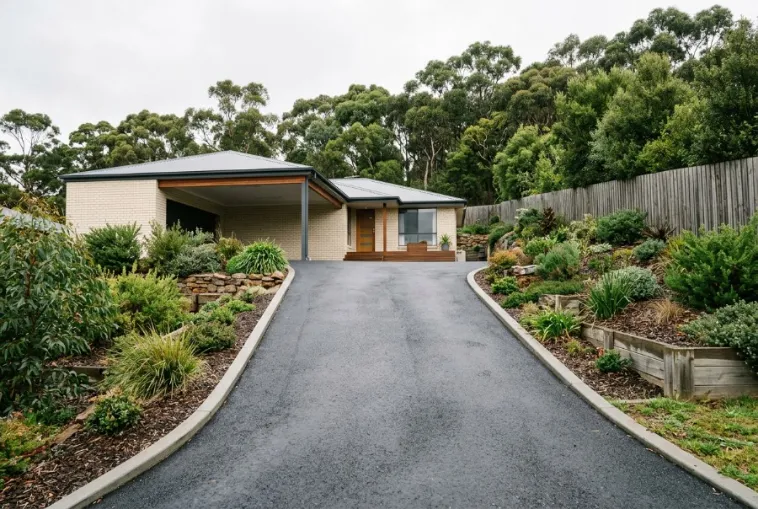
A hot-laid, rolled surface with good grip, laid in one continuous run without the joints a concrete drive is designed around on the same slope.
If one of those is your job, we can price it. If none of them are, we will tell you that too.
Asphalt is a wearing surface, not a structure. It carries load by spreading it into what is underneath, which means the base is not part of the job, it is the job.
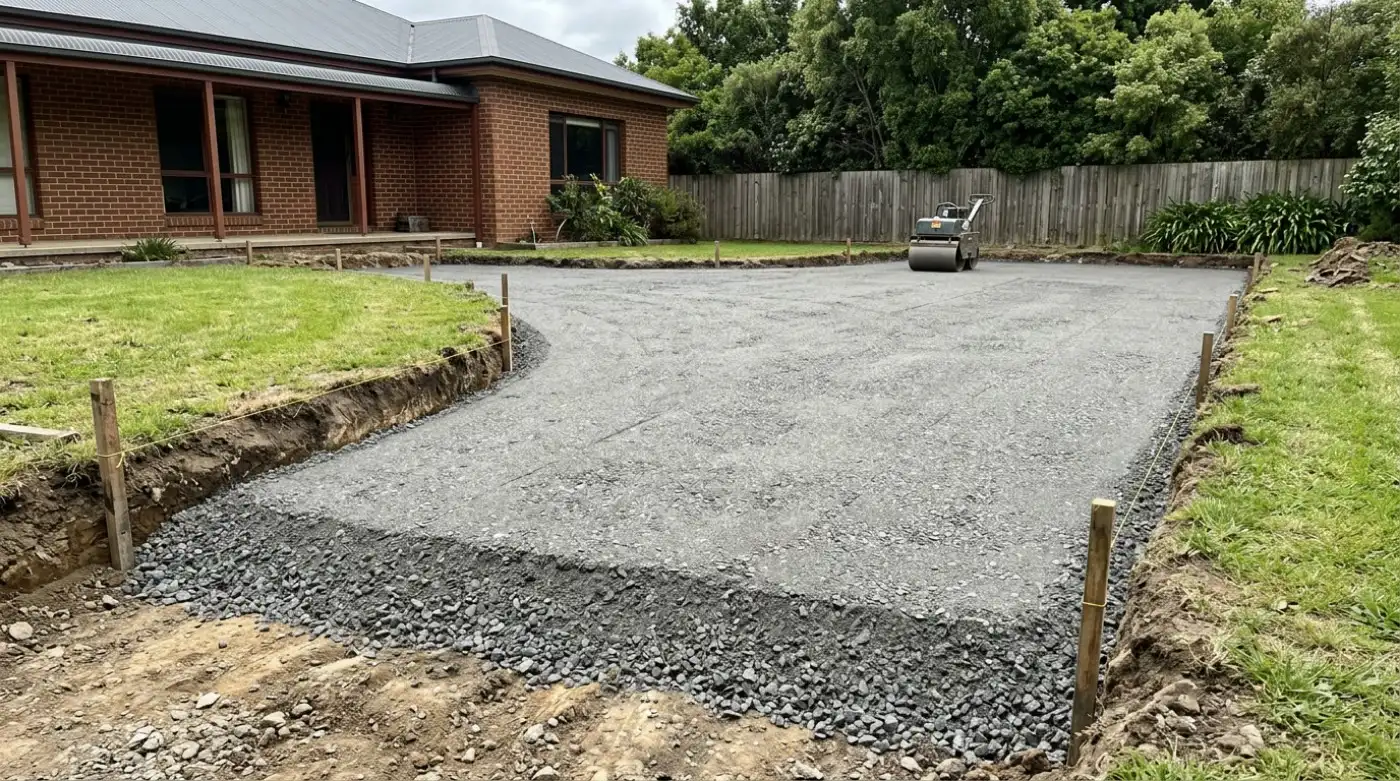
Soft or wet ground gets dug out and replaced rather than covered over. Asphalt laid on a soft spot will find that soft spot within a year.
Base material goes in and gets compacted in lifts, not tipped and levelled. This is the step that decides whether the drive is still flat in ten years.
The finished levels are worked out on the base. You cannot correct a fall with the asphalt itself, because the depth is what carries the load.
Laid at temperature and rolled while it is still hot, which is what compacts it into a dense sealed surface rather than a loose one.
The last step and the one most often skipped. Without a concrete edge, a kerb or a firm garden bed, the sides break away and the failure works inward.
Asphalt is not maintenance-free and anyone who tells you otherwise is selling something. It is low maintenance, and the maintenance is cheap if it happens on time.
The base is where a cheap quote saves its money. Ours says what goes under, in writing.
Asphalt is fast on the day and slow in the preparation, which is the opposite of what most people expect. Nearly all of the work happens before the hot load arrives.
Levels, falls and access worked out, and the subgrade checked so we know what is under it before anyone quotes it.
Out to depth, soft material removed rather than covered, and everything taken off site rather than pushed into a corner of the yard.
Crushed rock placed in lifts and rolled, with the finished falls set on the base before any asphalt is ordered.
Concrete edging or kerbing placed to hold the sides, because asphalt has no edge strength of its own.
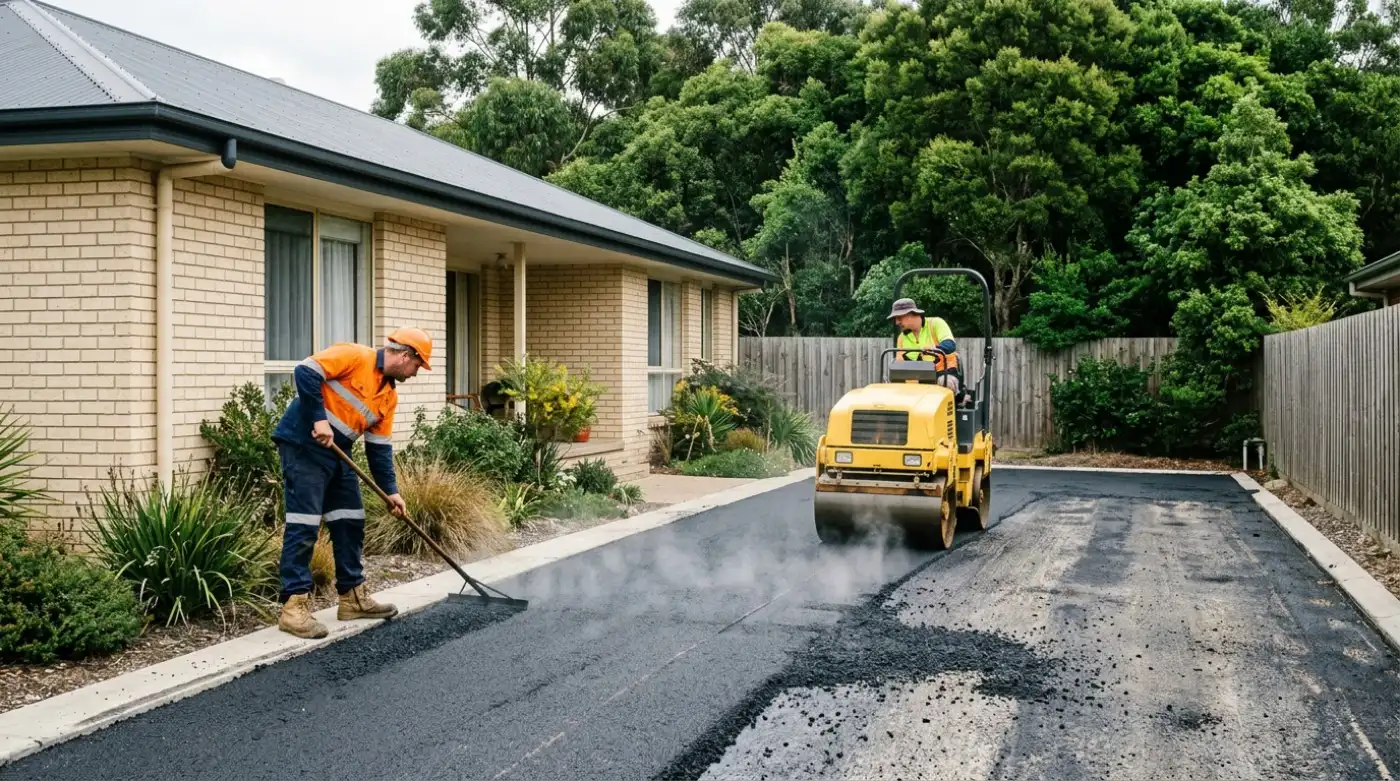
The hotmix arrives at temperature, is spread to depth and rolled before it cools. One day, and you are driving on it within a couple.
Send the rough length and width and what is there now, and we will come out and look at the ground. The measure and the written price are free either way.
Would rather talk it through? (03) 6724 3698, or send the details through the contact page.
Plus the wider Launceston area.
Usually yes up front, and the gap gets wider the longer the driveway is. Over thirty years the two get closer, because asphalt wants resealing and concrete does not. On a short suburban drive the difference is smaller than people expect; on a long one it is the whole decision.
Neither is better everywhere. Asphalt is better on long drives, on ground that moves, over an existing surface, and when you need it back quickly. Concrete is better on a short drive you want to look sharp for thirty years, and where you want a finish like exposed aggregate. We lay both and will tell you which yours is.
Asphalt and bitumen are used interchangeably here, though strictly bitumen is the black binder and asphalt is the finished surface of stone and binder together. Hotmix means asphalt laid hot and rolled, which is what a driveway should get. Spray seal, or tar and chip, is a different and much thinner treatment.
Fifteen to twenty-five years with a proper base, held edges and a reseal every few years. Without those it is closer to ten. The base under it matters more than the asphalt on top, which is where most short-lived driveways went wrong.
Over sound existing asphalt, often yes, and it is much cheaper than starting again. Over cracked concrete or a failing base, no. Whatever is moving underneath will come through the new surface within a year or two. We look at it before we say.
Within a day or two for a car, and it stays soft for a few weeks in warm weather, so keep stands, jacks and sharp turns off it early on. That is far quicker than concrete, which wants seven days.
One call and we come out, measure the real thing and put a price in writing. It costs nothing and there is no salesman in it.
One call. We measure it and put a fixed price in writing. Costs nothing.
Would rather type it out? Send the details instead