
Measured and Quoted on Site
Not off a photo. We come out, look at the pool, the access and the falls, and price the actual job.
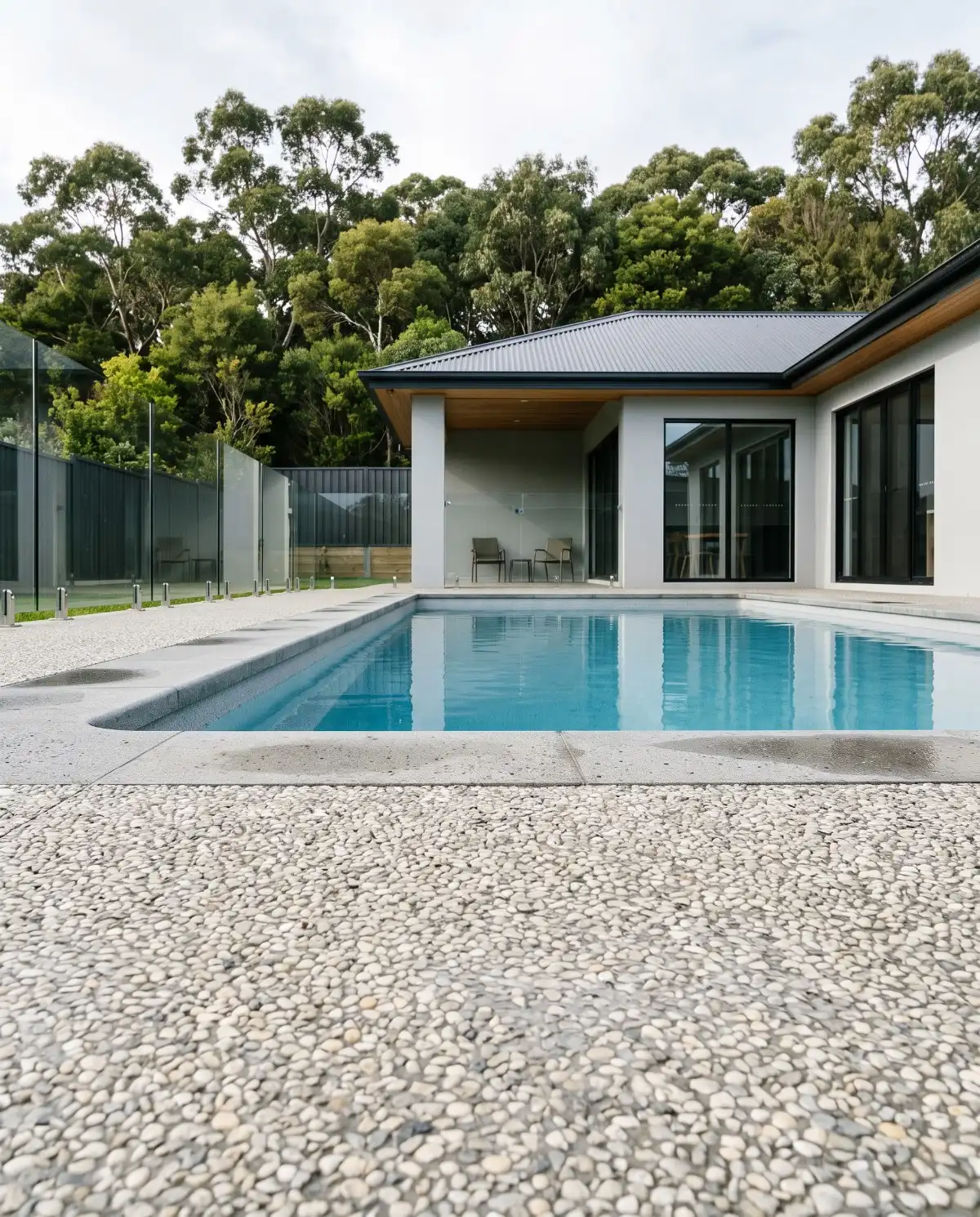
A Launceston pool surround is judged with wet feet, in bare skin, by people who are not looking where they are going. That makes slip and heat the whole decision, and it is why the finish matters more here than anywhere else on a block.
Not off a photo. We come out, look at the pool, the access and the falls, and price the actual job.
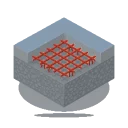
Excavation, a compacted base and reinforcement to spec, the half that decides how long it lasts.

One written price for the whole job, not a rate per square metre, and the site is left clean.
Four things decide it: whether it grips when it is wet, whether it is bearable in bare feet in February, what salt and chlorine and sunscreen do to it over years, and how it looks from the water, because it is the biggest surface in most back yards. Here is how the four finishes actually behave.
If one thing on this page decides your finish, make it this table. The smoothest, best looking finishes are also the hottest and the most slippery, and around water that matters more than looks.
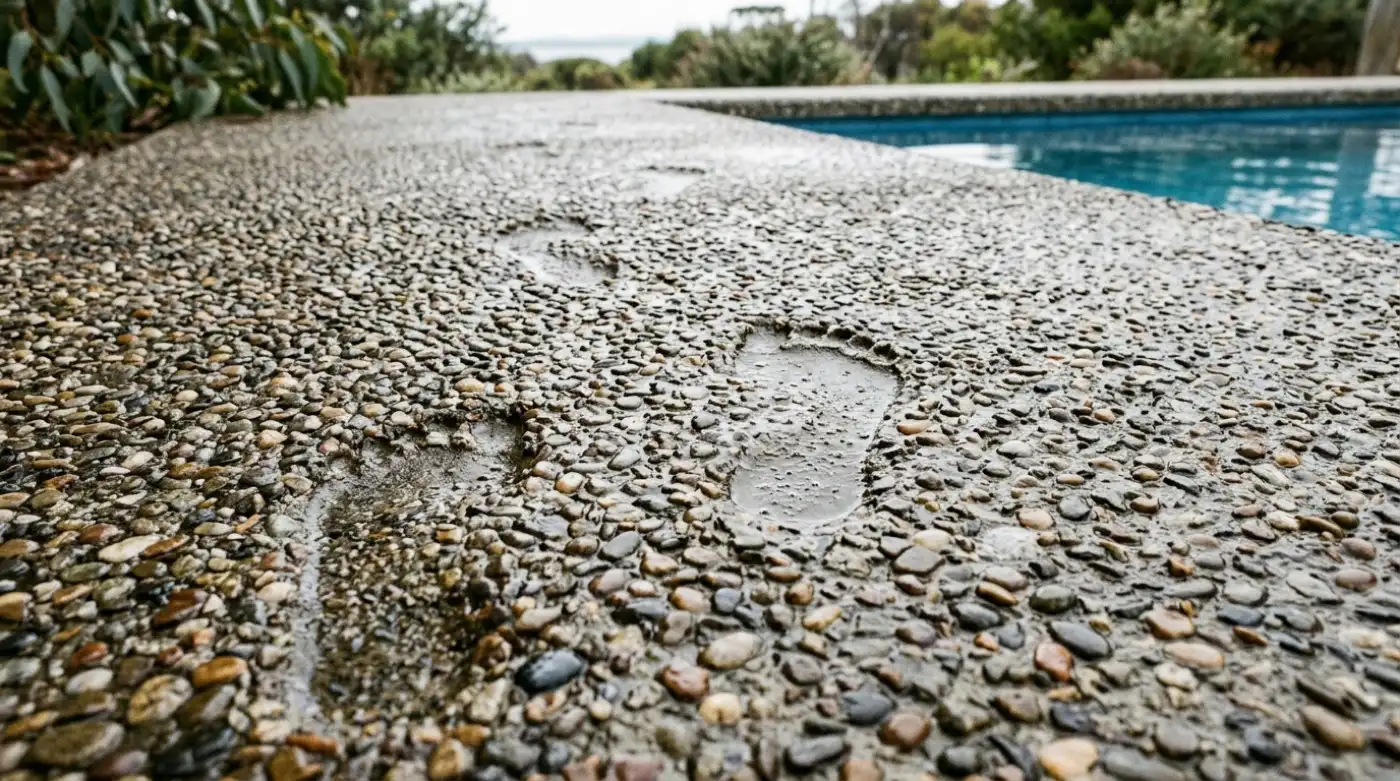
Exposed aggregate and honed are the two people choose between, and the answer is usually not one of them. It is aggregate on the wet zone right around the water and honed on the lounging area set back from it. This is what you are trading either side of that line.
The wet zone, right around the water
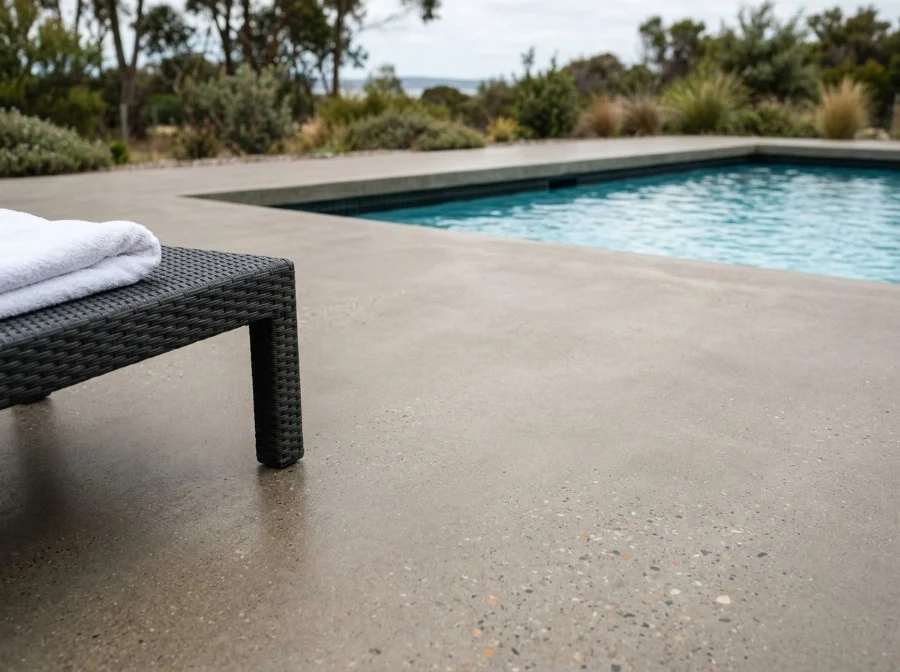
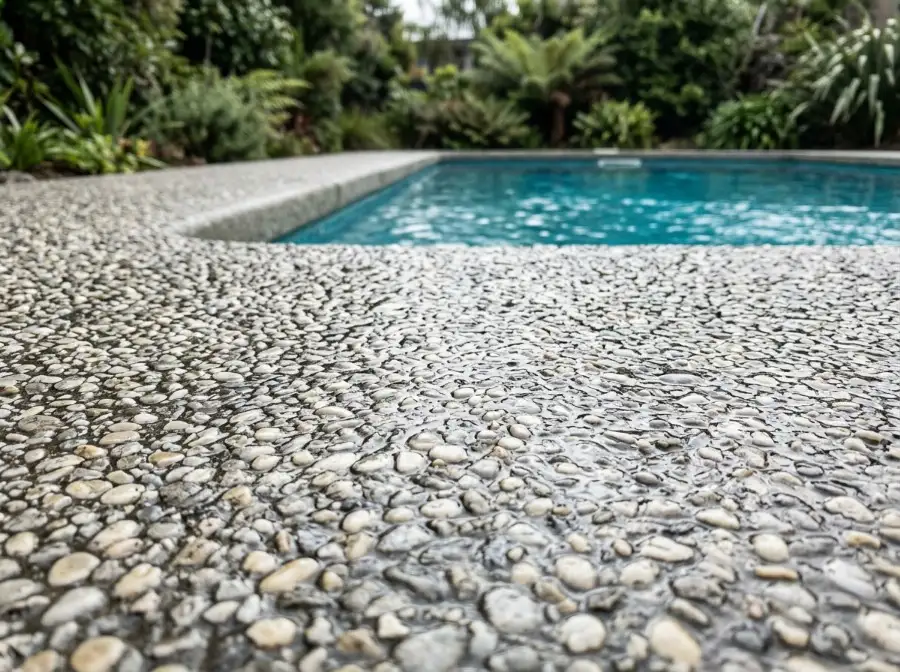
The lounging area, set back from the edge
One pour, two finishes: aggregate where it is wet, honed where you lounge. The line between them is a saw cut, so it reads as one surface rather than two slabs meeting.
Tell us the shape of your pool and we will mark up which finish goes where, on your plan.
Pool coping is the edge that caps the pool shell, and it is the piece people put their hands on, sit on and push off. It gets touched more than any other part of the surround, and it is the detail that dates a pool fastest.
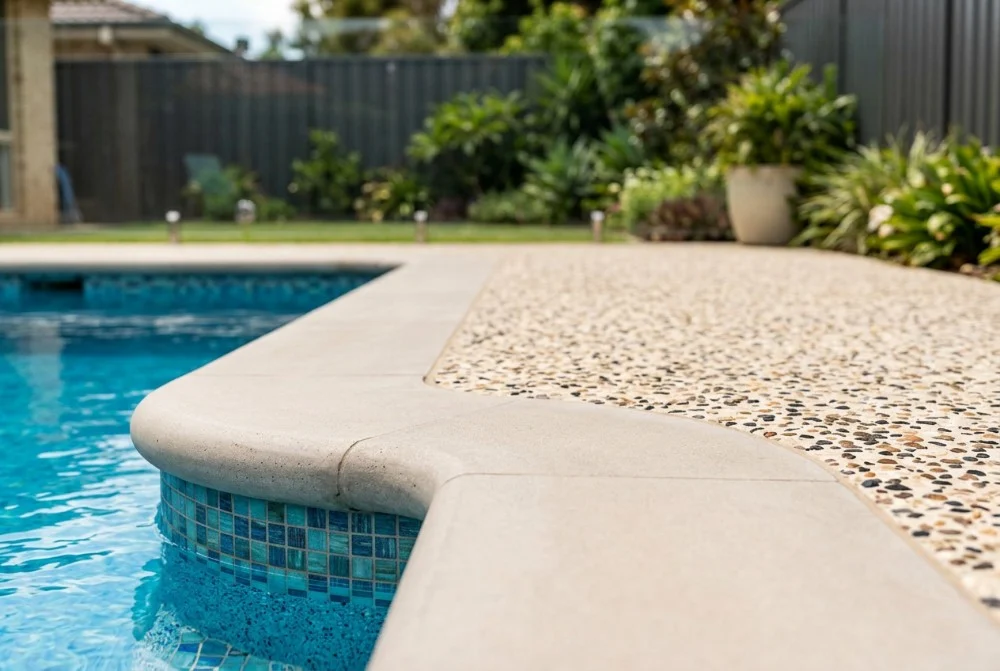
A rounded top edge, the traditional pool coping profile and still the most comfortable to grab and to sit on. Kind to elbows and to small knees.
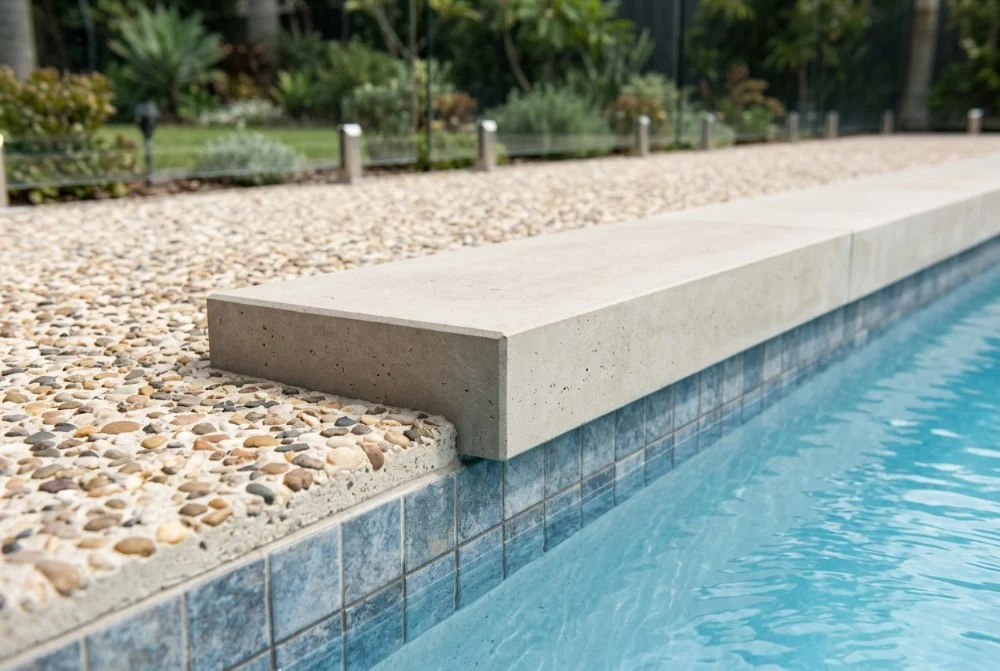
A crisp modern edge with a shadow line. Looks sharp, and it is harder underfoot and less forgiving when someone climbs out in a hurry.
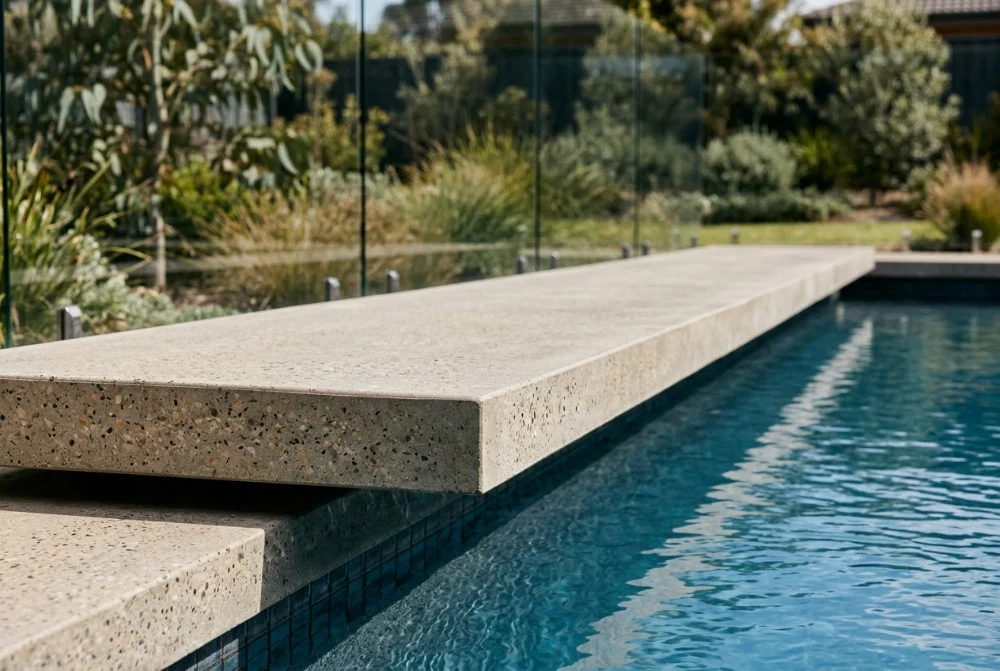
The surround is poured to overhang the shell slightly so the concrete appears to float over the water. The premium detail, and the one that has to be formed exactly.
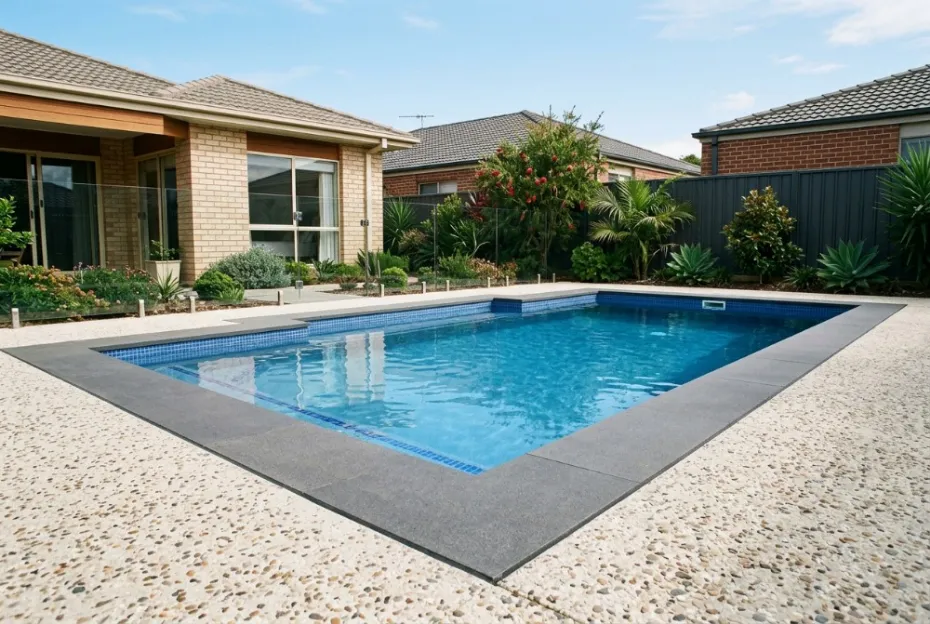
Coping in the same finish as the surround reads calm and continuous. A contrasting band frames the water and makes the pool the subject.
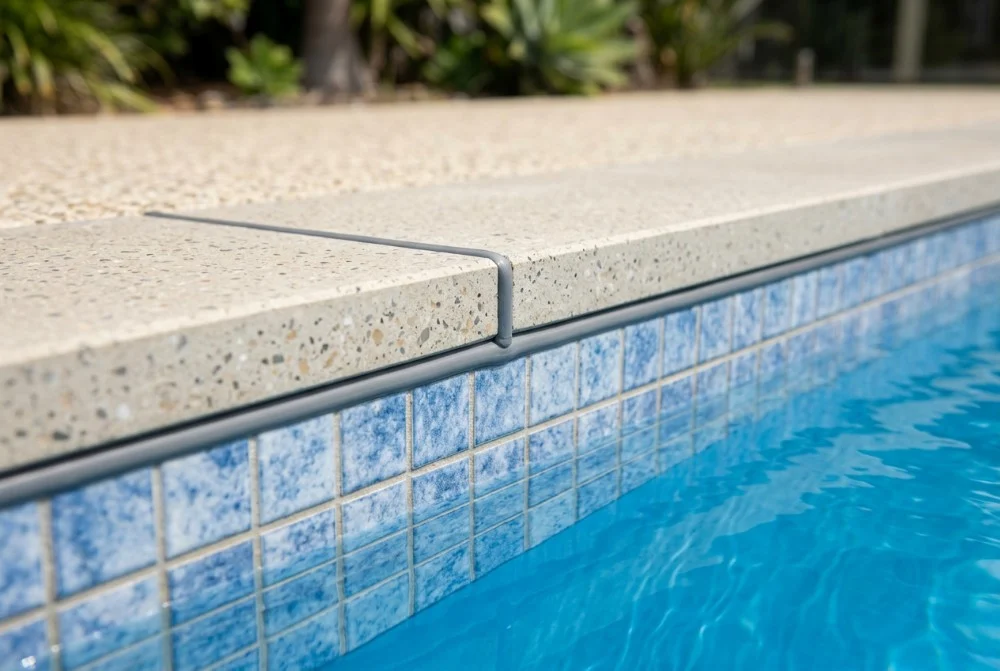
Whatever the profile, the coping must not be bonded rigidly to the pool structure. That junction is the one that cracks first when it is done wrong.
What the different approaches actually look like around water, rather than as a colour chip on a page.
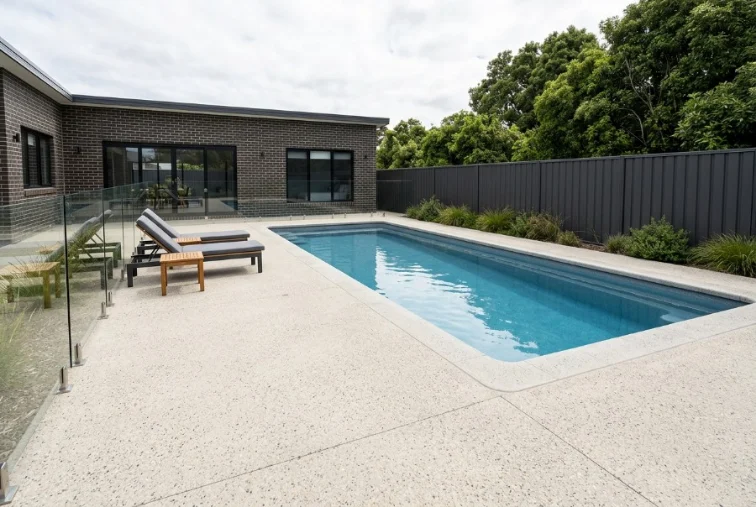
One pour on all four sides. Easiest to clean, easiest to get the falls right.
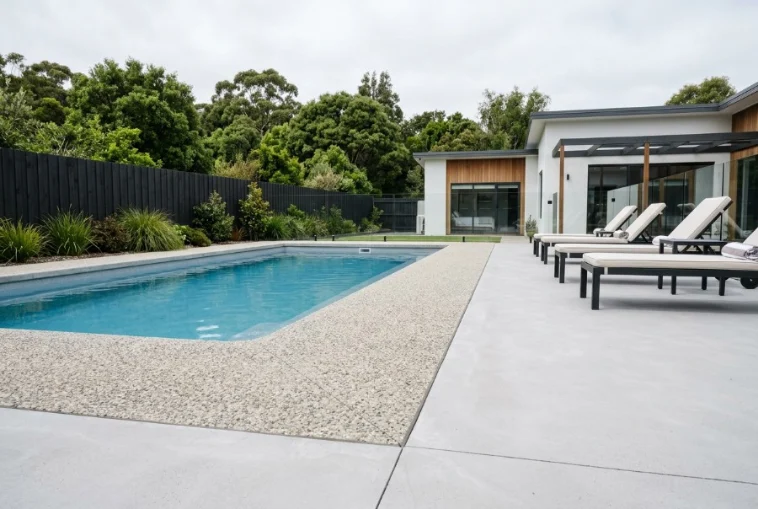
Aggregate on the wet zone, honed on the sun-lounge side.
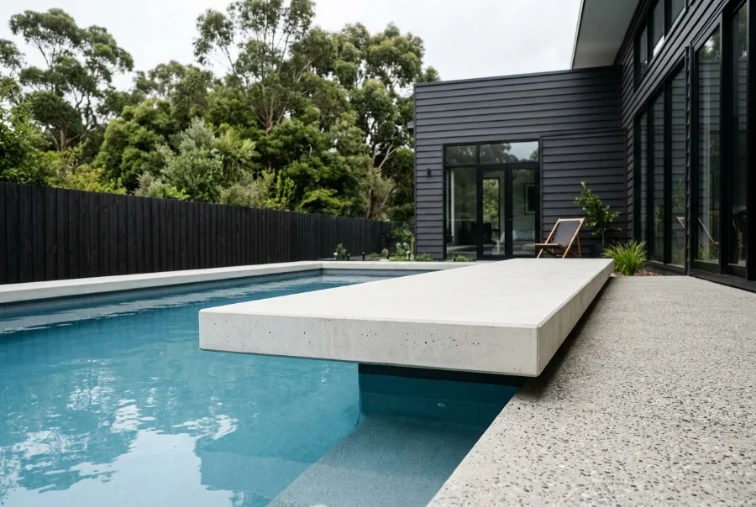
The surround runs out over the shell so the concrete floats above the water.
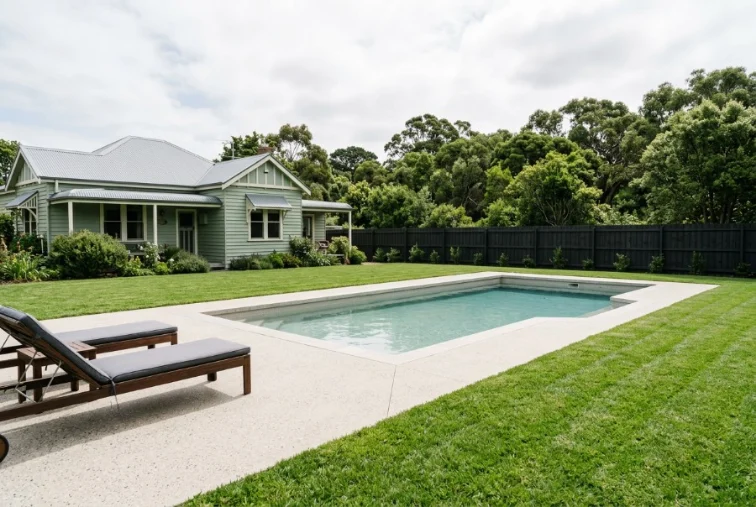
Generous on the entry side, narrowing to a mower strip on the far side.
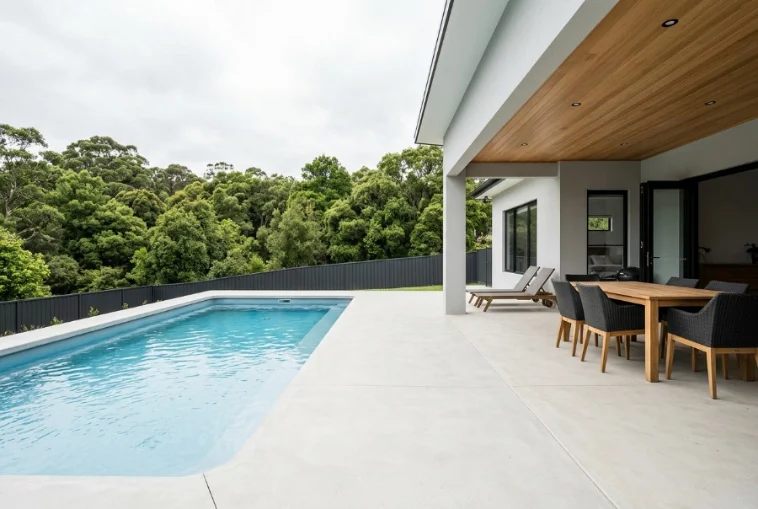
Surround and entertaining slab poured as one. No step, no join.
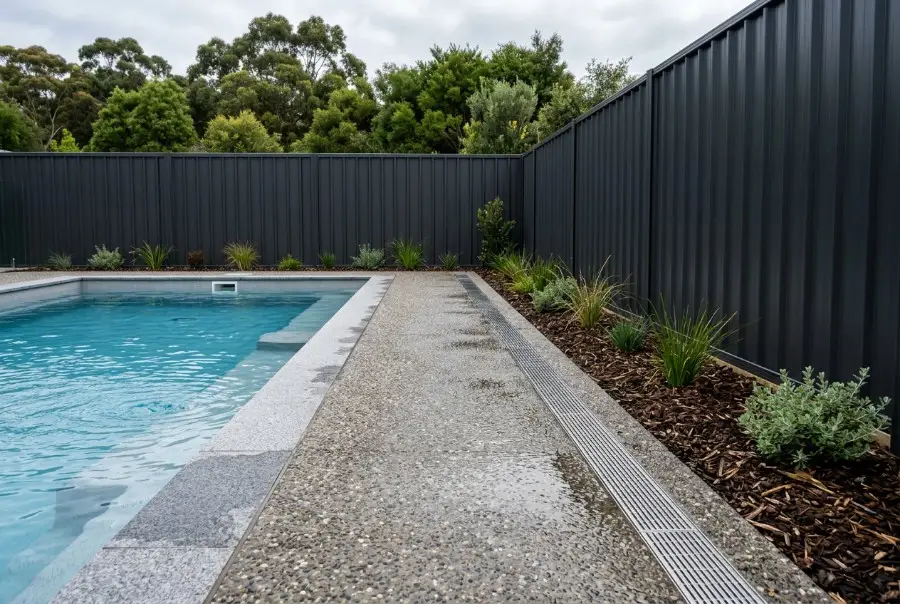
Every pool has one tight side. It still needs a fall and somewhere for water to go.
Seen one you like? We will walk your yard and tell you what it takes to build it there.
The most common failure in a pool surround is a crack running along the edge of the pool. It is not bad concrete. It is two structures tied together that were never going to move at the same rate.
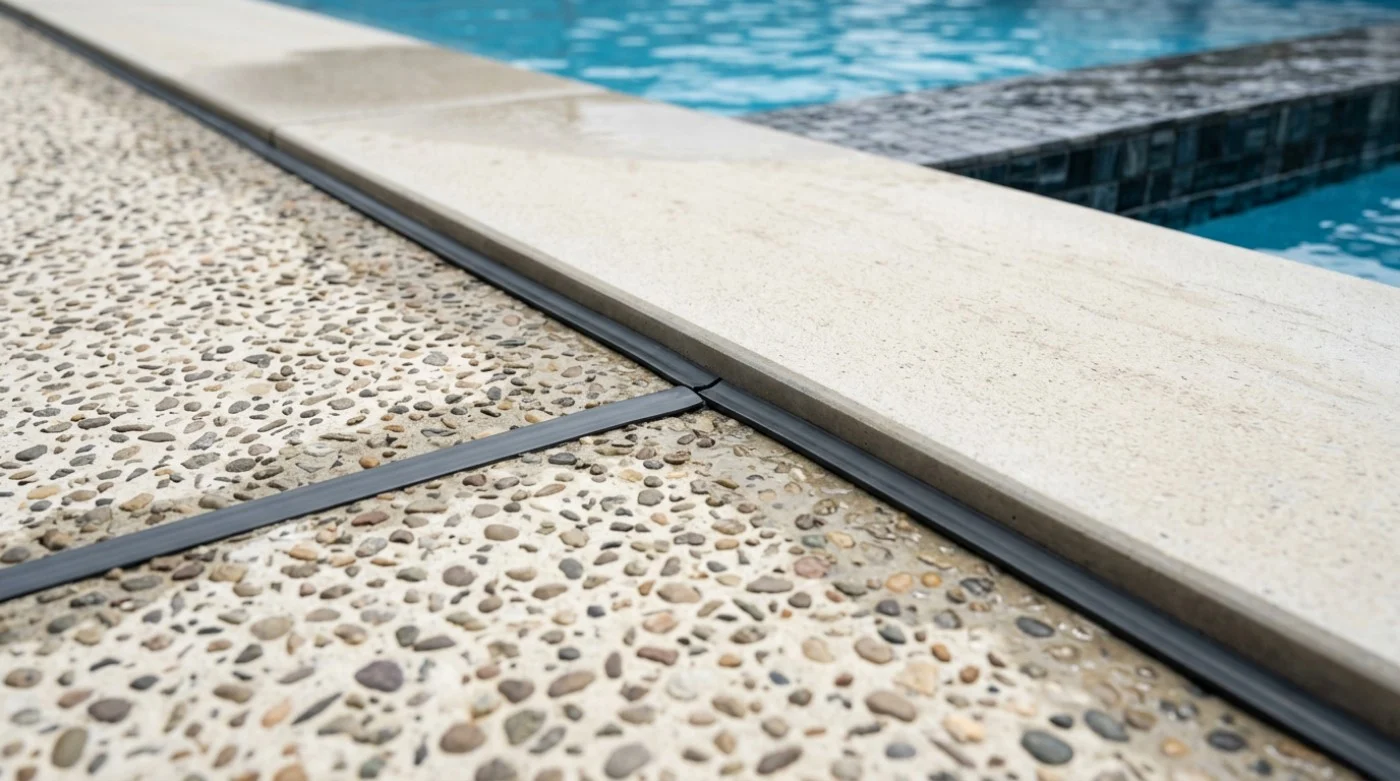
The pool shell and the surround are built differently, sit on different ground and move on different days. Tie them rigidly together and something has to give.
A flexible joint runs the full perimeter where the surround meets the pool. It is the single most important detail on this page.
A fibreglass pool flexes with the water level and the ground around it, so the joint detail matters more again. The surround is never allowed to bear on the shell.
A concrete pool moves less, but it still moves, and the surround still gets its own joint. Stiffer is not the same as still.
Beyond the shell, the surround is jointed like any slab, cut early at spacings that suit the shape so it cracks where we chose.
Every other slab sheds rain. This one sheds rain, splash-out, and whatever comes off four people getting out at once, all day, every summer.
Fall runs off the surround, never back into the pool. Dirt, grass clippings and sunscreen washing into the water is a filter problem you pay for every week.
Where the surround meets a wall or an alfresco it falls away from the building, sits below the damp course and keeps the weep holes clear.
The narrow side of a pool usually has nowhere to shed to. That side gets a strip drain as part of the job, not as an afterthought.
A surround that ponds around a pool never really dries. It grows algae, it gets slippery, and that is a safety problem rather than a cosmetic one.
Falls and drainage are decided on site, not on a price list. We will set them out with you before anything is ordered.
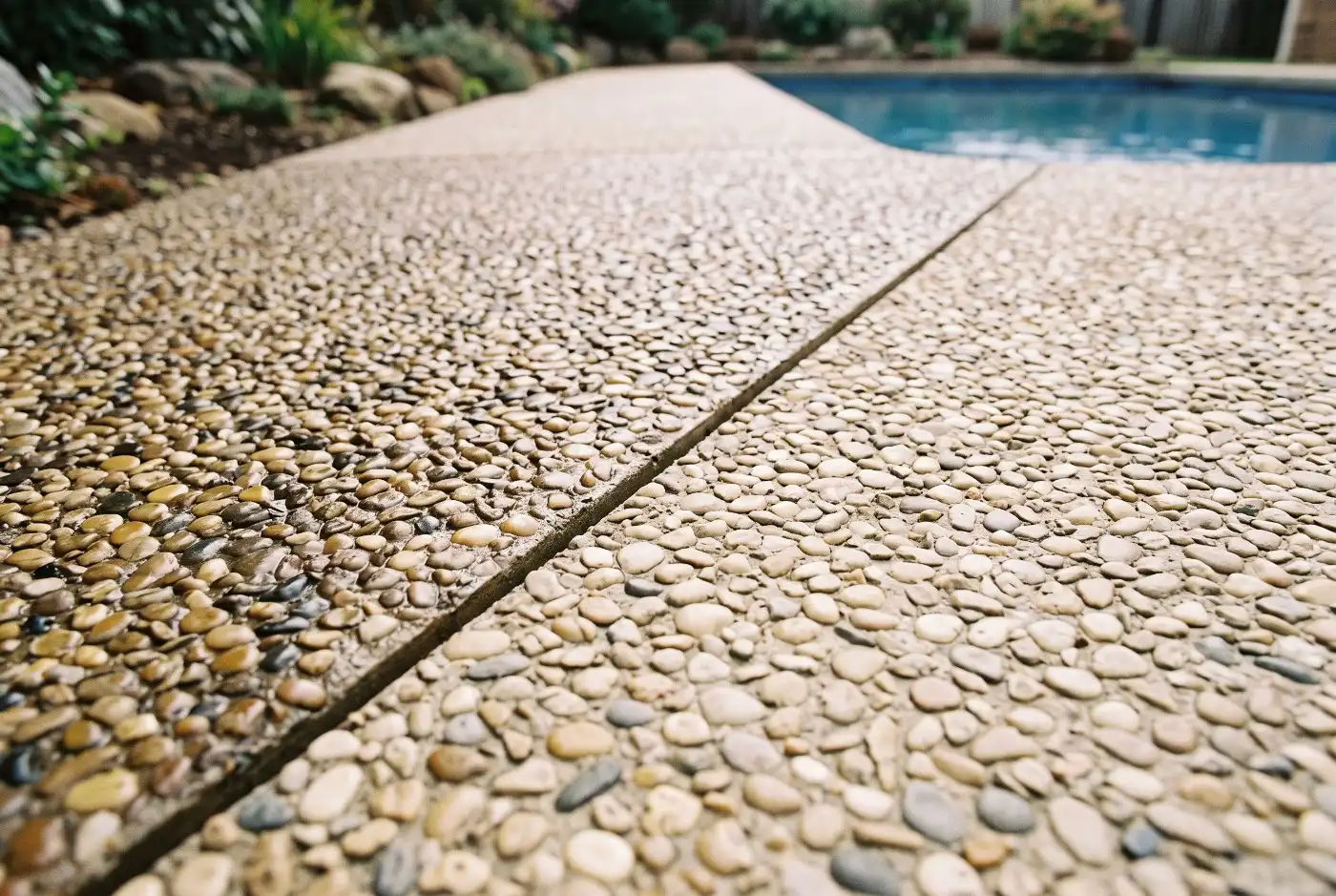
Sealing gets sold as protection and bought as a magic coating. Here is what it does and what it does not, so you can decide whether you want the maintenance that comes with it.
A tired surround around a good pool is one of the most common jobs we look at, and almost nobody writes about it. It is a different job from a new pour and it gets priced differently.
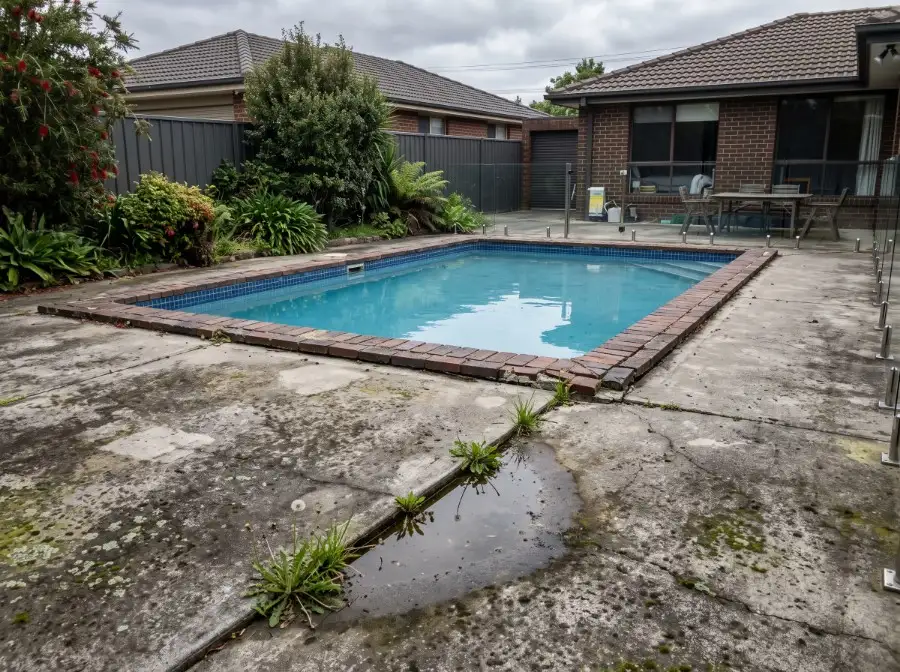
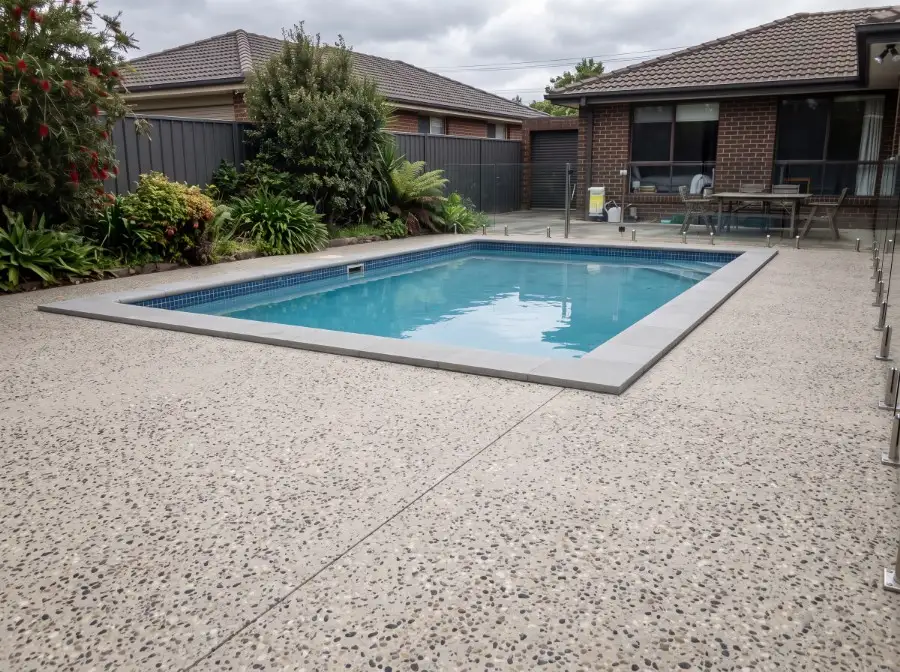
Already have a surround? Tell us what it is doing and we will say whether it wants replacing or resurfacing, before anyone comes out.
The same three questions come up on nearly every pool surround we quote. Here is what decides each one, and what we do about it on your job.
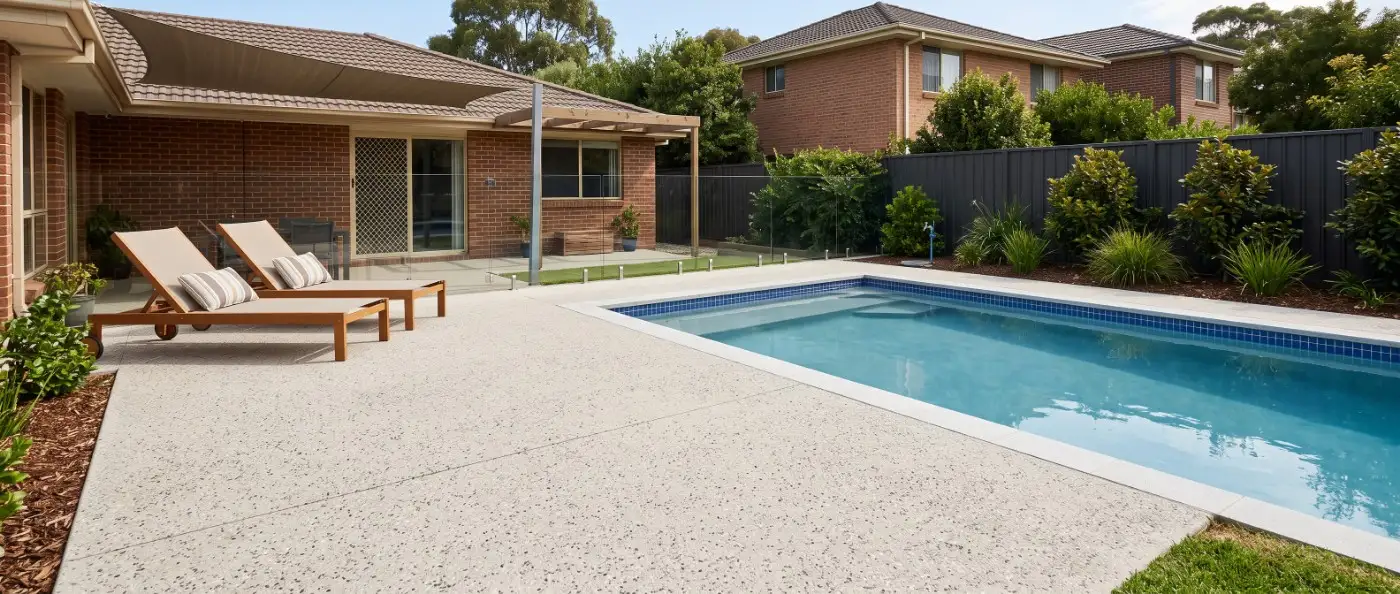
Light exposed aggregate and a pale mix stay comfortable on bare feet through a Tasmanian summer, and shade over the sitting end settles it entirely. It is the dark, dense finishes that hold heat, which is why we steer you off them beside a pool.
Concrete moves and a pool shell moves, and they do not agree. Cut joints in the right places, and an expansion joint against the shell the whole way round, give that movement somewhere to go. The surround stays flat and any cracking happens where we put it.
A poured surround is not lifted and relaid the way pavers are. What you get in return is no settling, no weeds through thirty metres of joints, and nothing to trip on beside water.
A surround happens around a pool that is already there, or one that has just gone in. Either way the order matters, and so does what happens to the water while we work.
Levels taken off the coping and the house, falls decided, and the shape marked so you can walk it before it is permanent.
Out to depth around the shell, then crushed rock in and compacted in layers. Careful work beside a pool rather than fast work.
Formwork to the line and the fall, mesh up on chairs, and the expansion joint set against the shell the whole way round.
Placed, screeded, and finished the way you chose, including two finishes in one pour where the wet zone and the lounging area differ.
Control joints cut early, the pool cleaned down, plant checked and the site left the way we found it.
The same 50m² surround, finished three ways. Liquid limestone is the dearest and the coolest underfoot; plain concrete is the cheapest way to get it safe and tidy.
 50m² surround, liquid limestone$7,000 – $10,500The full job: surround, coping, drainage falls, saw cut joints and slip seal.
 The same surround, exposed aggregate$5,000 – $9,000Barefoot friendly and hard wearing, at our exposed aggregate rate.
 The same surround, plain concrete$3,000 – $6,000The cheapest way to get a safe, tidy surround down.
These are indicative ranges only. Final pricing depends on site conditions and finish requirements, which is what the free measure settles.
Get Your Job MeasuredA surround varies more than almost any other slab, because it is built around something expensive that cannot be moved. That is what widens the range above.
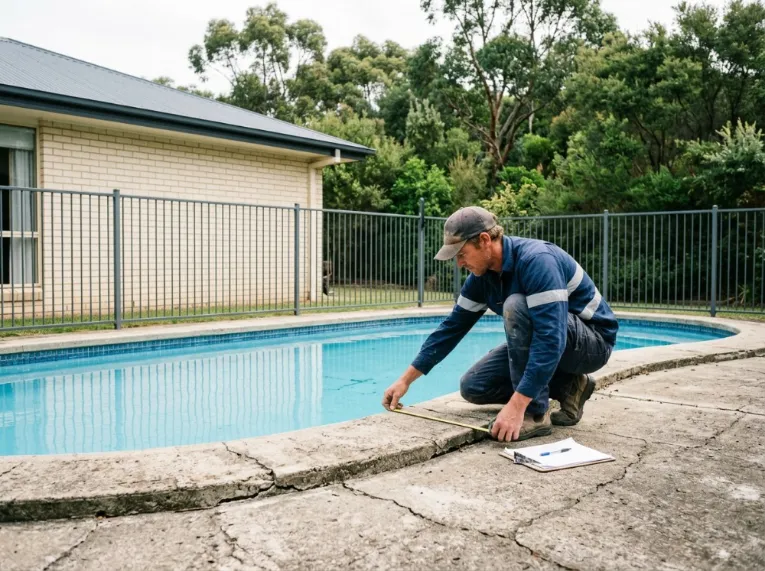
A surround poured while the pool is going in is straightforward. One replaced around a full pool, with plant and fencing in place, is careful work and costs like it.
Back yards, side gates and pool fencing. If the concrete has to be barrowed or pumped over a fence, that is hours rather than minutes.
A rectangular pool with a simple surround is mostly straight boxing. Curves, steps and a spa cut into the shape take far longer to form than to pour.
Bullnosed, square-edge or cantilevered are three different amounts of work, and a cantilevered edge has to be formed exactly.
Exposed aggregate through the wet zone with honed beyond it is two finishing operations in one pour, and it is priced as such.
A surround that can shed to garden on every side is simple. One that needs a strip drain and a connection is a different job.
Measure the paved area you want, not the pool. A surround is rarely a neat rectangle, so take the overall length and width of the paving and we will subtract the water when we measure it properly.
The overall area with the pool still in it. We take the water out at the measure. A starting point, not a quote.
Have those numbers when you ring and we can tell you how the coping and the surround meet, where the fall has to go so water leaves the pool edge, and what the barefoot finishes do to the number.
Send the pool size and whether it is a new pool or a replacement, and we will come out and measure it properly. The measure and the written price are free.
Would rather talk it through? (03) 6724 3698, or send the details through the contact page.
Plus the wider Launceston area.
Exposed aggregate, for most yards. It grips when it is wet, it stays cooler underfoot than a solid colour, and it hides the marks a pool surround collects. Honed looks calmer and belongs back from the water's edge, and polished concrete does not belong around a pool at all.
The coping is the edge that caps the top of the pool shell, between the water and the surround. It is what you hold, sit on and push off from. Bullnosed is the most comfortable, square-edge is the sharpest looking, and a cantilevered edge overhangs the shell so the concrete appears to float.
It will move, and the job is deciding where. A flexible expansion joint runs the whole perimeter where the surround meets the shell, and control joints are cut early through the rest. A crack along the pool edge almost always means the two were tied together.
They do not have to be. Sealing deepens the colour, slows salt attack and adds maintenance, because a sealer wears and has to be redone. If it is sealed around water it needs a grip additive, because a gloss sealer on a wet surround is a hazard.
It depends on the pool, the access and what is there now, and the rate is only a rate. It costs more than the same area of new work because everything happens around a full pool that cannot be damaged, and because the old surround has to be broken out and carted away.
Concrete is one surface with no joints to weed and nothing to lift and trip on, which matters more around water than anywhere else. Pavers can be taken up to reach a pipe and cost less to start. Both are legitimate; the trade is maintenance against flexibility.
One call and we come out, measure the real thing and put a price in writing. It costs nothing and there is no salesman in it.
One call. We measure it and put a fixed price in writing. Costs nothing.
Would rather type it out? Send the details instead