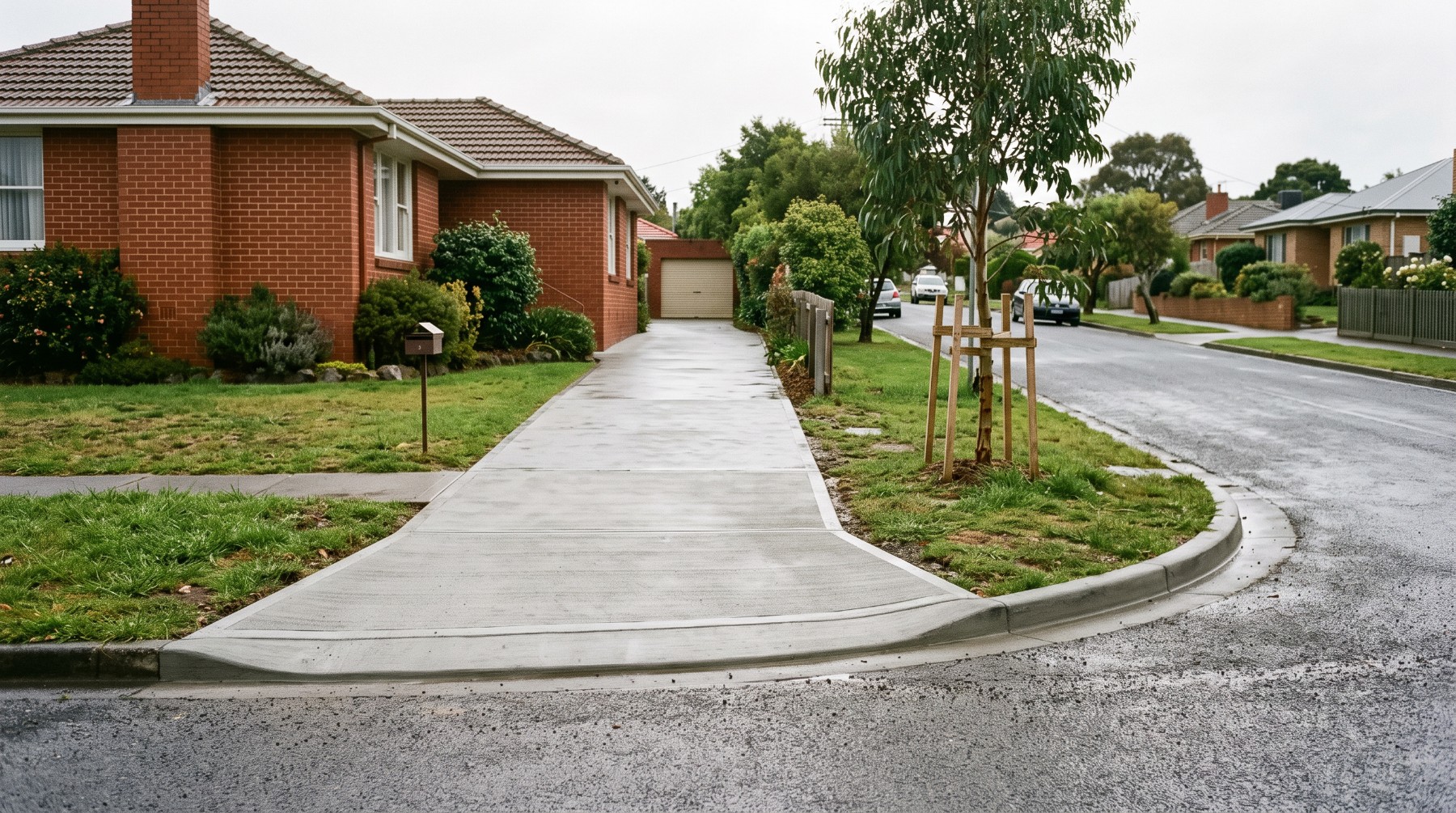
Driveway Crossovers and Kerb Cutting, Launceston
In Launceston the strip between your boundary and the road is not yours, and cutting the kerb in front of your house needs your council's permission first. That is the part people find out too late, so it is the part this page starts with.
- Council-approved crossovers
- Laybacks and kerb cuts
- Built to the council drawing
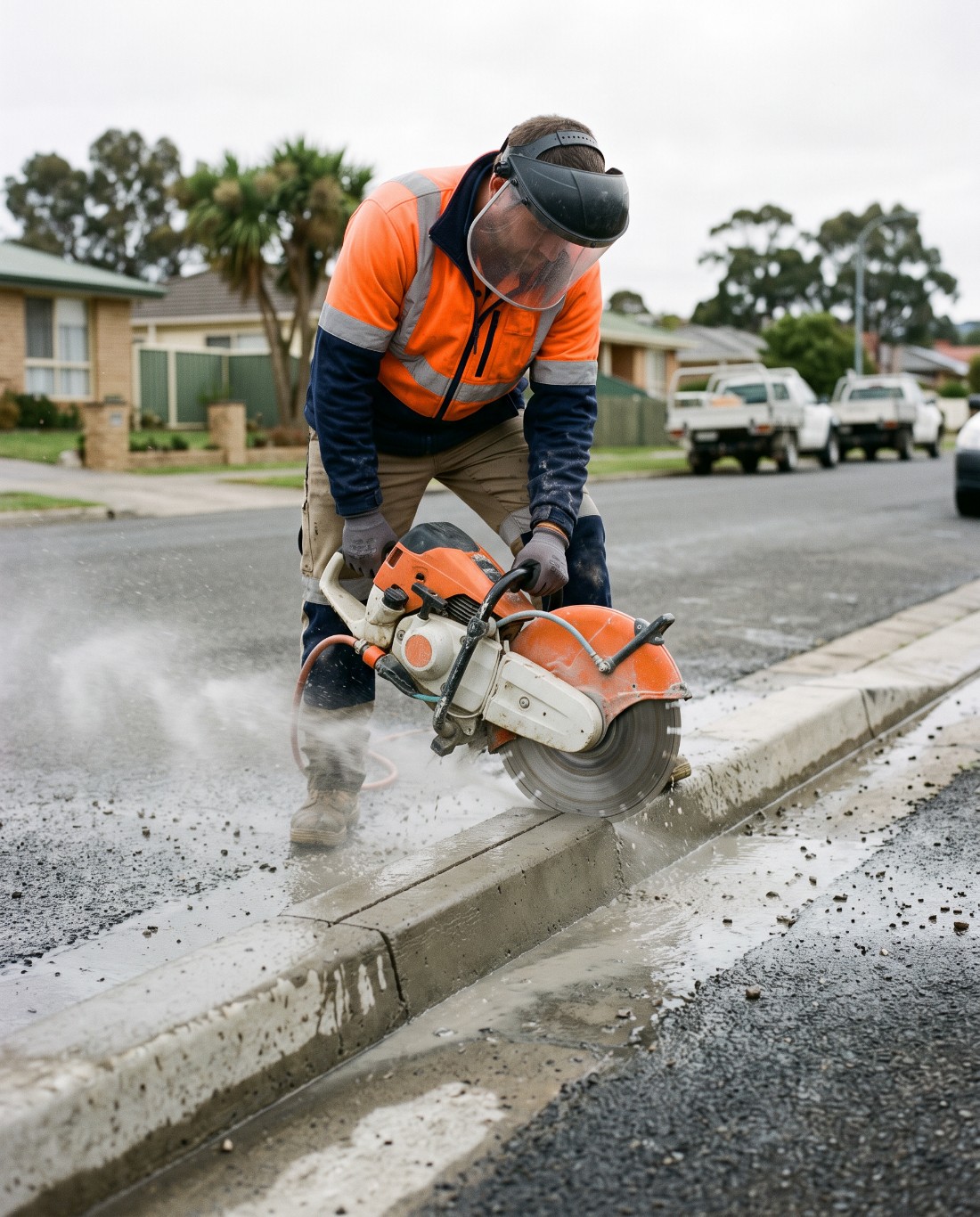
The Nature Strip Belongs to the Council, Not to You
Everything from your front boundary to the road, the verge, the footpath, the kerb and the gutter, is council land. Work on it needs a permit, and building without one can mean removing it at your own cost.
The Crossover Is the Bit on Council Land
From the road edge to your property boundary. Your driveway is everything behind that line, and the two are usually built together in one pour.
You Pay for It, They Specify It
The cost is the property owner's. The width, the grade, the thickness, the reinforcement and the finish are set by the council's standard drawing.
Approval Comes Before Construction
An application, a fee and usually an inspection. Some councils want the works inspected before the pour as well as after.
Doing It Without Approval Is Expensive
Councils can and do require unapproved crossovers to be removed and reinstated. That is the whole job twice, and you pay both times.
Different Councils, Different Rules
City of Launceston, West Tamar, George Town and Meander Valley each have their own specification. We build to whichever one applies to your address.
When Approval Is Required, and When It Is Not
Roughly how it splits. If you are on the line, assume you need it, asking costs nothing and rebuilding costs everything.
You Will Need Approval
 You Will Need Approval
- A new driveway where there was noneAny new access to the road. This always needs approval and it always needs the kerb cut and laid back.
- Moving an existing drivewayA new position means a new crossover and reinstating the old one back to kerb and footpath. Both halves need approving.
- Widening what is thereA single crossover made double. The council has a maximum width and a minimum distance from the side boundary, and both get checked.
- Replacing a failed crossoverEven like-for-like usually needs a permit, because you are working on their asset. It is normally a simpler application.
- Anything involving a stormwater pit or a poleServices in the verge change what is possible and sometimes what it costs. Always raised before, never discovered during.
You Probably Will Not
- Work entirely behind your boundaryYour own driveway, path or parking area on your side of the line is yours. No crossover permit needed for that part.
- Resurfacing your own drivewayAs long as you are not touching the crossover, the verge or the kerb, this is your property and your decision.
- Repairs on your side of the lineCracks, sections and slabs behind the boundary. That is ordinary concrete work.
- But if in doubt, ask anywayThe boundary is not always where people assume it is, and a survey peg is worth finding before concrete is ordered.
Layback, Crossover, Reinstatement
Three related jobs that usually happen together, and it helps to know which word means which when you are reading a quote or a council form.
Cutting the Kerb and Forming the Layback
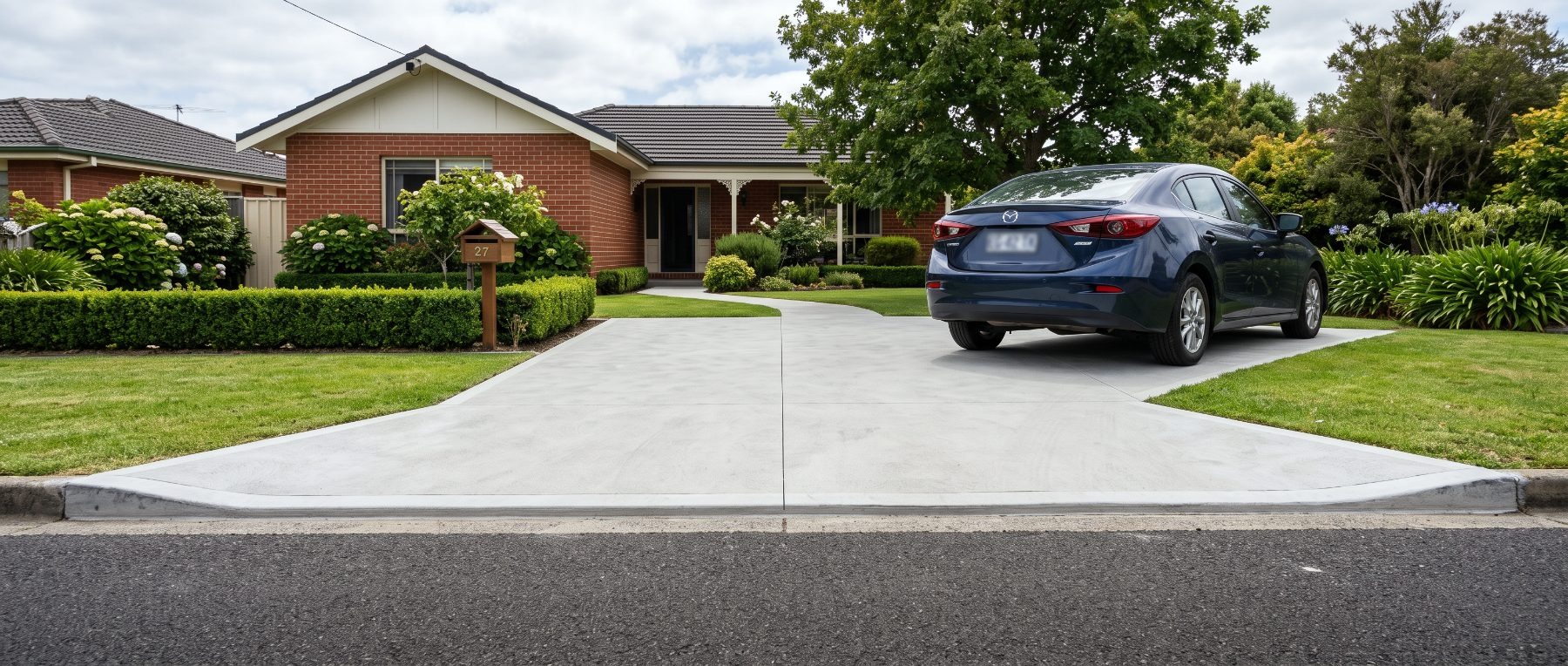
The existing kerb is saw-cut square at both ends and removed, and a laid-back kerb section is formed in its place so a vehicle can drive over it. The cut has to be clean and vertical, because a hammered-out kerb leaves a ragged joint that cracks within a year.
Building the Crossover
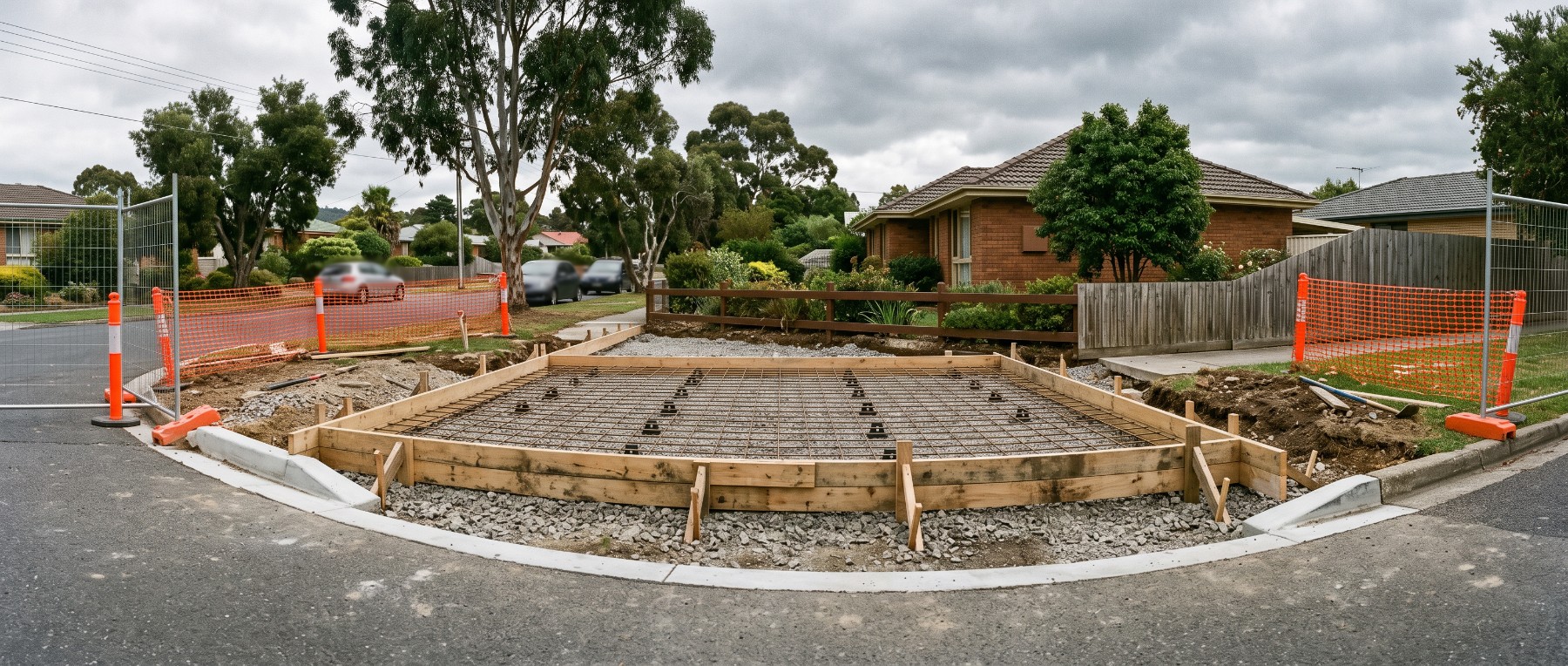
The apron between the road and your boundary, excavated, based, reinforced and poured to the council's standard drawing. It carries every vehicle that ever enters the property, so it is usually thicker and more heavily reinforced than the driveway behind it.
Getting the Grade Right
Where the crossover meets the road and where it meets your driveway are the two places cars scrape. It has to drain to the gutter, sit flush at both joints and still clear a low front bar. This is the part that separates a good crossover from one you notice every day.
Reinstating an Old Crossover
When a driveway moves, the old opening goes back to full kerb, gutter and footpath to match what is either side. Councils are particular about this and it is a condition of most approvals.
Straight kerb replacement, a section broken by a truck or failed with age, is the same trade without the crossover, and we do that too.
Crossovers are council work as much as concrete work. We will tell you what your council wants.
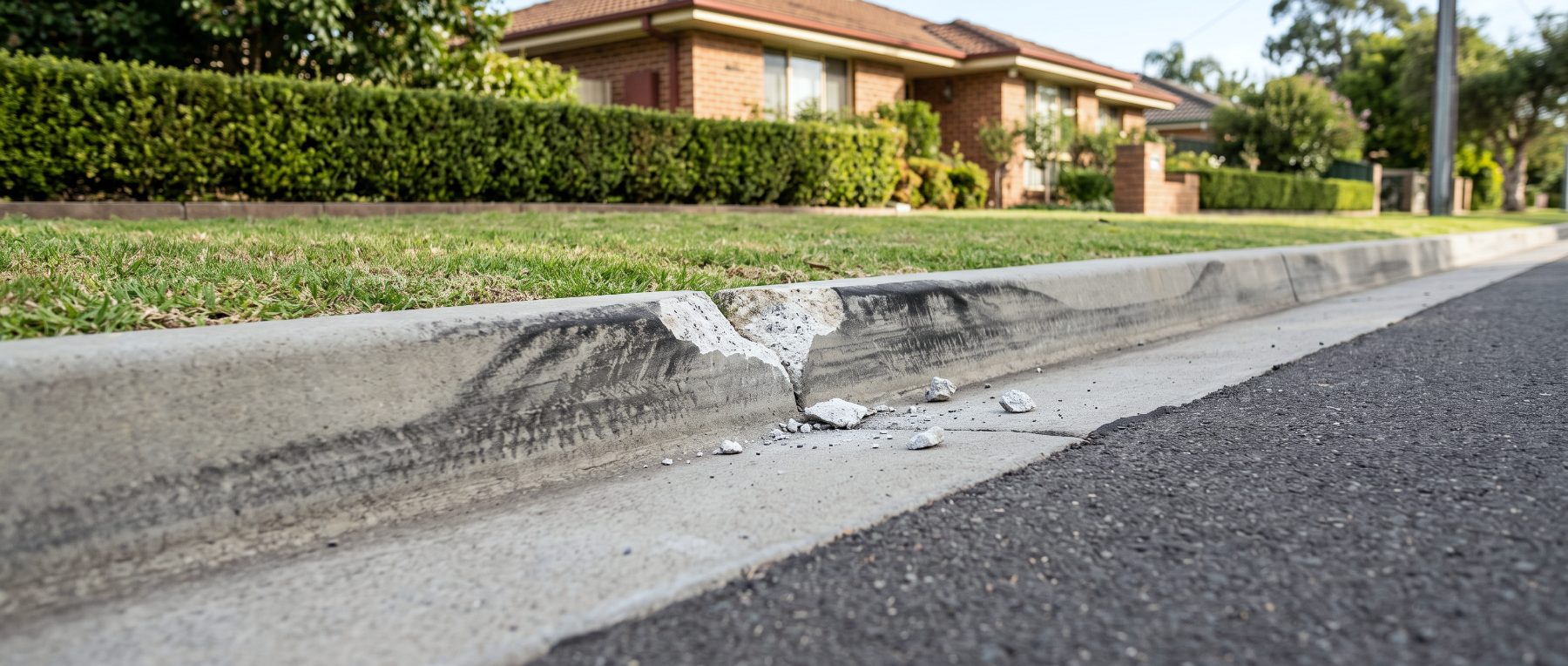
Driving Over an Uncut Kerb Wrecks Both the Kerb and the Car
It is common enough to see: no crossover, and a worn dip in the kerb where a car has been bumping up for years. It cracks the kerb, it blocks the gutter as the pieces break away, it damages suspension and tyres, and the council can require the kerb to be reinstated at the property owner's cost. If that is your driveway, a proper layback is cheaper than the repairs at both ends.
The Checks a Crossover Application Goes Through
The recurring ones across the northern Tasmanian councils. Yours will have its own numbers, so treat this as what to expect rather than what to build to.
We will check the requirements for your street before you are quoted, not after.
Approval First, Then Concrete
The paperwork is the long part and it is almost entirely waiting. The build itself is usually a couple of days on site.
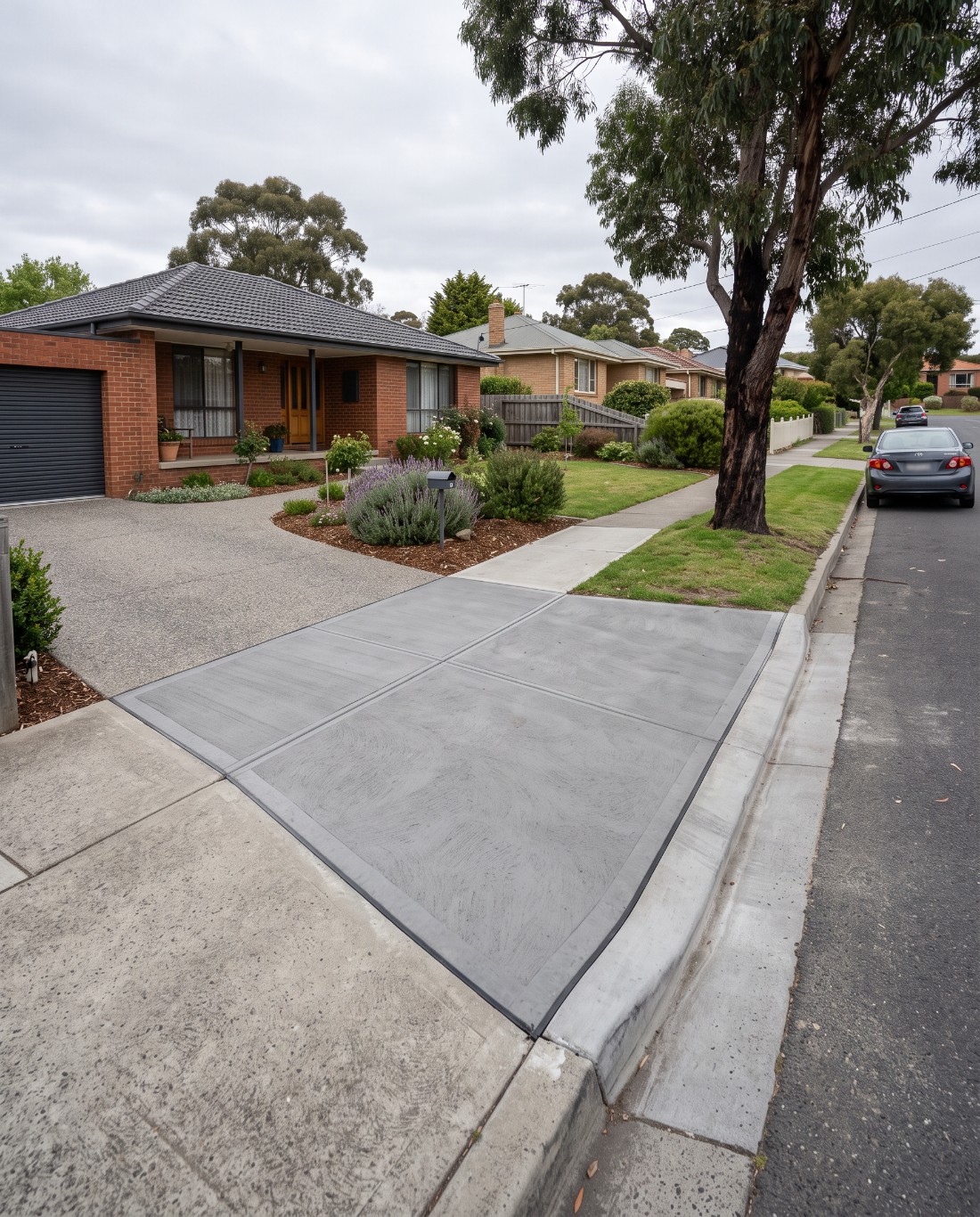

We Look and Measure
The position, the levels, the kerb type, the services in the verge and how the grade will work for a low car. Free, and it is where problems get found.

You Get the Price and the Spec
One written price for the crossover and the driveway behind it, quoted against your council's standard drawing rather than a generic one.

The Application Goes In
Your council, your permit, and we give you the drawings and details it asks for. Allow a few weeks, this is the part nobody can speed up.

Cut, Excavate and Form
Kerb saw-cut square and removed, the crossover excavated and based, boxed and reinforced to spec, and inspected before the pour where that is required.

Pour, Finish and Reinstate
Poured, finished to the required texture, joints cut, and the verge and footpath made good. Then the final inspection and it is done.
What Changes the Price of a Crossover
A crossover runs $800 to $2,000 all up. It is a small slab with a lot of conditions attached, and the conditions move the number more than the square metres do.
How Wide the Opening Is
A single, a double or a wide rural-style entrance. Width sets the concrete, the kerb length to be cut, and the formwork.
What the Kerb Is Now
A standard barrier kerb cuts cleanly. A rolled kerb, a deep dish gutter or an old bluestone section are each their own job.
The Council's Specification
Thickness and reinforcement are not ours to choose. Some councils require more than others, and that is a direct cost.
How Far the Levels Have to Move
A verge that falls steeply away from the road means more excavation, more concrete and sometimes a low retaining edge to make the grade work.
Services in the Way
A stormwater pit, a water meter, a power pole or a telecommunications pit in the opening. Relocation is a separate cost and a separate authority.
Whether an Old Crossover Comes Out
Breaking out the old opening and reinstating kerb, gutter and footpath is real work and it is usually a condition of the new approval.
Council application fees are yours and are paid directly to them, so they are not in our price. We will tell you roughly what to expect so the total is not a surprise.
Crossover and Kerb Questions We Get Asked in Launceston
Do I need council approval for a driveway crossover in Launceston?
Yes. Everything between your front boundary and the road is council land, so cutting the kerb and building a crossover needs a permit from your council before the work starts. City of Launceston, West Tamar, George Town and Meander Valley each have their own specification and their own application. Building without approval can mean removing the crossover and reinstating the kerb at your own cost.
What is a layback kerb?
It is the section of kerb that has been cut out and rebuilt on a slope so a vehicle can drive over it into a property. It is the part of a crossover that sits in the kerb line itself. The alternative, bumping a car up over an uncut kerb, damages both the kerb and the car, and councils can require the kerb to be reinstated.
How much does a driveway crossover cost?
There is no honest flat rate. The price is driven by the width of the opening, what kind of kerb is there now, your council's required thickness and reinforcement, how far the levels have to move, whether any services are in the way, and whether an old crossover has to come out and be reinstated. We quote the crossover and the driveway behind it as one price after looking at the site.
Can you do the council application for me?
The permit is issued to you as the property owner, so the application is yours. We provide the drawings, dimensions and construction details it asks for, and we will tell you before you apply if the position you have in mind is likely to be refused, usually because of the clearance from a corner or from the side boundary.
Why does my car scrape at the bottom of the driveway?
Because of the change of grade where the crossover meets the road or where it meets your driveway. A crossover has to drain to the gutter and sit flush at both joints while still clearing a low front bar, and getting all three right at once is the skill in the job. An existing scraping crossover can often be reprofiled.
Can you just replace a broken section of kerb?
Yes. Kerb that has been broken by a truck, cracked with age or damaged by vehicles driving over it can be saw-cut out and replaced to match what is either side. It is the same trade as a crossover without the driveway, and it still needs the council's approval because the kerb is theirs.
Talk to Us Before You Talk to the Council
Ten minutes on the phone usually saves a rejected application. Tell us where the driveway is going and we will tell you what your council will want, what is likely to be knocked back, and what it will take to build.
- We build to your council's crossover specification
- Layback, half-battered or full kerb replacement
- We will tell you if the position will not be approved
- One price for the crossover and the driveway behind it
Find Out What Your Job Costs
One call and we come out, measure the real thing and put a price in writing. It costs nothing and there is no salesman in it.
One call. We measure it and put a fixed price in writing. Costs nothing.
- We come and measure itOn site, tape out, so the price is for your job and not a guess off a photo.
- A fixed written priceOne number you can hold us to. Not a range, not a rate, not an estimate.
- The crew who quotes it pours itThe bloke standing in your driveway is the bloke who does the work. Who you are dealing with.
- Measured on site, not guessed
- Fixed written price, not a range
- The crew who quotes it pours it
Would rather type it out? Send the details instead