


Old Slabs, Sheds and Footings
A cracked slab, a collapsing shed, an old carport footing. All of it is demolition before it is excavation, the spoil is heavier, and it has to be out before we cut.
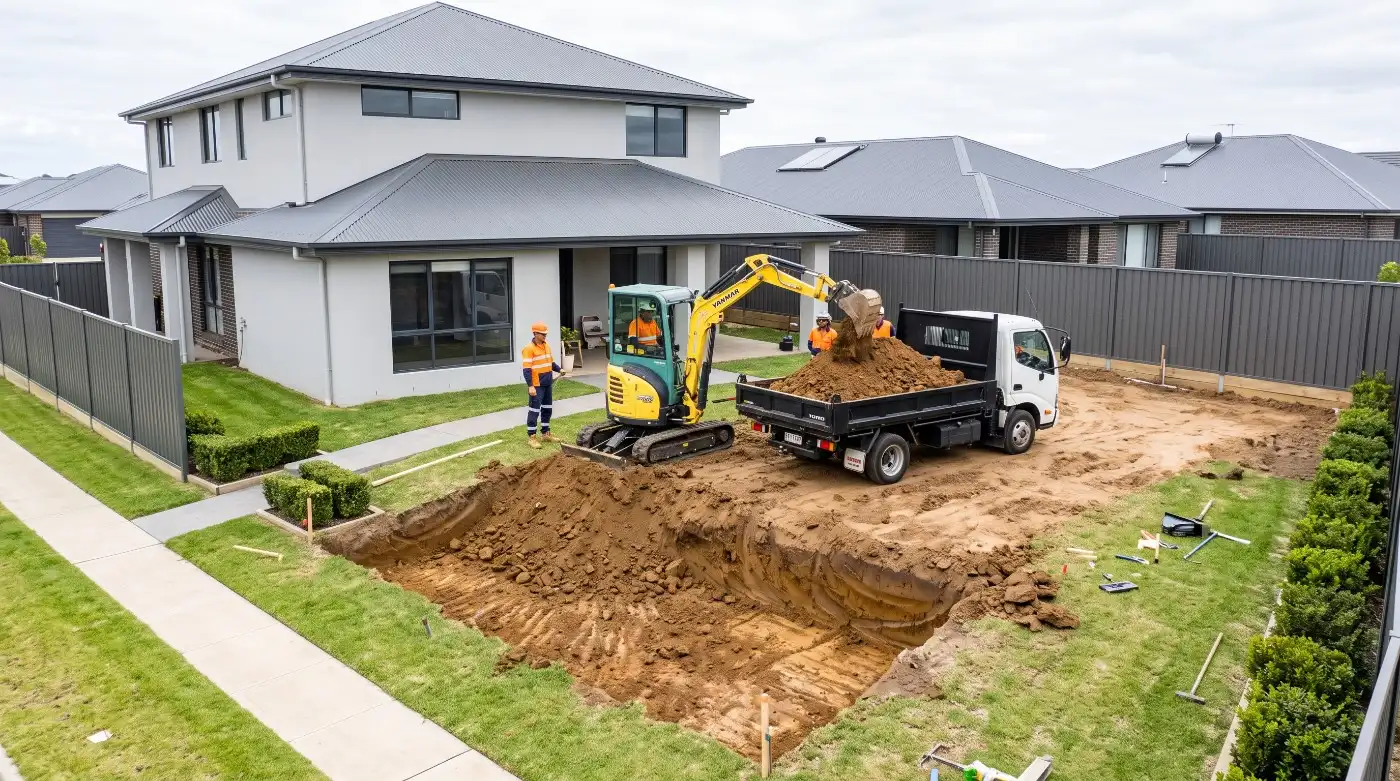
We dig the ground that concrete is going on across Launceston, and then we pour it. Launceston is built on hills, so most jobs here start by taking ground away. Get the cut and the compaction right and the concrete lasts. Get them wrong and no amount of steel saves it.
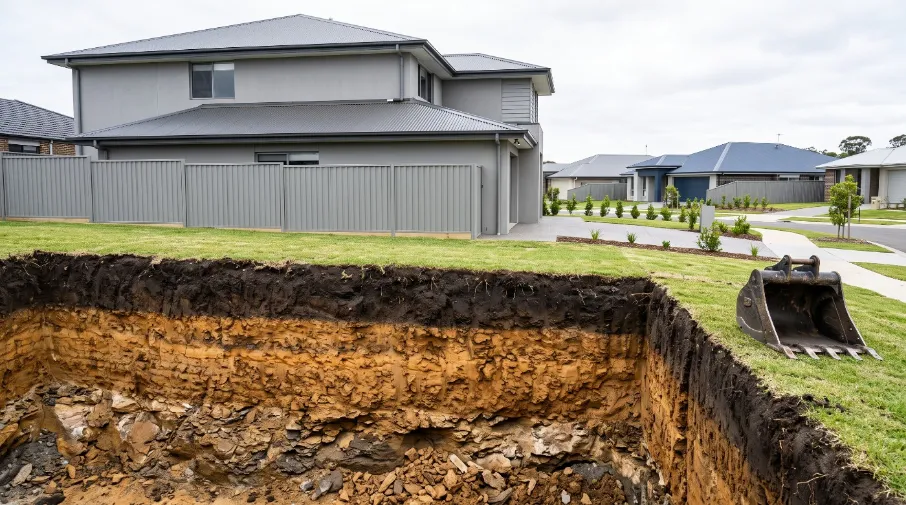
A cracked slab is almost never a concrete failure. It is a ground failure that the concrete reported. Which is why we would rather spend a day on the base than a morning arguing about the mix.
It is organic, it holds water and it keeps compressing for years. Concrete poured on topsoil settles, and it does so unevenly, which is what cracks it.
Ground that has been filled at some point in the past, an old pool, a levelled yard, a filled gully, is the single most common cause of slab movement here.
Northern Tasmanian clay swells wet and shrinks dry. That movement is why slabs are designed to a site classification rather than a standard recipe.
Solid rock is the best thing you can build on and the most expensive thing to dig through. Finding it changes the quote in both directions at once.
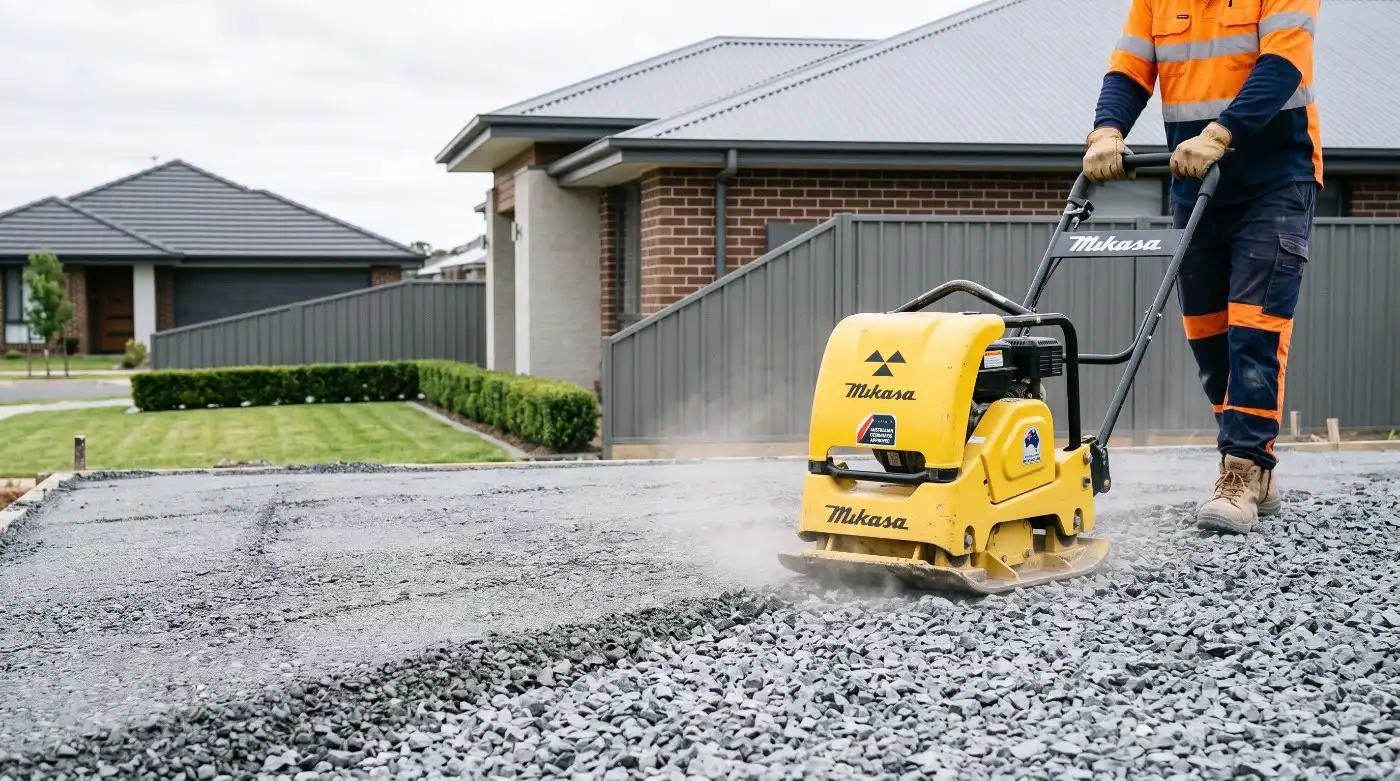
Crushed rock placed in layers and compacted each time, not tipped in and raked level. It is invisible, it is where corners get cut, and it is the difference.
A site cut quote looks like a number for moving dirt. It is mostly not. Knowing where the money goes is what makes two concrete quotes comparable.
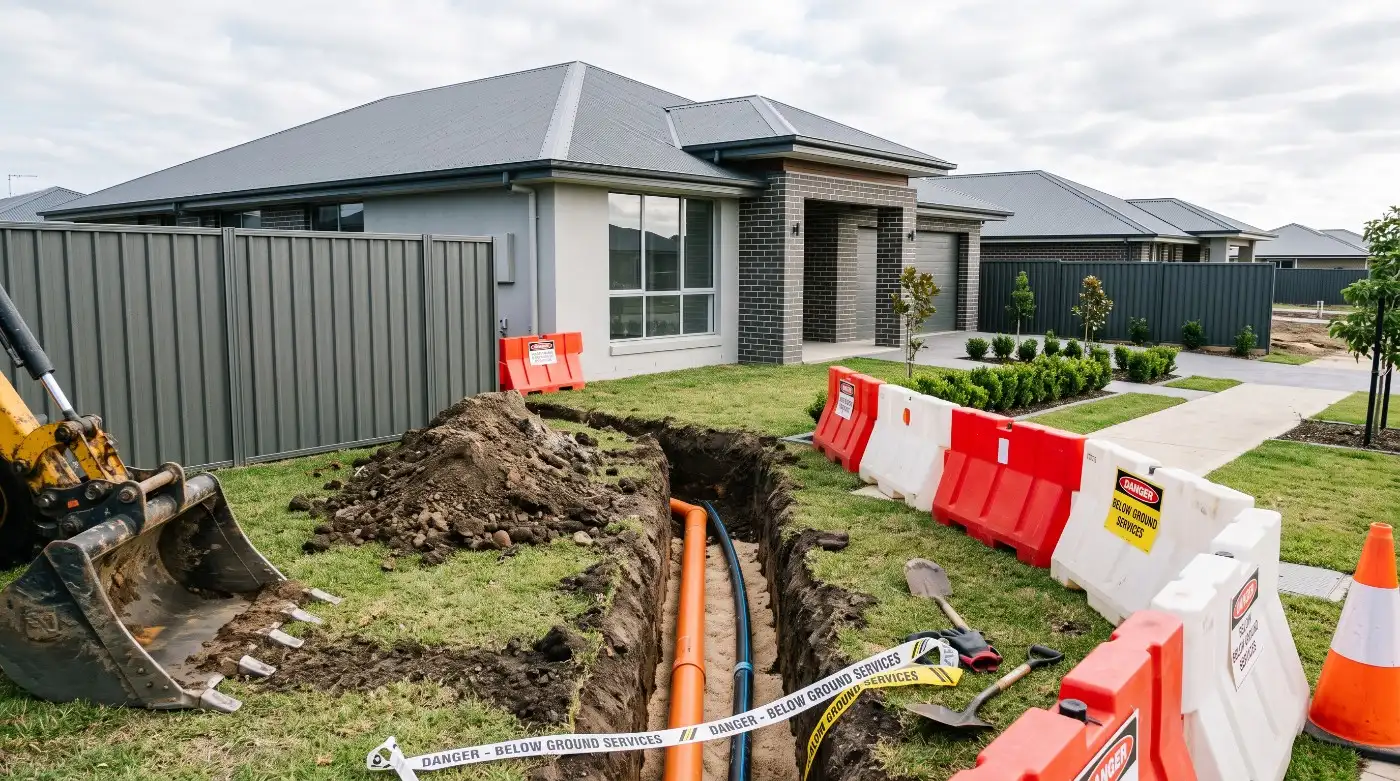
We do the excavation that has concrete going on it afterwards. That is a narrower trade than general earthmoving and it is worth being clear about which is which.
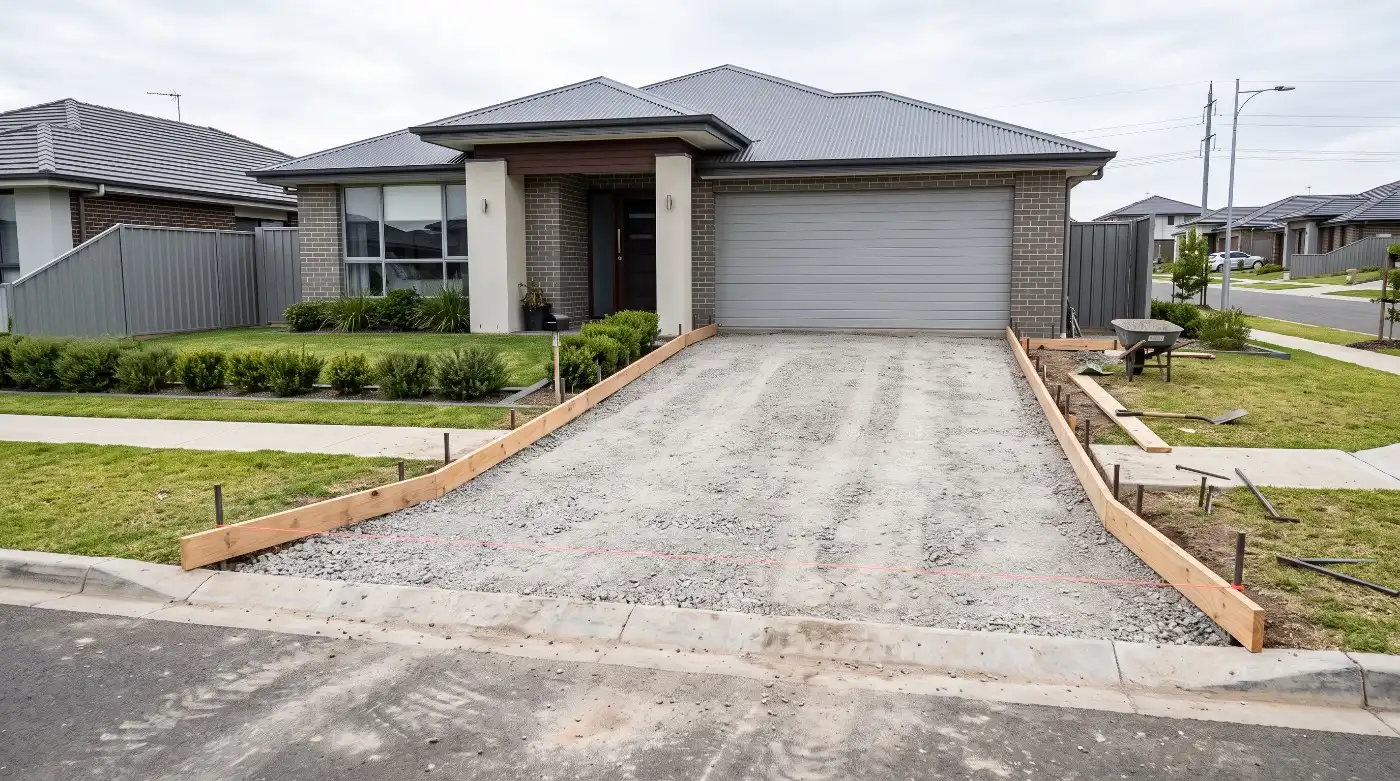
Cutting into a slope to make a level pad, with a batter or a retaining edge on the high side. This is the standard Launceston job, because very little of this city is flat. The cut has to be big enough for formwork and someone to work in, which is always further out than the slab itself.
Stripping to depth along the run, boxing out and getting a compacted base in. The depth comes off what is going on top, a car is not a mower and the base changes accordingly.
Stumps, an old slab or a collapsing shed taken out and carted away, so there is bare ground to work from. Covered in full further down the page.
Stormwater and sewer connections, deep service trenching, dam work, rural earthmoving and large-scale reshaping are not what we do. Launceston has good dedicated excavation firms for that and we would rather point you at one than take the job and learn on it.
So the honest boundary is this: if concrete is going on it, the dig is ours. If it is a trench for a pipe or a paddock being reshaped, it is not, and we will say so on the phone rather than at the quote.
Tell us what is going on the ground afterwards and we will tell you whether the dig is ours.
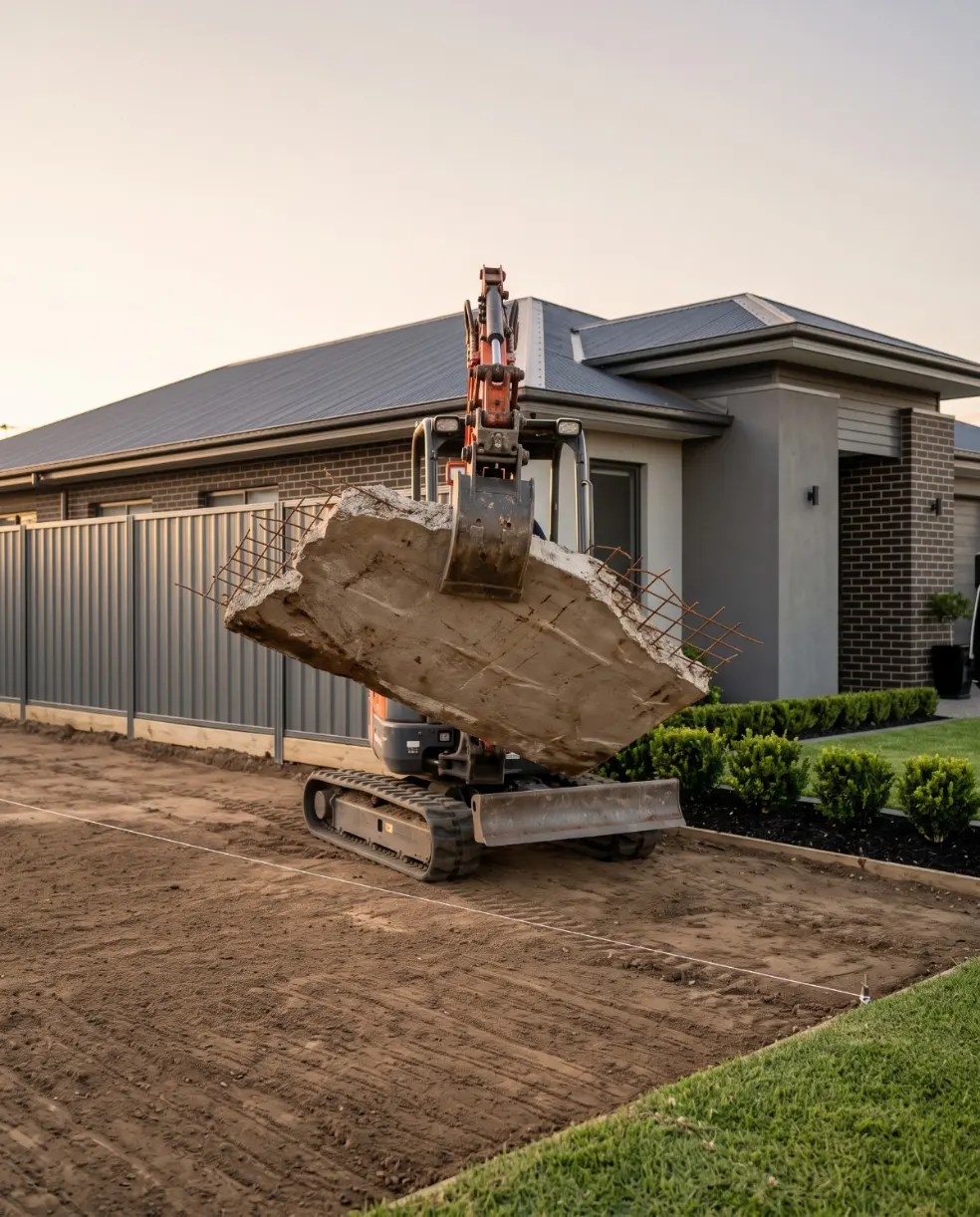
Most jobs we quote need something taken away before a level can even be measured. It is not a separate business, it is the first hour of yours.
A cracked slab, a collapsing shed, an old carport footing. All of it is demolition before it is excavation, the spoil is heavier, and it has to be out before we cut.
A stump left in the ground rots, and the void it leaves settles under whatever you put on top. They come out or get ground below base level, never covered over.
Older Launceston blocks routinely have builders' rubble, bottles or an old fill pit under the lawn. Found early it is a line on a quote; found late it is a hold-up, and it is the most common reason a slab is not level a year later.
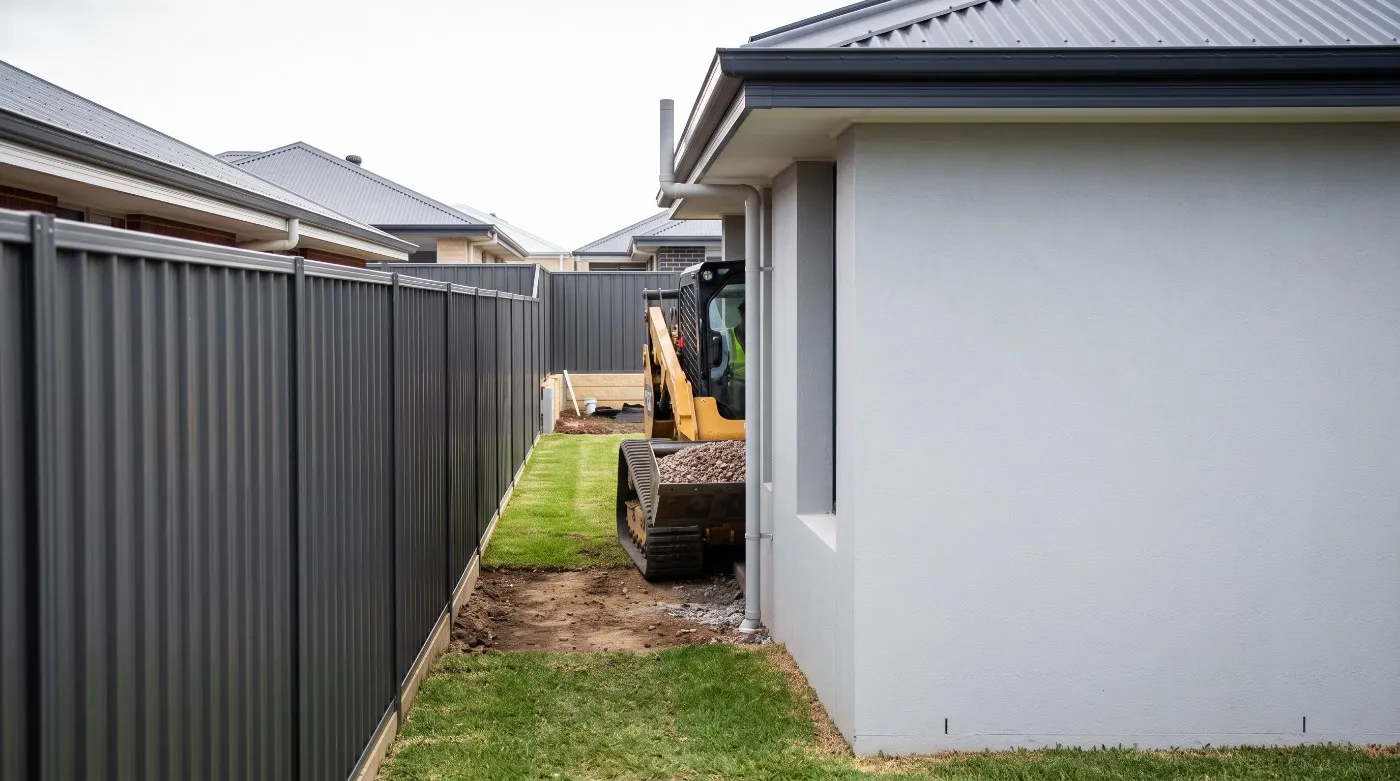
The first question on a Launceston back yard is not how much has to come out, it is what can get in. A standard side gate is around 900mm, which rules out most machines and leaves a mini excavator, a narrow-track loader, or people with shovels. Sometimes the answer is lifting a machine in over the fence, and occasionally it is taking a fence panel out for a day and putting it back. We work that out at the quote, because finding it out on the morning is how a job loses a day before it starts.
The depth is not a preference, it comes off what is going on top. Rough guidance for residential work. Read across.
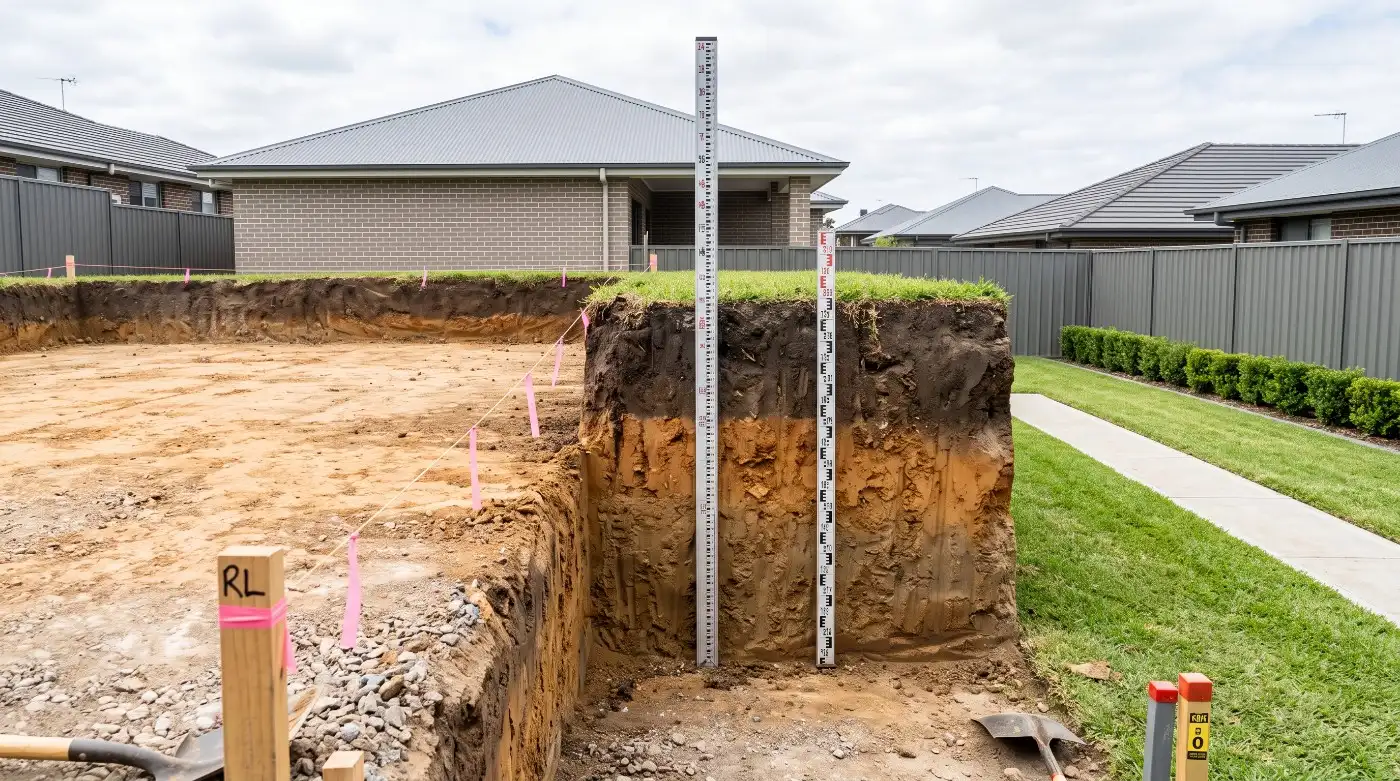
Depth is decided on site, not on a price list. The measure is free either way.
A residential site cut is one to three days. The first hour and the last are the two that decide whether the pour after it goes smoothly.
What can get in, where the spoil goes, and what has to be protected. This sets the machine, and the machine sets the price.
Stormwater, sewer, water, power and comms found before the bucket moves. We do not connect them and we absolutely do not want to hit one. Plans are a starting point and old Launceston suburbs are full of surprises.
Topsoil off and stockpiled or carted, then cut to the design level with the batter or edge the high side needs.
Crushed rock in, compacted, tested by eye and by feel, and another layer. Not tipped in and raked, which is the shortcut that shows up later.
Levels checked, string lines set and the pad left ready for formwork, usually for our own crew, which is the point of doing both.
Excavation is priced on the machine, the hours and the material going out, and the third of those is usually the largest.
Cubic metres cut, and then trucked and tipped. Tipping is charged by weight, so wet clay costs more to remove than the same volume of dry soil.
A machine that drives in works several times faster than one that has to be lifted over a fence or fed through a side gate.
Rock, old fill, buried rubble, a slab nobody mentioned, an unrecorded service. Handled as a variation, discussed before it is done.
Imported material and the labour to place and compact it properly in layers. The quiet line that separates a base that lasts from one that does not.
A rough level for a lawn and a pad to an engineer's detail are different jobs with the same machine.
When the same crew digs and pours it is one mobilisation, one set of levels and nobody blaming the other trade. That is usually cheaper as well as easier.
If you already have an excavation quote, the two lines worth comparing are what it says about spoil removal and what it says about compaction. Those are where quotes for the same job diverge.
There is no honest rate per cubic metre, because the price is driven by what can get onto the site, how much material has to be trucked away and tipped, how much crushed rock goes back in, and what you find once the topsoil is off. Spoil removal is often the biggest single line. We quote after looking at the access and the levels.
Cutting into a slope to create a level pad for a slab, a shed or a driveway, with a batter or a retaining edge on the high side to hold the ground back. It is the most common concrete excavation job in Launceston because very little of this city is flat, and the cut always has to be wider than the slab so there is room for formwork.
Usually. A standard side gate is about 900 millimetres, which rules out most machines and leaves a mini excavator or a narrow-track loader. Where nothing fits, the options are lifting a machine over the fence or taking out a fence panel for the day. We work this out at the quote rather than on the morning.
We tell you, and it is handled as a variation rather than absorbed silently. Rock is good news structurally. It is the best thing to build on, and it is slow and hard on machines to break through. Nobody can price it accurately before the bucket reaches it, which is why honest quotes treat it separately.
Because it is organic, it holds water and it keeps compressing for years. Concrete poured over topsoil settles unevenly, and uneven settlement is what cracks a slab. The same applies, more so, to old fill. Ground that was filled at some point is the most common cause of slab movement we see.
Both, and doing both is the point. When the same crew cuts the pad and pours the slab there is one mobilisation, one set of levels, and no gap between two trades where the base was signed off by one and blamed by the other. We will also do the excavation on its own if that is what you need.
Tell us what is going on the ground afterwards and how much fall there is across the site. Those two answers decide almost everything about the excavation, and we can usually price it from a photo and a few measurements.
One call and we come out, measure the real thing and put a price in writing. It costs nothing and there is no salesman in it.
One call. We measure it and put a fixed price in writing. Costs nothing.
Would rather type it out? Send the details instead