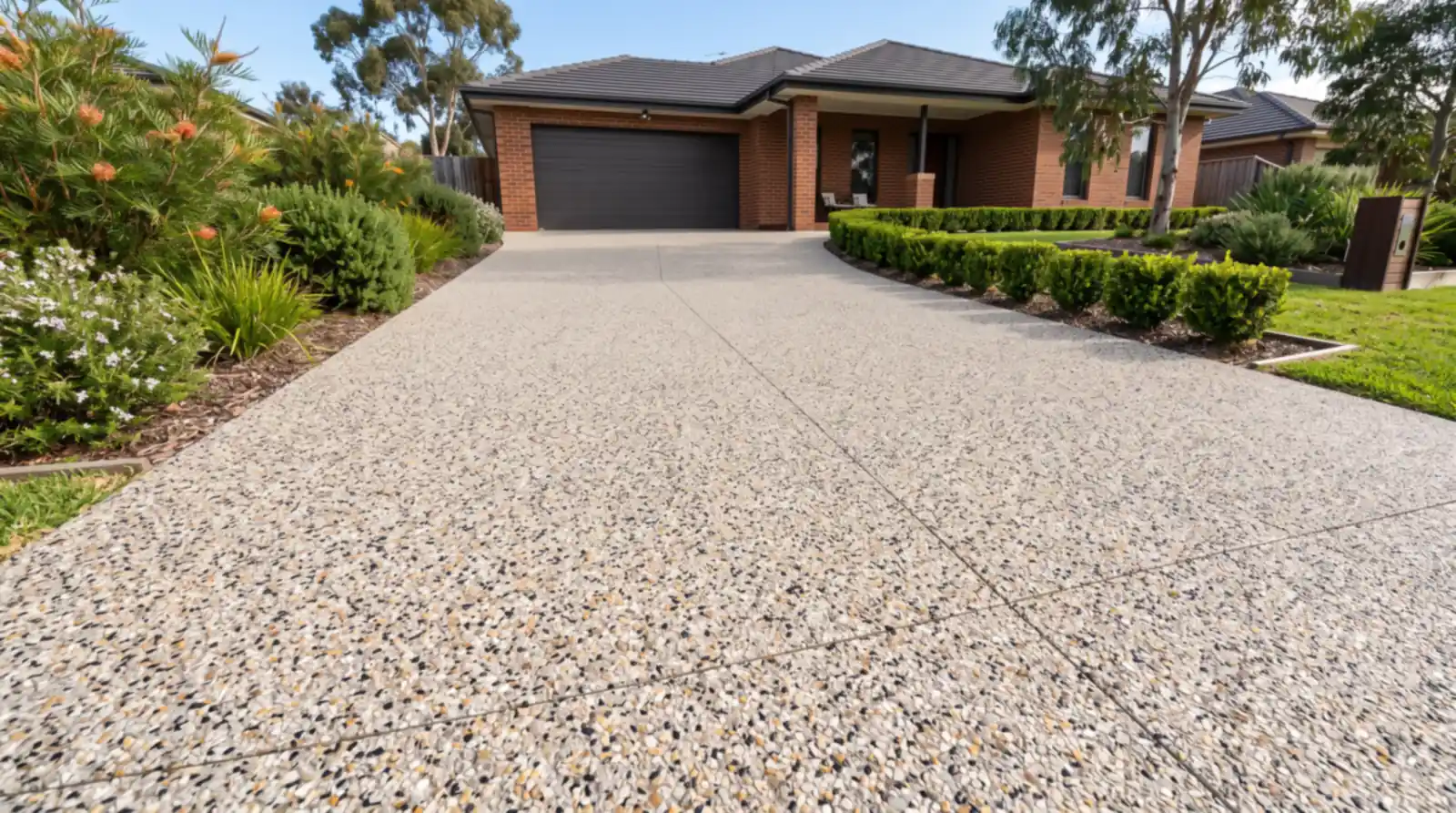
A sealed exposed aggregate driveway with cream, gold and black stone at a brick home in Launceston
Sealing and Cleaning

Does Concrete Need Sealing in Launceston?

Concrete sealing means rolling or spraying a clear coating, called a sealer, onto finished concrete. It soaks into the surface or sits on top of it, and it changes how the slab looks, how it stains and how it weathers. It is also one of the easiest things in this trade to oversell, so here is when it is worth paying for and when it is not.

6 October 20267 min readBy Concreters Launceston Team

The Short Version

  • The finish decides whether you need a sealer, not the salesperson
  • Honed, liquid limestone and resurfaced concrete need sealing; plain broom does not
  • A sealer deepens colour and keeps stains on top; it does not stop cracking
  • Clean first, let it dry, then seal, usually on a second visit
  • Frost makes a gloss sealer slippery, so slopes need a grip additive
  • Reseal every few years, and expect about $5 to $15 per square metre

The Short Answer Depends on the Finish

Whether you need it comes down to the surface you have. This is roughly how each one sits.

The finishSealingWhy
Plain broom finishOptionalTough and grippy, but it shows oil and tyre marks
Coloured through the mixWorth itA sealer makes the colour richer and slightly darker
Exposed aggregateYour choiceThe stone is the surface, so sealing is about the look
HonedPart of the jobA ground surface is open, and it stains
Liquid limestonePart of the jobA pale porous surface stains without one
Resurfaced toppingPart of the jobA thin layer, and the sealer is what protects it

On a plain driveway in open sun, plenty of people never seal and are happy. On a honed or liquid limestone surface, skipping it is how you end up with marks that will not come out.

What a Sealer Does, and What It Does Not

Sealing gets sold as protection and bought as a magic coating. It is neither, and knowing which is which saves you paying for the wrong thing.

It Deepens the Colour

A sealer adds depth and a little sheen. On coloured concrete it makes the colour richer, and on a dark exposed aggregate it makes the stone look the way it did when it was wet.

It Keeps Stains on Top

A clean, dry, sealed slab has its pores closed, so oil and leaf stain sit on the surface long enough to wipe up instead of soaking in.

It Slows Moss Down

Moss has less to grip on a sealed surface. On a shaded south-facing path it slows it down rather than stopping it.

It Does Not Stop Cracking

Cracking is decided by the base, the steel and the joints under the surface. A coating on top has nothing to do with it.

It Does Not Last Forever

A sealer wears where people walk and cars drive, so it wants redoing every few years.

It Can Make a Wet Surface Slippery

A gloss sealer on a surface that gets wet is a genuine hazard. Near a pool or on a steep path it needs a grip additive mixed into the sealer.

Why It Matters More on a Launceston Driveway

Moss and algae are the most common complaint we hear about concrete around Launceston, and wet winters are the reason. A shaded drive or a south-facing path can stay damp for months, and an open, unsealed surface gives moss somewhere to take hold.

Leaf and tannin staining is the other one. The brown marks under a gum or a liquidambar soak into bare concrete, and a sealed surface holds them on top where they wash off.

None of that means every slab has to be sealed. Sealing a concrete driveway earns its place the more shade, trees and decorative finish it has. A plain concrete driveway in full sun is the case where it is most optional.

What Frost Does to a Sealed Driveway

Properly poured and cured concrete handles a Launceston frost without trouble. A sealer is not what gets a slab through winter, so you do not need one to stop frost damage.

Frost does change how a sealed surface feels underfoot. It makes a slick surface slicker on a winter morning, and a gloss sealer is about as slick as concrete gets. On a sloped driveway or the path to your front door, use a sealer that does not turn glassy, with a grip additive mixed in.

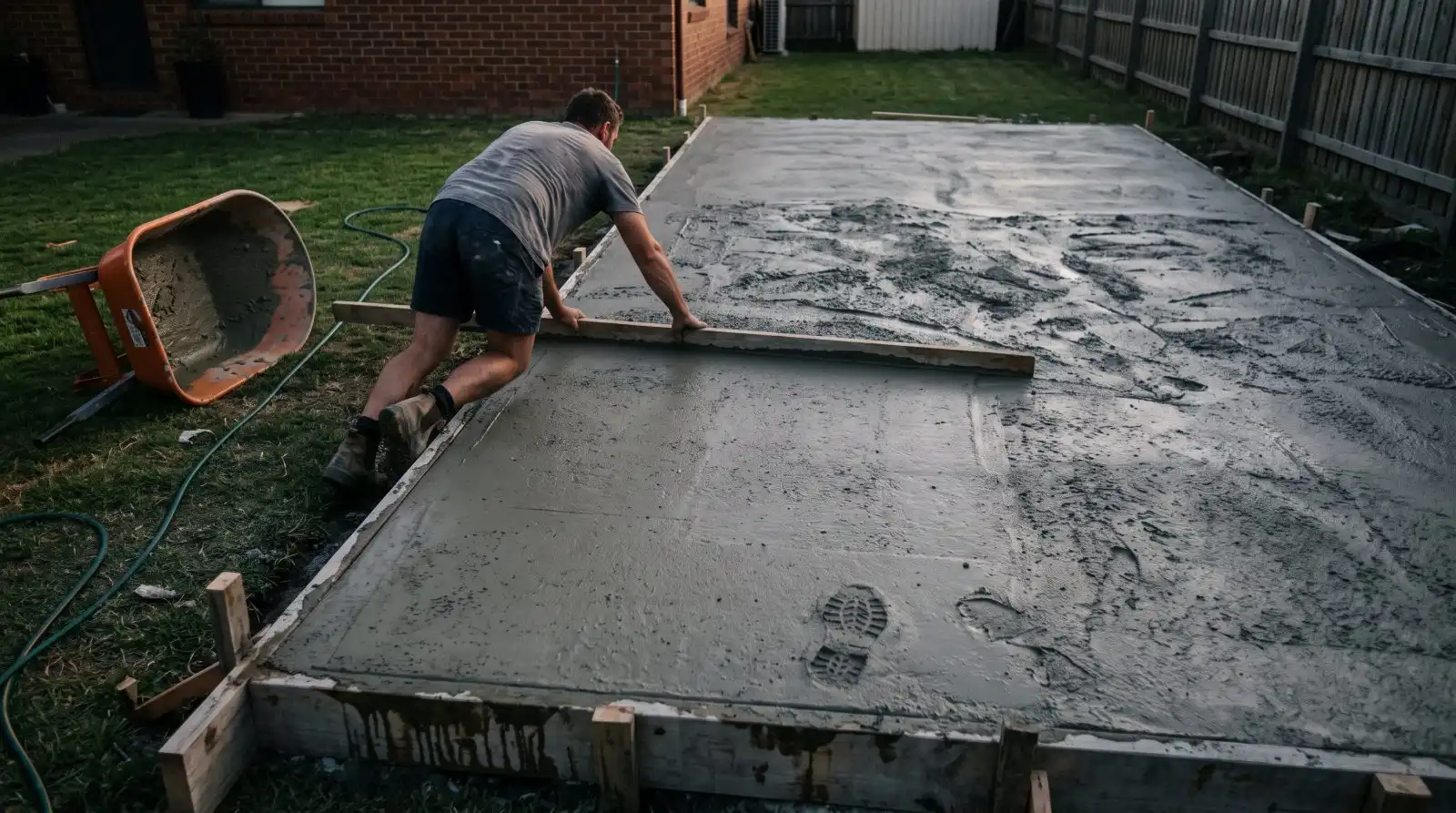
Water that sits on the surface is the bigger winter problem. A slab needs at least ten millimetres of fall for every metre of run. With less, water sits long enough to grow moss and freeze, and no sealer will move it. The fall is set when the slab is poured, so it is worth asking about at the measure.

Colour plays a part too. A charcoal driveway shows frost and salt marks through winter more than a mid grey does, sealed or not.

Clean It First, Then Seal It on a Dry Day

A sealer locks in whatever is on the surface when it goes on, so the slab has to be properly clean first. Moss, grime and fresh oil come off with the right method. Old oil that has soaked in usually leaves a shadow, and sealing over it keeps the shadow rather than hiding it.

The pressure has to suit the finish, not the stain. Too much on exposed aggregate blasts out the cement holding the stones, and a honed surface gets a soft wash instead. Our driveway and concrete cleaning page goes through what comes off and what does not.

Then it has to dry. Sealer goes on dry concrete or it clouds, so on a cleaned driveway it is usually a second visit a few days later. Sealing after a clean roughly doubles how long it stays looking right.

How Often, and What Concrete Sealing Costs

Expect to reseal every few years, sooner where the traffic runs and in the shade. The worn strip down the middle of a driveway tells you when, because it starts to look and stain differently from the edges.

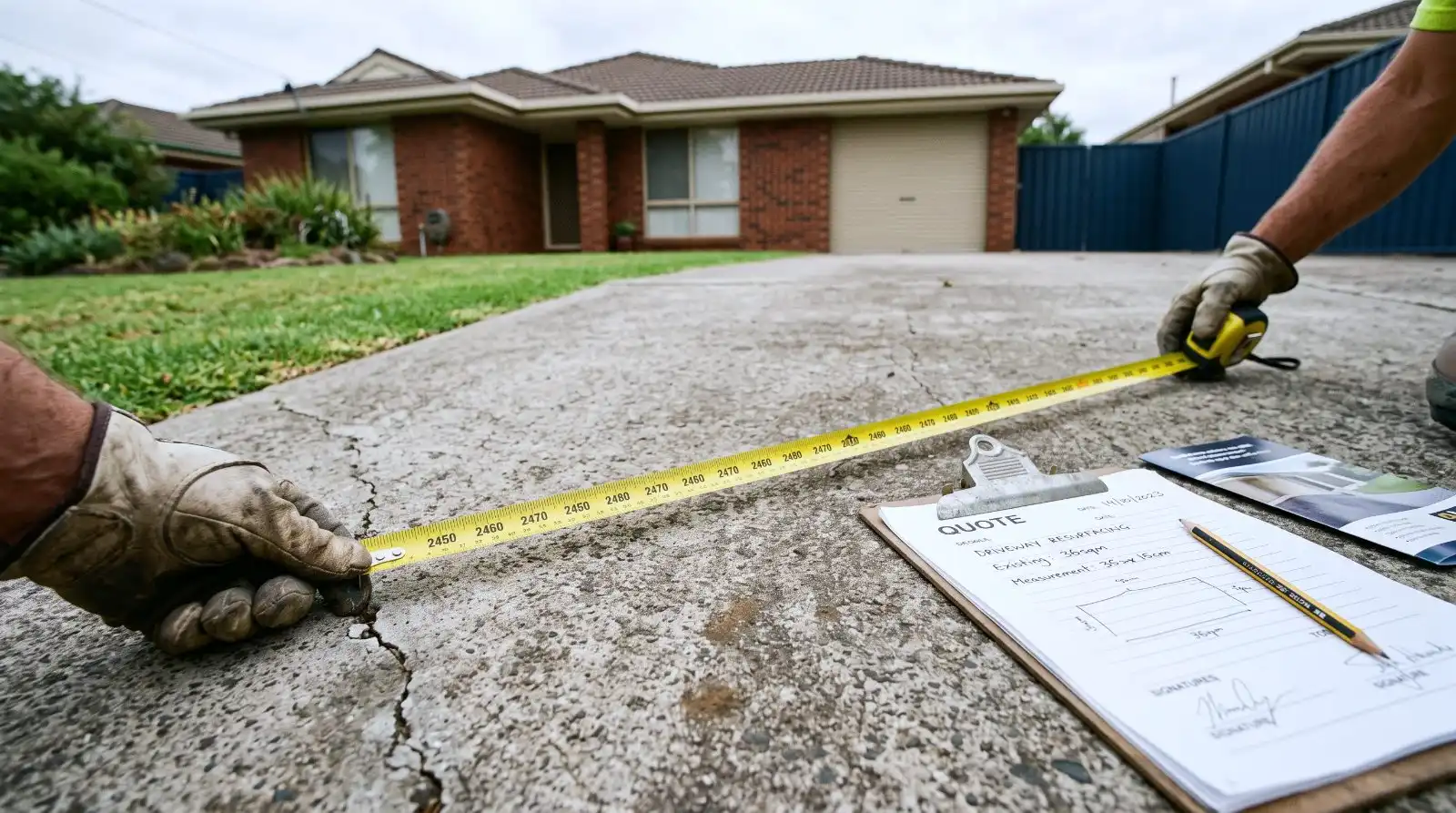
Sealing runs about $5 to $15 per square metre, depending on the sealer and the surface. On a new slab it is a line on the same quote. On an older one it goes with a clean, and on a tired surface that has started to wear, resurfacing may be the better spend. We will tell you which at the measure.

Now You Know What to Ask

Send us the size and where it is. We will come out, measure the real thing and put a number in writing.

Get a Priceor call (03) 6724 3698
The Next Step

Get Your Job Priced

Send the size and where it is, or ring us. We come out and measure it properly, free either way.

Free Measure & Quote
Tell us what you need and we'll have a look.

What Happens After You Send It

  • We come out and measure it, free, and look at the ground and the access.
  • You get one written price for the whole job, not a rate per square metre.
  • If you go ahead, you get a start date and the same crew from quote to pour.

Would rather talk it through? (03) 6724 3698, or send the details through the contact page.

Common Questions

Questions We Get Asked About Sealing Concrete

Do I have to seal a new concrete driveway?

No. A plain broom-finish driveway is fine unsealed, and many are. Sealing is worth it on coloured and decorative finishes, and it is part of the job on honed and liquid limestone surfaces.

Will sealing make my driveway slippery?

A gloss sealer on a wet surface can be. Anywhere that gets wet and is walked on, the sealer needs a grip additive, and on a driveway most people choose a finish that does not turn glassy.

Does sealing stop oil stains?

It stops fresh oil soaking in long enough for you to wipe it up. It does not remove old oil that has already gone into the concrete, so clean first and seal after.

How long does concrete sealer last?

A few years, depending on traffic and shade. It wears where tyres and feet go, so the middle of a driveway goes first.

Does sealing protect concrete from frost?

Properly poured and cured concrete handles Launceston frost on its own. What frost changes is grip: it makes a slick surface slicker, so on anything sloped choose a sealer that does not turn glassy and add a grip additive.

Can I seal it myself?

You can, on a small plain area. The parts people get wrong are sealing over dirt, sealing before the concrete is dry, which clouds it, and using a gloss sealer where it gets wet. On a decorative or honed finish it is worth having it done.

Free Measure, Fixed Price

Find Out What Your Job Costs

One call and we come out, measure the real thing and put a price in writing. It costs nothing and there is no salesman in it.

One call. We measure it and put a fixed price in writing. Costs nothing.

(03) 6724 3698 Ask for a free measure
  • We come and measure itOn site, tape out, so the price is for your job and not a guess off a photo.
  • A fixed written priceOne number you can hold us to. Not a range, not a rate, not an estimate.
  • The crew who quotes it pours itThe bloke standing in your driveway is the bloke who does the work. Who you are dealing with.
  • Measured on site, not guessed
  • Fixed written price, not a range
  • The crew who quotes it pours it

Would rather type it out? Send the details instead

Call UsGet a Quote